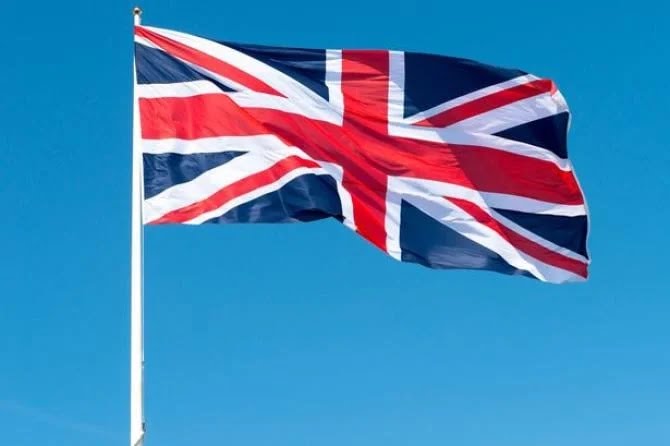
The United Kingdom has recorded its highest-ever defence export earnings, exceeding £20 billion in 2025, according to an announcement by the Ministry of Defence.
In a statement released on Friday, the MoD said the figure represents the largest value of British defence exports since records began more than four decades ago, describing the milestone as a major boost for workers, defence firms and the country’s strategic alliances.
The ministry noted that the deals are expected to strengthen NATO capabilities, deepen international partnerships and sustain tens of thousands of highly skilled jobs across the UK.
Among the headline agreements is a £10 billion contract with Norway for the export of at least five Type 26 frigates. The deal is projected to support about 4,000 jobs across more than 430 businesses throughout the UK.
Commenting on the development, the Minister for Defence Readiness and Industry, Luke Pollard MP, said the government was delivering on its promise to use defence as a driver of both security and economic growth.
“These export successes show how defence is powering economic growth across the UK while strengthening our security and that of our allies,” Pollard said.
“The Type 26 frigate deal with Norway will boost jobs in Scotland and beyond, while enhancing our joint ability to counter threats in the North Atlantic.”
He also highlighted the export of Typhoon fighter jets to Türkiye, noting that it would safeguard high-skilled employment in several regions.
“By exporting Typhoon jets to Türkiye, we are protecting jobs in Lancashire, Scotland and other parts of the UK, while reinforcing NATO’s southern flank,” he added.
As part of wider defence cooperation, the UK and Norway recently signed the Lunna House agreement, committing both navies to closer collaboration in addressing Russian naval activity in the North Atlantic.
The MoD also pointed to ongoing investments in advanced maritime capabilities, including uncrewed systems, under the Royal Navy’s Atlantic Bastion programme.
In addition to the Norwegian frigate deal, the UK secured an £8 billion contract to supply 20 Typhoon fighter jets to Türkiye, supporting an estimated 20,000 jobs nationwide. Other exports included 12 C-130 aircraft sold to Türkiye for over £550 million, protecting around 1,400 jobs in Cambridge, as well as the sale of 18 military transport vehicles to Czechia, produced by Devon-based firm Supacat.
The National Armaments Director, Rupert Pearce, said the record performance reflected the UK’s integrated approach to defence exports.
“These achievements underline our mission to strengthen international partnerships while driving prosperity at home,” Pearce said.
“By working as a single, integrated organisation, we are helping allies access world-class UK defence capabilities while creating jobs and supporting collective deterrence.”
Similarly, the Director General for International Collaboration and Exports, Avril Jolliffe, said defence exports were about more than equipment sales.
“This is not just about selling hardware,” Jolliffe said.
“It’s about building long-term defence partnerships that support global security and the UK’s economic objectives.”
Looking ahead, the MoD said the UK plans to build on the momentum in 2026, with further export campaigns focused on advanced aircraft, maritime systems and armoured vehicles.
Recent reforms, including the creation of the National Armaments Director Group and a dedicated International Collaboration and Exports team, are expected to further strengthen the UK’s position as a leading global defence exporter.
The ministry added that the record export performance in 2025 has not only boosted the domestic economy but also reinforced the UK’s role as a key contributor to international security through partnerships with NATO and AUKUS allies.