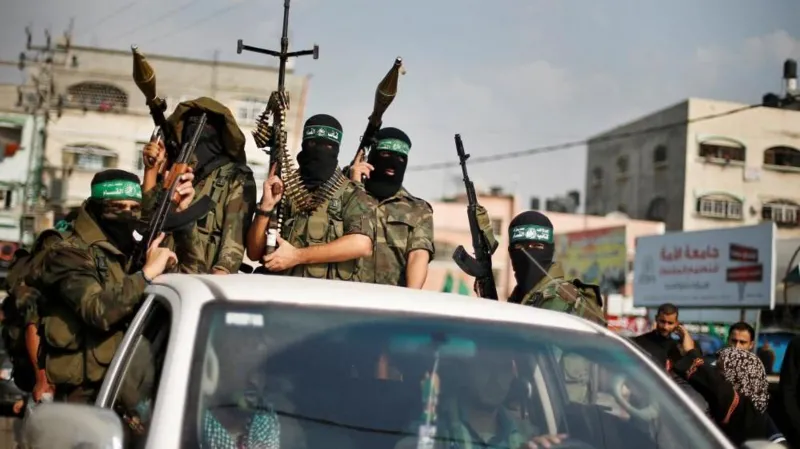
Hamas on Monday released seven hostages, the first to regain freedom under a ceasefire that halted two years of brutal conflict between Israel and Hamas in the devastated Gaza Strip.
The Israeli military confirmed that the hostages were now in its custody, though it gave no immediate update on their condition.
Hamas said the latest deal involves exchanging 20 living hostages for more than 1,900 Palestinian prisoners held in Israeli jails.
Across Israel, families and friends of hostages erupted in cheers as local TV stations announced that the freed captives had been handed over to the Red Cross.
Tens of thousands of Israelis gathered at public viewing events nationwide, with a major one held in Tel Aviv, to watch the moment unfold.
Meanwhile, Palestinians anxiously awaited the release of hundreds of prisoners. United States President, Donald Trump, arrived in the region alongside other global leaders to discuss Washington’s proposed peace plan and postwar reconstruction efforts.
The ceasefire also paved the way for a surge of humanitarian aid into Gaza, where famine and homelessness have reached dire levels.
Though major uncertainties persist over Hamas’ future and the governance of Gaza, the exchange marked a pivotal step toward ending what has become the deadliest confrontation between Israel and the militant group.
Living hostages freed first
For many Israelis, the hostages’ return closes a painful chapter. Since the October 2023 Hamas assault that sparked the war, daily newscasts have tracked the hostages’ plight while citizens donned yellow pins and ribbons in solidarity. Massive weekly demonstrations called for their release.
As months passed, protesters accused Prime Minister Benjamin Netanyahu of stalling for political gain, while he blamed Hamas for refusing compromise.
Mounting international pressure eventually forced both sides to accept the truce last week.
With the hostages’ release, much of the public urgency surrounding the war appears to have eased.
The freed hostages were first received by the International Committee of the Red Cross before being transferred to the Israeli military, which will reunite them with families at the Reim base.
However, authorities say the remains of as many as 28 other captives are unlikely to be returned immediately.
Gal Hirsch, Israel’s coordinator for hostages and missing persons, said an international task force would begin locating deceased hostages not returned within 72 hours.
The timing for releasing Palestinian prisoners has not yet been disclosed. Among those to be freed are 250 serving life terms for attacks on Israelis and 1,700 Gazans detained during the war without formal charges. They will either return to Gaza or the West Bank, or be sent into exile.
Israel has reportedly warned West Bank residents against public celebrations, according to a Palestinian official and a prisoner’s relative who both spoke anonymously for fear of retaliation.
Trump declares “the war is over”
President Trump began his regional visit in Israel, where the White House said he would meet families of hostages and address the Knesset.
Vice President JD Vance told reporters that Trump might also meet newly released hostages.
“The war is over,” Trump asserted to reporters as he departed, adding he believed the ceasefire would hold.
From Israel, Trump will head to Egypt to co-chair a “peace summit” with President Abdel Fattah el-Sissi, joined by regional and global leaders.
Mahmoud Abbas, head of the internationally recognized Palestinian Authority, will attend, according to adviser Mahmoud al-Habbash.
Netanyahu, however, has rejected any future role for Abbas in Gaza’s administration, though the U.S. plan leaves the option open if the Authority undergoes reforms. Hamas has controlled Gaza since 2007.
Still unresolved are key issues such as Gaza’s future governance and the funding of its billion-dollar reconstruction.
Israel insists Hamas must disarm, a demand Netanyahu warned could be enforced “the hard way,” while Hamas vows to retain its weapons and demands a complete Israeli troop withdrawal.
Israeli forces have pulled out of most of Gaza City, Khan Younis, and several other areas but remain stationed in Rafah, parts of northern Gaza, and along the Israeli border.
Under the U.S.-brokered framework, an international administration would oversee Gaza, with Palestinian technocrats handling daily affairs. Hamas says such governance should be determined solely by Palestinians.
The plan also envisions an Arab-led international security force operating alongside Palestinian police trained in Egypt and Jordan, while Israeli troops gradually withdraw. Around 200 U.S. troops are already stationed in Israel to help monitor the ceasefire.
A potential future Palestinian state is also mentioned in the plan — a proposal that Netanyahu has firmly rejected.
“Much of Gaza is a wasteland”
According to the United Nations, Israel has approved 190,000 metric tons of aid for Gaza since the ceasefire began, following a complete blockade that resumed after a March truce collapsed.
Israel’s military agency for Gaza said the number of aid trucks was expected to rise to about 600 per day, as stipulated in the deal.
“Much of Gaza is a wasteland,” said U.N. humanitarian chief Tom Fletcher, speaking to the AP on Sunday. He said the U.N. aims over the next two months to restore basic health services, deliver thousands of tons of food and fuel, and clear the vast rubble.
Two years of devastation
The war erupted on October 7, 2023, when Hamas-led militants launched a surprise assault on southern Israel, killing roughly 1,200 people and taking about 250 hostages.
Israel’s ensuing military campaign has since killed more than 67,000 Palestinians, according to Gaza’s Health Ministry. While the ministry is run by Hamas, the U.N. and independent analysts regard its figures as the most reliable available. It says about half the victims were women and children.
The death toll continues to climb as rescuers recover bodies from collapsed buildings in areas previously unreachable due to fighting.
Nearly 90% of Gaza’s two million residents have been displaced, and vast areas have been reduced to rubble. The war has fueled wider regional tensions, sparked global protests, and triggered accusations of genocide, allegations Israel vehemently denies.