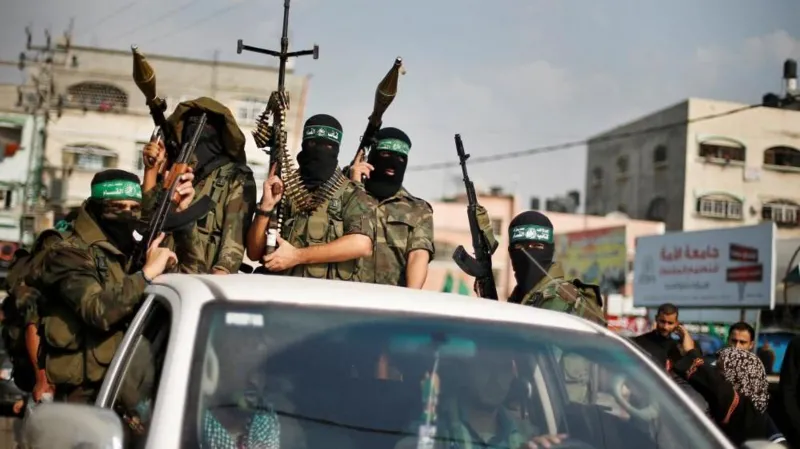
Israeli Prime Minister, Benjamin Netanyahu, said on Thursday that he had instructed the Israeli military to expand its control in Gaza to 70 percent of the territory.
Speaking during a conference in the occupied West Bank, Netanyahu said Israel was increasing pressure on Hamas through its military operations in the enclave.
“We are now in 60% of the territory of the Gaza Strip. We were at 50%. We moved to 60%,” he said. “My directive is to move to, take it step by step, first of all 70. Let’s start with that.”
As he addressed the audience, attendees reportedly urged him to extend Israeli control across the entire Gaza Strip.
The remarks came despite maps reportedly shared by the Israel Defense Forces with international aid organisations in late April indicating that Israeli troops already held around 64 percent of Gaza.
Any further territorial expansion would likely push nearly two million Palestinians into an even smaller section of the already devastated coastal enclave.
Under the October 2025 ceasefire deal between Israel and Hamas, Israeli troops had withdrawn to a demarcation zone known as the “yellow line,” leaving them in control of about 53 percent of Gaza at the time.
On Tuesday, Hamas accused Israel of shifting that line, saying the move “constitutes an explicit and ongoing undermining of the ceasefire agreement, a serious violation of its provisions, and an exposed attempt to impose new facts on the ground by force, with the aim of entrenching military control over the Strip and undermining any real chance of stabilizing the situation or making de-escalation efforts succeed.”
Israel and Hamas are both expected to adhere to the US-brokered ceasefire agreement that came into force in October.
However, negotiations and implementation efforts have stalled, raising concerns that Gaza could end up permanently divided.
Nickolay Mladenov, the Bulgarian diplomat overseeing implementation of the agreement, warned earlier this month that if progress remains frozen, the “yellow line” could become “into a fence or wall, a permanent separation of Gaza.”
Mladenov also described worsening humanitarian conditions in the enclave, noting that “civilians are still being killed” and “families live in fear” of Israeli airstrikes.
Israel has continued carrying out strikes in Gaza during the ceasefire period, claiming Hamas has violated the truce by rebuilding its military capabilities.
According to the Palestinian Ministry of Public Health, more than 850 people have been killed in Gaza since the ceasefire began.
Earlier this month, Israel killed Izz al-Din al-Haddad, identified as the head of Hamas’ military wing. His successor was also killed in another strike 11 days later.
Israeli Defence Minister Israel Katz said Thursday on social media, “We vowed to eliminate everyone who led the October 7 massacre, and that is what will be done: They are all condemned to death everywhere.”
Mladenov also said Hamas has refused to disarm or surrender its weapons, an issue considered central to the future implementation of the ceasefire deal.
Under the agreement, Israeli troops are expected to gradually withdraw from Gaza once Hamas disarms and an international security force takes over parts of the territory.
While some countries have expressed readiness to join such a force, no timeline has been agreed for its deployment.
Meanwhile, with ceasefire progress stalled, Israel has steadily expanded its military presence in Gaza, further deepening its control over the war-ravaged enclave.