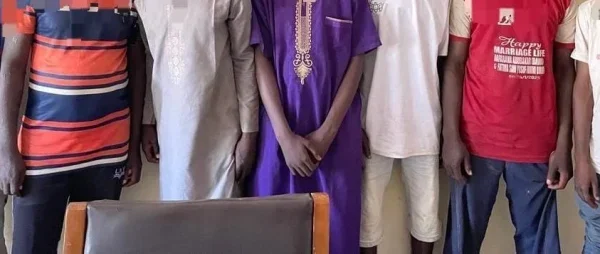
The Jigawa State Universal Basic Education Board has suspended the salaries of 239 public school teachers across the state for chronic absenteeism, with some found to have been absent from duty for as long as three years.
Chairman of the Board, Professor Haruna Musa, disclosed this development while speaking to journalists on Saturday in Dutse, following the conclusion of a five-day capacity-building workshop for 250 Arabic teachers. The training, which focused on computer literacy and effective lesson planning, was organised in partnership with the Colleges of Education in Gumel and Babura.
According to Prof. Musa, the decision to withhold the salaries was a disciplinary measure aimed at improving the state’s basic education sector. He described the situation as worrisome, noting that several of the affected teachers had abandoned their posts while continuing to draw salaries unlawfully.
“In one case, a primary school teacher who had been turbaned as a village head had not reported to work for three years but kept receiving both his salary and traditional entitlements,” the Chairman revealed.
He added, “This crackdown on absenteeism is necessary if we are serious about restoring integrity and quality in our education system. We cannot allow people to receive public funds without doing the work.”
Professor Musa further explained that the board has mandated the most egregious offenders to refund the salaries they had collected during their period of absence. “The teacher in question has been asked to return the total amount received while absent. He also has the option to remain in service, provided he repays the money,” he stated.
The SUBEB Chairman emphasized that the board is committed to enforcing discipline and holding staff accountable. “This should serve as a deterrent to others. No one will be allowed to short-change the system under our watch,” he said.
In a bid to strengthen transparency, Prof. Musa urged members of the School-Based Management Committees (SBMCs) to report any cases of habitual absenteeism in their communities. “We want to encourage community participation in monitoring our schools. Anyone who sees something wrong should report to the nearest SUBEB office,” he advised.
He also decried the attitude of some teachers who, he said, view their responsibilities as a formality. “Teaching is not just a job; it’s a duty to shape the future of our children. Any teacher who cannot commit to that has no place in our schools,” he added.
Prof. Musa concluded by announcing that the state government plans to recruit more teachers to address staffing shortages in public schools. “We’re committed to not only holding existing staff accountable but also filling the gaps to improve overall learning outcomes across Jigawa,” he said.