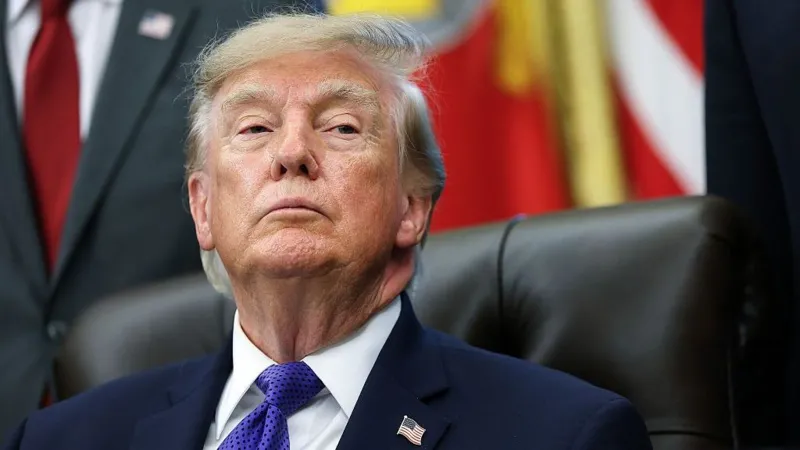
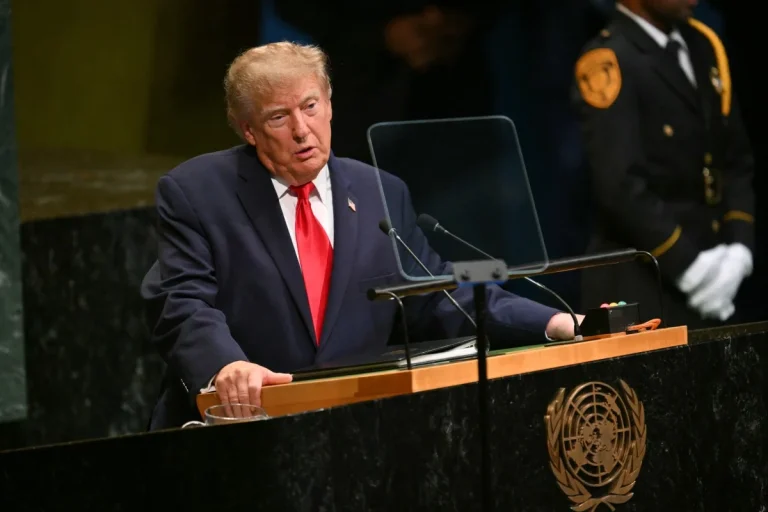
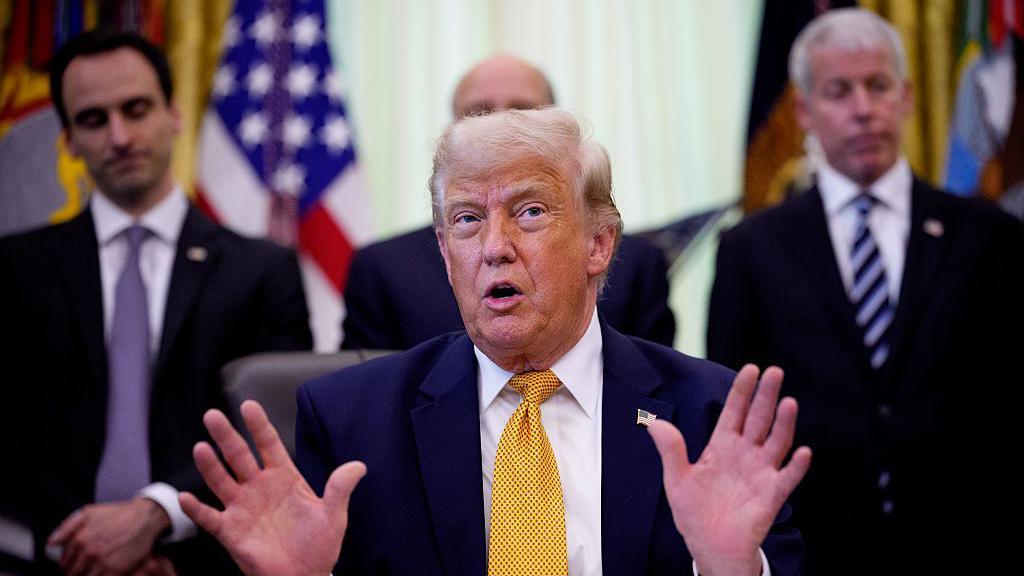
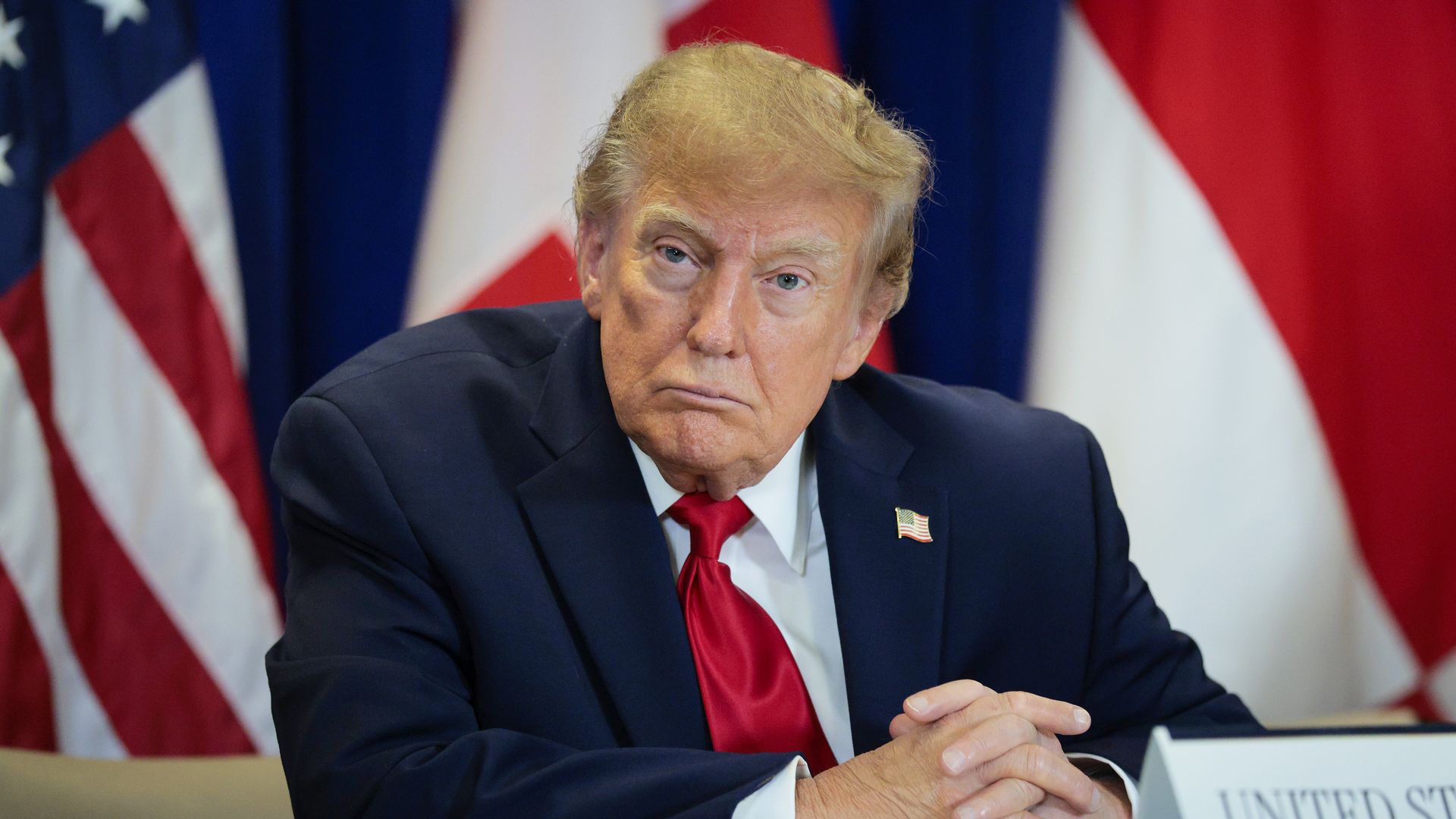
President Donald Trump has reportedly expressed frustration over reports revealing that US military munitions stockpiles have been significantly depleted, arguing that the disclosures undermine Washington’s leverage as his administration seeks to pressure Iran into negotiations.
According to senior US officials, Trump believes public attention on shrinking weapons reserves creates an impression of weakness at a critical stage of the standoff with Tehran, where he has repeatedly warned of possible further military action if Iran refuses to negotiate.
The issue reportedly dominated discussions during a Cabinet meeting at Camp David last week.
Sources familiar with the meeting said Trump was already aware of the status of the country’s weapons inventory but was angered that the information became public at such a sensitive moment.
Officials said the president’s frustration was directed less at the condition of the stockpiles than at the timing of the leaks, insisting he wanted the United States to project strength while dealing with Iran.
“The U.S. has massive amounts of ‘munitions,’ especially of certain types,” Trump wrote on Truth Social shortly after midnight Thursday.
“Additionally, large amounts are being manufactured and shipped to the U.S. as needed. Defense companies are building the largest number of plants and factories in our country’s history.”
Although defending the country’s military capabilities, Trump later acknowledged in the Oval Office that some advanced weapons are in shorter supply than others, while stressing that less sophisticated munitions remain readily available.
He also vowed to pursue those responsible for leaking the information.
Trump said his administration would seek “long term jail sentences” for anyone found to have disclosed the classified details.
Despite speculation over tensions within the administration, White House officials said Trump has not blamed Defense Secretary Pete Hegseth for the situation.
“He has never blamed Pete. This is all about the leakers,” one official said.
Trump reinforced his support for Hegseth in another Truth Social post, declaring he was “extremely happy with the job that Pete Hegseth is doing.”
The president has reportedly instructed the Justice Department to identify what he described as “treasonous” officials responsible for the disclosures.
Recent reports have highlighted the pressure on US weapons reserves.
CNN reported that the military has used nearly four-fifths of its Terminal High Altitude Area Defense (THAAD) missile inventory and about half of its Patriot interceptor stockpile since the conflict with Iran began.
Before the war, the Center for Strategic and International Studies estimated that the United States possessed roughly 2,200 Patriot interceptors of its latest variants and 452 THAAD missiles.
The issue has also raised concerns among Gulf allies, several of whom rely on American air defence systems.
Officials said regional leaders fear dwindling US supplies could reduce their ability to defend against any retaliatory missile or drone attacks from Iran if hostilities escalate.
According to a regional official, Iran has warned Gulf countries that renewed US military strikes would trigger retaliation against energy infrastructure and desalination facilities across the region.
Trump has recently held discussions with the leaders of Qatar and Saudi Arabia regarding the conflict.
Within the White House, some officials reportedly suspect that anti-war figures inside the administration leaked the information in an attempt to discourage further military escalation.
Concerns over munitions stockpiles also resurfaced before Trump ultimately decided to cancel planned strikes on Iran last weekend.
Military advisers had reportedly cautioned him on multiple occasions that continued operations risked further reducing supplies of key weapons.
Questions about America’s weapons inventory date back to the early stages of the conflict.
Trump previously discussed the issue with Hegseth after similar media reports emerged, with the defence secretary assuring him that the Pentagon was working to replenish supplies.
Senior military leaders, including Joint Chiefs of Staff Chairman Gen.
Dan Caine, had also warned before the conflict that a prolonged military campaign could place heavy strain on weapons stockpiles, particularly those supporting Israel and Ukraine.
Trump has since accused the previous administration of contributing to the shortage through military aid sent to Ukraine.
“We have a lot. I’d like to have more, to be honest, but so much was given to Ukraine by Biden,” Trump told reporters aboard Air Force One on July 27.
The Pentagon has long expressed concern about the defence industry’s ability to rapidly replenish advanced weapons inventories.
Those concerns have intensified following US military support for Israel, Ukraine and the conflict with Iran.
In response, Trump has met with executives from major defence companies, including Lockheed Martin, to accelerate weapons production.
Last month, he also invoked the Defense Production Act to expand manufacturing capacity, although officials acknowledge it will likely take years before production increases significantly strengthen US stockpiles.