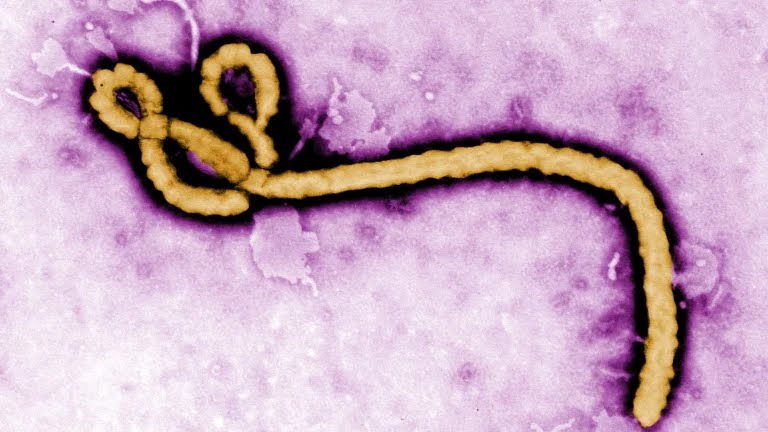
An American working in the Democratic Republic of Congo has tested positive for Ebola, the United States Centers for Disease Control and Prevention confirmed on Monday, as international efforts intensify to contain the outbreak spreading across the DRC and Uganda.
Although the CDC did not identify the patient, international Christian missions organization Serge confirmed that medical missionary physician Dr. Peter Stafford tested positive for the Bundibugyo strain of the Ebola virus after “presenting symptoms consistent with the virus.”
His wife, Dr. Rebekah Stafford, alongside another physician who had been treating patients at the onset of the outbreak, are currently under observation for possible symptoms but remain asymptomatic, according to the organization.
The couple’s four children are also being monitored.
The World Health Organization (WHO) on Sunday declared the outbreak a “public health emergency of international concern,” warning that rising infections and deaths across several health zones indicate “a potentially much larger outbreak.”
Africa Centres for Disease Control and Prevention (Africa CDC) Director-General, Dr. Jean Kaseya, said the outbreak had already claimed more than 100 lives.
“Currently, we have already more than 100 deaths due to this outbreak, and this is not acceptable,” Kaseya told CNN on Monday.
Africa CDC has since classified the outbreak as a Public Health Emergency of Continental Security, enabling a coordinated response across African countries.
Relief agencies warned that years of conflict and humanitarian challenges in the DRC have weakened surveillance systems that could have detected the outbreak earlier.
Aid groups also noted that continued violence in eastern Congo has worsened the healthcare crisis.
The US government on Monday invoked Title 42, a public health law that permits restrictions on entry into the country during outbreaks of infectious diseases. The measure will remain in effect for at least 30 days.
The law, first introduced in 1944, was previously used during the Covid-19 pandemic between 2020 and 2023.
Dr. Jeanne Marrazzo, chief executive officer of the Infectious Diseases Society of America, cautioned that travel restrictions alone may not stop the spread unless combined with proper screening measures and respect for human rights.
“Singling out non-US passport holders singles out non-US citizens,” she said. “Pathogens don’t recognize passports.”
Despite the measures, the CDC assessed the immediate threat to the American public as “low,” while stating that authorities would continue to monitor developments closely.
Africa CDC said there have been 395 suspected cases and 106 deaths linked to the outbreak in the DRC and Uganda.
According to CDC incident manager Capt. Satish K. Pillai, US health officials are working to evacuate seven individuals from the DRC to Germany, including the infected American.
WHO reported that the outbreak is concentrated in the northeastern Ituri province of the DRC, while neighboring Uganda has confirmed two laboratory-tested cases, including one death, in the capital Kampala.
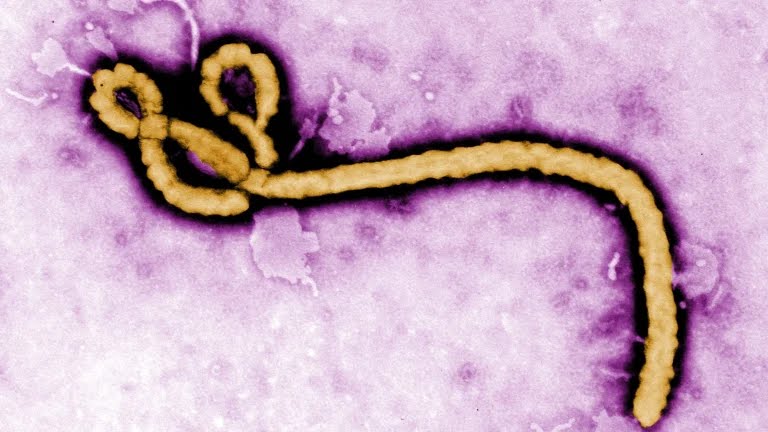
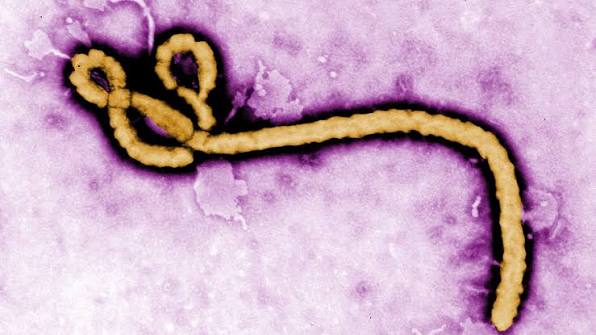
The outbreak is being driven by the Bundibugyo strain of Ebola, for which there are currently no approved vaccines or treatments.
Symptoms of Ebola include fever, muscle pain, rash and, in severe cases, bleeding. The virus spreads through direct contact with bodily fluids or contaminated materials.
Médecins Sans Frontières (MSF), also known as Doctors Without Borders, estimates that the Bundibugyo strain has a fatality rate of between 25 and 40 percent.
Health workers in the region appealed for urgent international assistance as they struggle to contain the outbreak.
“We are also appealing to all people and organizations capable of supporting this battle against the infection,” Dr. Patient Mazirane, medical director at Universelle Clinic in Bunia, told CNN on Monday.
“This is a major battle which requires enormous resources in order to save all those who can still be saved from this illness,” he added.
Another resident, Jean-Faustin Baraka, warned that the current outbreak “seems even more deadly” than previous Ebola waves and urged health organizations to act swiftly.
From Monday, US health authorities began implementing additional screening procedures for travelers arriving from affected areas and introduced restrictions on non-US passport holders who recently visited Uganda, the DRC or South Sudan.
The US State Department also issued fresh travel advisories warning Americans against visiting the DRC and Uganda due to the outbreak.
WHO announced that emergency medical supplies, including protective equipment, tents and hospital beds, had arrived in Bunia to support frontline response efforts.
Oxfam’s DRC country director, Dr. Manenji Mangudu, warned that deaths occurring within communities suggest there are many more undetected infections.
“There are already deaths in the community. When people die at home, it means there are many more undetected cases,” Mangudu said.
Health experts also raised concerns after WHO confirmed that four health workers were among the suspected deaths linked to the outbreak.
Dr. Matt Mason of Australia’s University of the Sunshine Coast said the infections among medical personnel point to serious weaknesses in infection prevention systems.
This marks the 17th Ebola outbreak in the DRC since the virus was first discovered there in 1976, according to WHO. Public health experts say the country remains vulnerable because fruit bats, considered the virus’ natural reservoir, are common in the nation’s forest regions, where many communities interact closely with wildlife.