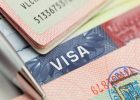
The U.S. State Department announced on Wednesday that it has resumed the previously suspended process for international student visa applications, now requiring all applicants to grant access to their social media accounts for government scrutiny.
According to the department, consular officers will assess posts and private messages for any content that may reflect antagonism toward the United States, its people, institutions, foundational ideals, or way of life.
In a public notice issued the same day, the department confirmed it had reversed its May decision to pause visa processing.
However, it emphasized that any applicant unwilling to make their social media profiles “public” for review could be denied a visa.
Officials noted that such refusals could signal efforts to conceal potentially disqualifying content.
In May, the Trump administration halted new student visa interview scheduling while preparing to implement stricter reviews of applicants’ online activity, officials said.
The uncertainty left many prospective students around the globe anxious, with time running out to finalize travel plans and accommodation ahead of the academic year.
For some, relief came quickly. On Wednesday afternoon, a 27-year-old Ph.D. student from Toronto secured a visa interview for the following week.
The student, a Chinese national identified only as Chen, is planning to participate in a U.S.-based research internship beginning in late July.
“I’m really relieved,” said Chen. “I’ve been refreshing the website couple of times every day.”
Students from nations including China, India, Mexico, and the Philippines have been sharing updates and experiences on social media as they closely monitor U.S. consular activities and press briefings for information on interview availability.
Alongside reopening appointments, the State Department has directed consular posts to give preference to applicants enrolling at institutions where foreign students make up less than 15% of the total student body, a U.S. official revealed anonymously, as this detail has not been made public.
An Associated Press review of 2023 federal education statistics shows that more than 200 U.S. universities exceed that 15% foreign student threshold.
These include every Ivy League school and 26 public universities such as the University of Illinois and Penn State. When focusing only on undergraduates, about 100 institutions, predominantly private, also surpass that mark.
Foreign students have come under intensified review in recent months. Earlier in the year, the Trump administration abruptly revoked the legal study status of thousands, some of whom had committed only minor infractions such as traffic violations, before reversing its decision.
In another controversial move, the administration has targeted Harvard University, seeking to impose a 15% cap on international student enrollment.
Trump has justified the measure by saying Harvard is too reliant on foreign tuition and students.
As part of these broader enforcement efforts, the State Department said the decision to vet applicants’ social media content would ensure “we are properly screening every single person attempting to visit our country.”
An internal directive to consular officers instructed them to flag any “indications of hostility toward the citizens, culture, government, institutions, or founding principles of the United States.”
Critics warn the policy may infringe on civil liberties.
“This policy makes a censor of every consular officer, and it will inevitably chill legitimate political speech both inside and outside the United States,” said Jameel Jaffer, executive director at the Knight First Amendment Institute at Columbia University.
The new visa rule also comes amid the Trump administration’s wider push for international cooperation on security screenings.
Over the weekend, the State Department issued a cable urging 36 countries to enhance their traveler vetting systems. Nations that fail to comply within 60 days risk being added to the U.S. travel ban list, which currently includes 12 countries.