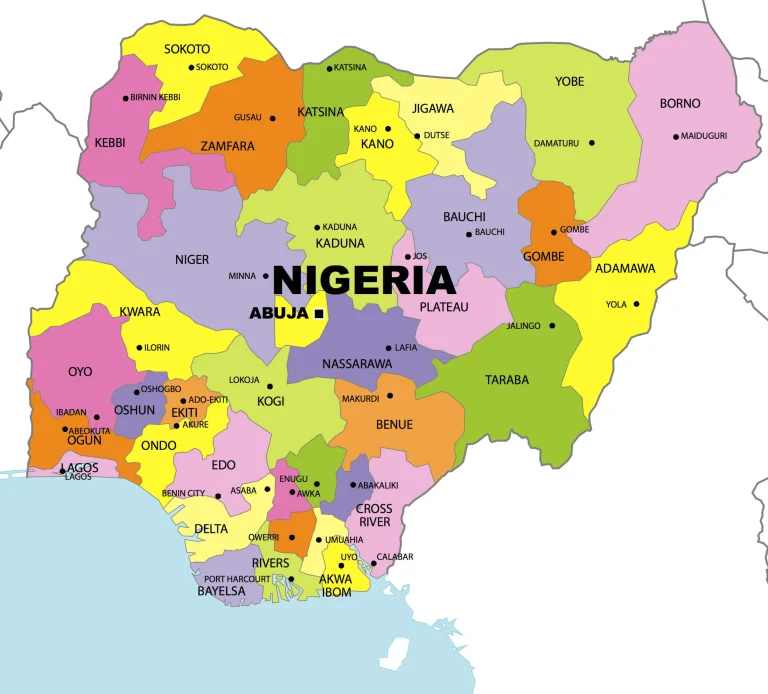
The newly elected Chair of the United States Commission on International Religious Freedom, Asif Mahmood, has identified Nigeria as his top priority, expressing concern over continued attacks on religious communities across the country.
The Punch reported that Mahmood made this known in an interview with OSV News, where he described Nigeria’s religious freedom situation as a major concern for the independent, bipartisan US federal commission responsible for monitoring religious freedom globally.
He said, “My top priority is going to be — if you ask me, ‘pick one place’ — it’ll be Nigeria.”
According to Mahmood, the commission is particularly concerned about violence perpetrated by Islamic extremist organisations, including Boko Haram.
He, however, noted that Muslim communities have also suffered significantly from the violence.
Insecurity arising from clashes between farmers and herders, he added, has also resulted in violence and displacement in various parts of Nigeria.
The USCIRF had previously called on the administration of US President Donald Trump to redesignate Nigeria as a “country of particular concern”, a classification applied by the US State Department to countries or entities involved in systematic violations of religious freedom.
Trump redesignated Nigeria as a Country of Particular Concern in 2025.
Also in 2025, the United States carried out a deadly strike in Nigeria on Christmas Day, which Trump said was aimed at Islamic State terrorists accused of persecuting Christians in the country.
Mahmood stressed that Nigeria’s significance as Africa’s most populous country, with substantial Christian and Muslim populations, made the situation particularly important to the commission.
He said USCIRF wanted to see concrete improvements in the country, including an end to what he described as “misery and that brutality.”
The commission, he added, was also interested in tangible outcomes, including the recovery of victims of kidnapping.
Trump recently praised President Bola Tinubu in a letter released by the Nigerian Presidency, commending his efforts to tackle “the violence affecting Christian communities.”
However, Mahmood criticised the Nigerian government, saying it “continues to tolerate and fail to respond to violent attacks against religious communities by non-state actors and expose them to a violent interpretation of Islam.”
He cited USCIRF’s 2026 annual report, released on March 4, which maintained the commission’s concerns about religious freedom and security in Nigeria.
Mahmood explained that the commission’s assessment was based largely on the experiences of families and communities and whether people could practise their faith safely.
He said, “Our assessment is what is happening on the ground, what is happening to the households, the communities, how many people can go to church and perform their services, how many people, how many churches actually can perform those services without having a huge guarded facility which everybody cannot afford.
“So, I would say at this point we don’t see the corner being turned, but hopefully we’ll move in that direction,” he said.
USCIRF recently welcomed new commissioners after the terms of its previous members expired in May.
Mahmood was among two commissioners who were reappointed.
However, three positions reserved for commissioners nominated by the White House remain vacant under the Trump administration.
The position of ambassador-at-large for international religious freedom at the US Department of State is also vacant.
Mahmood said USCIRF was now able to resume its operations after reaching the required quorum, but called on the administration to fill the remaining vacancies to enable the commission to function at full strength.
“We fortunately have now six commissioners to start our business now,” Mahmood said.
The US Congress established USCIRF and the ambassador-at-large position through the International Religious Freedom Act of 1998.
The ambassador is tasked with advising the President and the Secretary of State on international religious freedom matters.
A previous nomination by Trump for the ambassador-at-large position expired without being renewed.
Mahmood also reaffirmed USCIRF’s bipartisan nature, stressing that its mandate covers people of every faith who face religious persecution or repression.
“Our priority and our goal and our mission is to help anybody and everybody all over the world who is repressed or oppressed because of their faith or religion,” he said.
In June, the US House of Representatives passed the United States Commission on International Religious Freedom Reauthorization Act of 2026, H.R. 1744, in a bipartisan vote.
The bill, sponsored by Rep. Chris Smith, R-N.J., seeks to extend USCIRF’s authorisation and annual funding through fiscal year 2028.
Speaking during the June debate on the legislation, Smith said, “USCIRF is a genuinely independent force, a constructive influence on the State Department.”
He added, “USCIRF is important to millions of people of all faiths. I therefore ask all our colleagues to join us in reauthorizing it for two more years,” the legislation contended.
The US Conference of Catholic Bishops has backed the legislation, which is awaiting consideration by the Senate.