One of the top figures in Tren de Aragua, the cartel and US-designated terrorist organization, has been killed in a US military strike, according to President Donald Trump.
Hector Rusthenford Guerrero Flores, popularly known as Niño Guerrero, died in what Trump described as “a swift and lethal kinetic strike,” the US president announced Friday on Truth Social. Trump added that the operation was “coordinated closely with our friends in Venezuela, with whom we are working very well.”
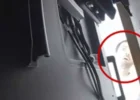
The president’s post also featured a video showing a green-roofed structure engulfed by a huge explosion, sending thick smoke into the air.
US Secretary of Defense Pete Hegseth later confirmed on X that the strike had been carried out earlier in the week in conjunction with Venezuelan security operatives.
US Southern Command Commander Gen. Francis Donovan also praised the operation in a statement on X, saying, “We extend our gratitude to the Venezuelan security forces for their support to the successful joint operation against a Tren de Aragua compound that resulted in the death of the narco-terrorist organization’s leader.”
Back in December, the US Attorney’s Office for the Southern District of New York accused Guerrero of directing and facilitating terrorist activities inside the United States.
The charges formed part of a wider crackdown targeting Venezuela, its leadership and criminal organizations operating within the country.
At the time, US Attorney Jay Clayton labeled Guerrero as the “mastermind of Tren de Aragua’s evolution from a Venezuelan prison gang into a transnational terrorist organization.” The US government also placed a $5 million reward on information that could lead to his arrest. Clayton has since been nominated by Trump to serve as Director of National Intelligence.
Authorities had earlier arrested Guerrero’s brother in Spain in March 2024 over allegations including terrorism, human trafficking, arms trafficking, extortion, money laundering and criminal association. Spanish investigators said the arrest led to the dismantling of what was believed to be the country’s first Tren de Aragua cell.
The gang, which originated inside a Venezuelan prison, has gradually expanded its influence across Latin America and into the United States.
Although the true scale of its operations remains uncertain, US authorities say the organization is heavily involved in human trafficking and crimes targeting migrants.
It has also been linked to kidnapping, extortion, drug smuggling and money laundering, according to the US Treasury Department’s Office of Foreign Assets Control.
Over the years, Tren de Aragua has spread fear not only in Venezuela but also in countries including Bolivia, Colombia, Chile and Peru.
Transparency Venezuela reported that the group adopted its current name between 2013 and 2015, although its criminal activities existed before then.
Law enforcement agencies in the US continue to face difficulties determining how many members of the gang are already operating in the country. Some Venezuelan migrants in Florida and other states have claimed they are witnessing the same criminal patterns they fled back home.
However, Insight Crime, an organization focused on organized crime research, stated in October 2025 that Tren de Aragua’s “reputation appears to have grown more quickly than its actual presence in the United States.”
Shortly after returning for his second term, Trump officially designated Tren de Aragua as a terrorist organization.
The administration also faced criticism in March after deporting more than 200 individuals alleged to be linked to the gang to a notorious maximum-security prison in El Salvador. Critics argued that authorities failed to provide sufficient proof of gang ties, while several deportees denied involvement with the group.
Beginning around September last year, the Department of Defense intensified operations against suspected drug-smuggling boats across the Caribbean and eastern Pacific regions.
Reports indicate that over 200 people have died in those strikes. However, the Trump administration has not publicly released evidence confirming the boats carried narcotics or were connected to drug cartels.
Sources familiar with the matter also disclosed that the CIA conducted a drone strike in December on a Venezuelan coastal port facility allegedly used by Tren de Aragua to store and transport drugs.
In January, Trump ordered a military operation in Venezuela that resulted in the capture of then-President Nicolás Maduro.
Maduro was later transferred into US custody, where he pleaded not guilty to charges including narco-terrorism conspiracy, cocaine importation conspiracy, possession of machine guns and destructive devices, and conspiracy related to those weapons charges.