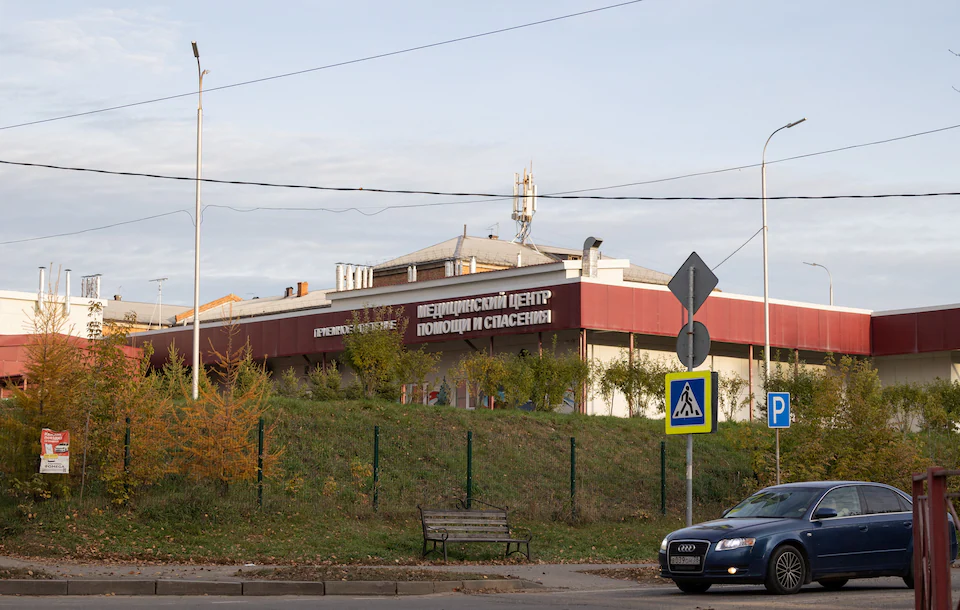
A powerful 8.8 magnitude earthquake struck off Russia’s remote Kamchatka Peninsula, triggering widespread tsunami alerts across the Pacific region, including Hawaii, Alaska, the US West Coast, Canada, and parts of South America.
The earthquake, tied as the sixth strongest ever recorded and the most powerful since the 2011 Japan disaster, hit approximately 74 miles (119 kilometers) southeast of Petropavlovsk-Kamchatsky at a depth of 20.7 kilometers, according to the US Geological Survey.
Though early tsunami waves appeared milder than forecast, experts caution that wave intensity can vary widely and may continue to impact coastlines hours after the initial impact.
Authorities are urging people to steer clear of coastal areas until warnings are lifted.
In Honolulu, Adam Jung was seen pushing water and supplies out of a store as residents rushed to prepare following tsunami warnings.
People in Hawaii, some parts of the US west coast and Japan have been told to evacuate, according to BBC.
Hawaii’s Governor, Josh Green issued an urgent call for evacuations, “You need to expect that there will be flooding on the islands and it will be imminent after the wave hits,” he said during a press briefing. “It will not hit one beach, it will wrap around the islands. If we’re calm, we’re going to be fine.”
Mayor Rick Blangiardi echoed the call for action, “We need people to stay calm but also to act accordingly. If you can get to higher ground if you’re in a low-lying area, please do that.”
Emergency shelters opened across Oahu, Kauai, and Maui, while hotels on the west coast of the Big Island evacuated guests.
Japan, Russia, and Alaska were among the first to report tsunami waves. On Japan’s northern island of Hokkaido, sirens sounded as waves of up to 60 centimeters (2 feet) were observed.
Over 1.9 million people were advised to evacuate, with more waves expected despite initial surges falling short of early predictions of up to three meters.
Footage showed people in Japan seeking safety on rooftops. In Russia’s Severo-Kurilsk district, authorities declared a state of emergency following multiple tsunami waves that swept away boats and storage containers.
Nearly 300 residents were evacuated from the port area.
Russian authorities recorded a tsunami wave between 3 and 4 meters high in Kamchatka’s Yelizovo District.
In Alaska, the volcanic island of Amchitka registered a one-foot tidal rise—the first confirmed tsunami effect in the US.
The earthquake, centered in the seismically volatile Pacific Ring of Fire, also triggered two major aftershocks of magnitudes 6.3 and 6.9, followed by dozens more above magnitude 5.
Tsunami warnings, the highest level of alert, are active for Hawaii, Alaska’s Aleutian Islands (from Samalga Pass to Attu), and California’s coast from Cape Mendocino to the Oregon border.
Advisories are in place for the rest of the US West Coast, British Columbia, and parts of Alaska.
Mexico’s tsunami alert spans from Ensenada to Panama, while South American countries such as Chile, Ecuador, and Peru have also activated warnings.
Ecuador’s Oceanographic and Antarctic Institute noted that the Galapagos Islands may face waves as high as 1.4 meters (4.6 feet).
According to the US National Weather Service, the largest waves, up to 3 meters (almost 10 feet), may strike Russia, the northwestern Hawaiian islands, and parts of Ecuador, with elevated water levels expected in coastal zones throughout Asia, the Pacific islands, and South America.