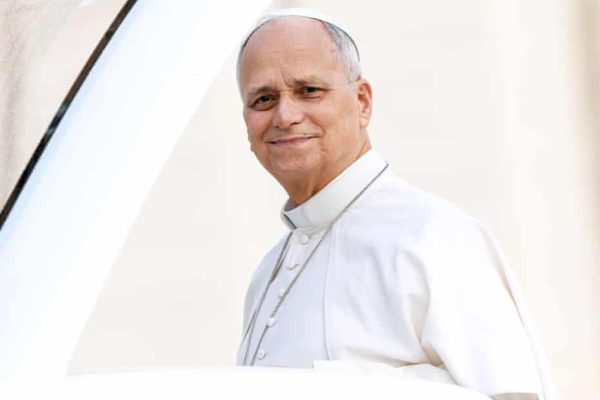
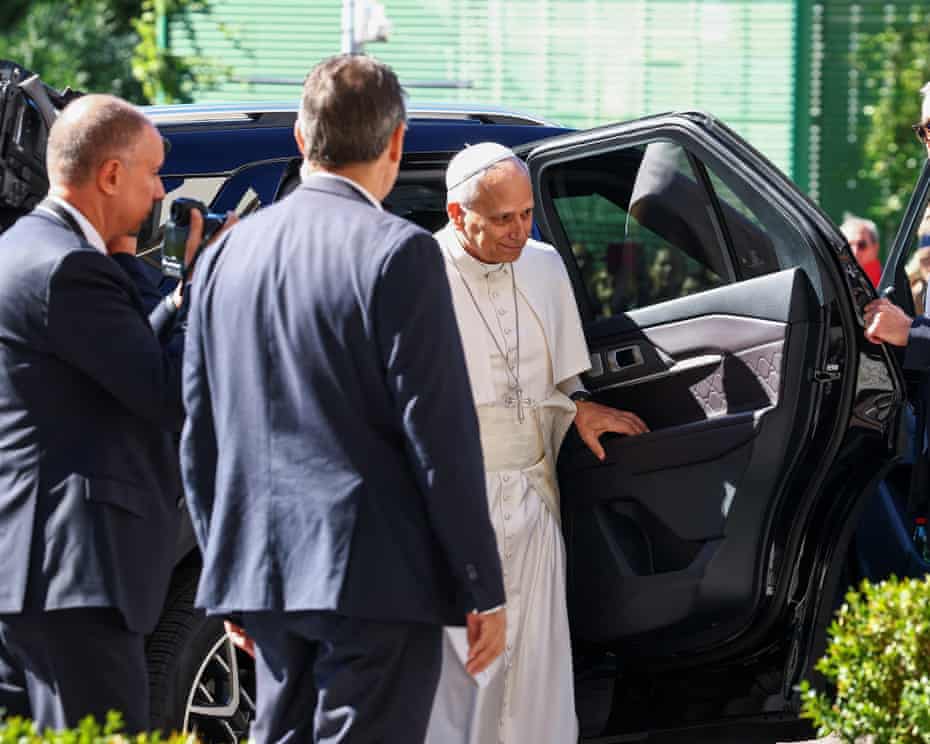
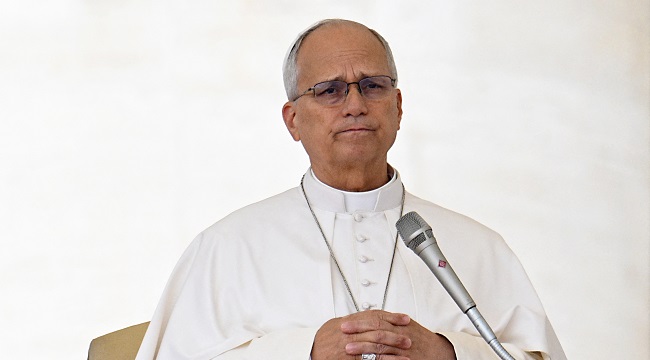
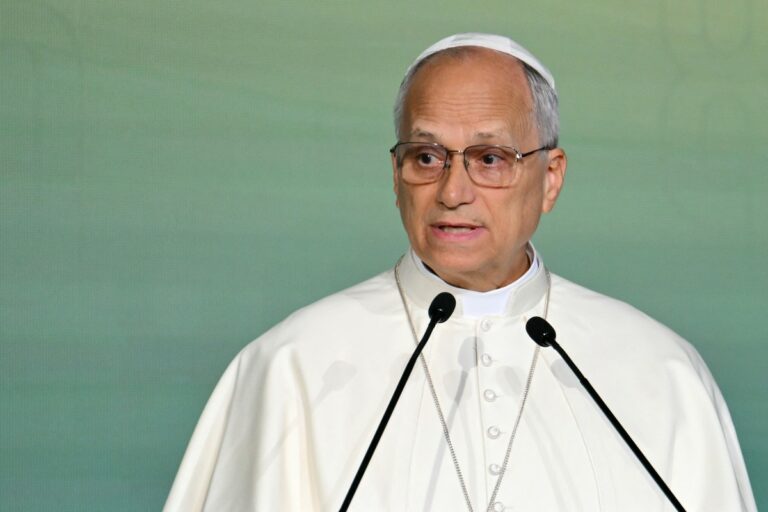
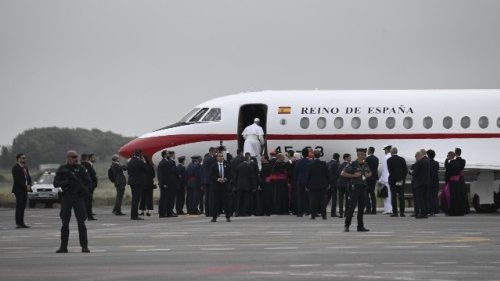
Pope Leo XIV is expected to arrive in Angola on Saturday, marking the third leg of a significant African tour that has also featured a growing exchange of words with US President Donald Trump over the Middle East conflict.
The pontiff will become only the third pope to visit the oil-rich nation, where about 44 percent of citizens identify as Catholic. His visit follows those of Pope John Paul II in 1992 and Pope Benedict XVI in 2009.
Before landing in Luanda at around 1400 GMT, Leo will conclude a three-day stay in Cameroon with an open-air Mass at Yaounde airport.
Upon arrival in Angola’s capital, where large billboards bearing his image have been mounted in anticipation, he is scheduled to meet President João Lourenço and deliver an address.
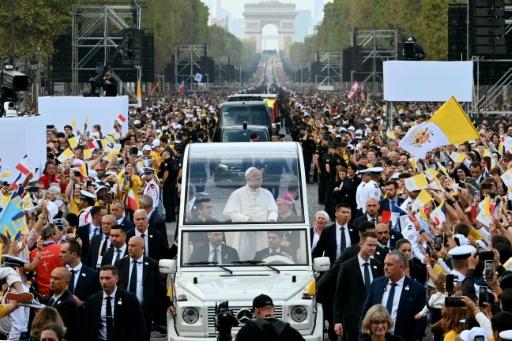
The first American pope is expected to draw massive crowds, with tens of thousands of faithful likely to gather, just as they did in Cameroon, to see the leader of the world’s 1.4 billion Catholics before he departs on Tuesday.
“It’s as if God were very close to us,” 40-year-old human resources manager Helena Maria Miguel said of the pope’s visit.
Leo’s strong calls for global peace are expected to resonate in Angola, a country that emerged from a devastating 27-year civil war in 2002 following its independence from Portugal in 1975.
Throughout his 11-day, four-country African tour, the pope has delivered sharp messages against corruption, the exploitation of Africa’s natural resources and the risks posed by artificial intelligence.
His remarks have grown more pointed in recent days amid ongoing tensions with Trump, though he has not mentioned the US leader directly.
After Trump’s Catholic Vice President JD Vance urged the Vatican to “stick to matters of morality”, Leo on Thursday said the world was “being ravaged by a handful of tyrants” and intensified his criticism of those who invoke religion to justify conflict.
During his time in Cameroon, he also urged leaders to confront corruption and condemned “those who, in the name of profit, continue to seize the African continent to exploit and plunder it”.
These messages are likely to strike a chord in Angola, where despite vast oil wealth, about one-third of the population lives below the poverty line.
The economy remains heavily reliant on crude oil, making it vulnerable to global price swings, while corruption scandals have extended even to the family of former president José Eduardo dos Santos.
The visit also comes at a difficult time for the country. Heavy rains have killed nearly 50 people in the coastal Benguela region since early April, while a deadly crackdown on cost-of-living protests less than a year ago left 30 people dead and hundreds detained.
“There is a lot of suffering, a lot of poverty in Angola. I hope the pope will see with his own eyes the needs of the youth here,” said Antonio Masaidi, a 33-year-old engineer.
On Sunday, Leo will celebrate a large open-air Mass in Kilamba, on the outskirts of Luanda, where preparations, including the construction of a large food court, are underway to accommodate thousands of worshippers.
Later in the day, he will travel by helicopter to Muxima, about 130 kilometres southeast of the capital. The village is home to a 16th-century church overlooking the Kwanza River and is regarded as one of southern Africa’s most important pilgrimage sites.
A new basilica is currently being built there as part of a multimillion-dollar government initiative aimed at boosting tourism.
The site also carries historical significance, as enslaved people were once baptised there before being transported out of Africa.
“It is a historic moment of grace, a moment of profound emotion, with tears in our eyes and gratitude in our hearts,” the rector of the shrine, Father Mpindi Lubanzadio Alberto, told ACI Africa.
On April 20, the pope is scheduled to travel more than 800 kilometres from Luanda to Saurimo, where he will visit a retirement home and celebrate another Mass before departing the following morning.
He will then proceed to Equatorial Guinea, the final stop of his extensive 18,000-kilometre journey, which began in Algeria.