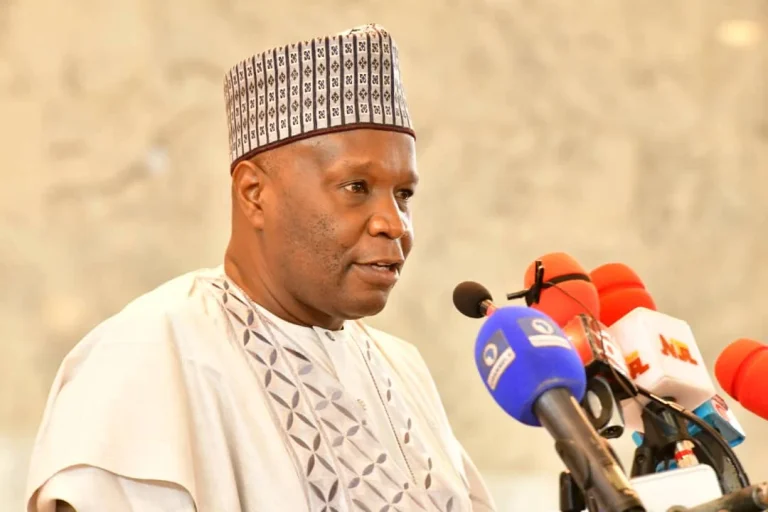
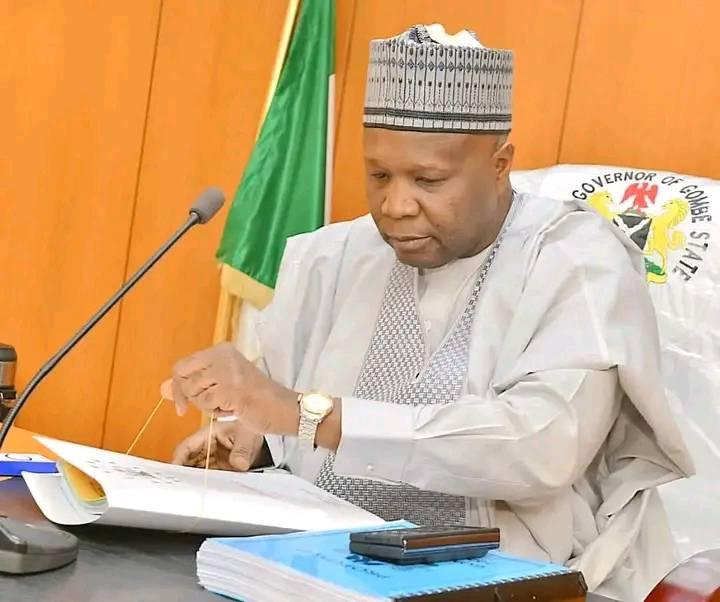
Gombe State Governor and Chairman of the Northern States Governors’ Forum, Muhammadu Yahaya, has warned that the rising number of out-of-school children in Northern Nigeria poses a serious threat to the region’s development, stability and security.
Yahaya called on governors in the region to develop a common strategy to address the crisis, stressing that poverty, insecurity and limited access to education must be tackled through collective action.
The governor made the call on Saturday at the 2026 Biennial Dialogue, Lecture, Dinner, Awards and Recognition Ceremony organised by the Barewa Old Boys’ Association, Gombe State Chapter.
The event, themed, “The Scourge of Out-of-School Children in Nigeria and the Implications for National Security and National Development,” focused on the growing education gap and its wider consequences.
Yahaya cited estimates indicating that about 18 million Nigerian children were out of school, with Northern states accounting for a significant proportion.
He described the situation as a major development challenge, warning that millions of children were being denied opportunities to acquire the knowledge and skills needed for a productive future.
“Behind these statistics are real human stories: children whose dreams are cut short by poverty, girls denied education by circumstances beyond their control, and young boys growing up on the streets without the knowledge and skills needed to build their future,” he said.
The governor stressed that the crisis extended beyond the education sector, describing it as an emergency with serious implications for national security.
“We must therefore recognise that the out-of-school children crisis is not merely an educational problem. It is a development emergency and a national security concern,” he stated.
He argued that military operations alone would not guarantee lasting peace without corresponding investments in education, employment and human capital development.
Yahaya urged Northern governors to move beyond individual state policies and establish a regional framework that would address the common challenges confronting the area.
Reflecting on the region’s educational history, he cited institutions such as Barewa College as examples of the vision that produced generations of leaders, urging governments to revive that commitment to quality education.
He proposed that states across the North consider establishing institutions modelled after Barewa College to expand access to quality education and encourage unity among young people.
The governor also cautioned against concentrating investments on tertiary education while basic education continued to suffer.
He disclosed that his administration had constructed approximately 400 primary schools in Gombe State and was taking steps to improve teacher training and recruit qualified personnel.
According to him, addressing the out-of-school children crisis should go beyond enrolling children in classrooms to ensuring that they complete their education and acquire useful skills.
“It is not just in getting them off the streets and returning them to school. It is to ensure that they qualify and get the skills and other education that they desire,” he said.
Yahaya further advocated the inclusion of vocational and technical training in the region’s educational strategy to provide alternative opportunities for children who may not follow conventional academic pathways.
He also called for greater involvement of traditional rulers, religious leaders and parents in encouraging school attendance and ensuring that children remain in the education system.
The governor warned that poverty, insecurity and educational exclusion were interconnected challenges that required simultaneous intervention.
He urged the Barewa Old Boys’ Association to translate discussions from the event into practical interventions through scholarships, mentorship programmes, advocacy and partnerships.
“Actions that follow discussions in forums like this are what matter. So, there is a need for us to provide this strategy,” he said.
Yahaya also pledged to present the recommendations from the dialogue to the Northern States Governors’ Forum for consideration, urging political leaders to put aside partisan interests and embrace a shared development agenda.
“Whatever it takes, we must align. The politics of government will not take us anywhere. We will continue to suffer,” he warned.
Earlier, the National President of the Barewa Old Boys’ Association, General Alwali Jauji Kazir (retd.), described the out-of-school children crisis as a developmental, economic and social challenge requiring urgent collective intervention.
Kazir cautioned against portraying children excluded from education as security threats, noting that they were vulnerable individuals whose circumstances required support and protection.
He called for reliable data to identify affected children, improved access to basic education, safer learning environments and interventions tailored to the needs of different communities.
The BOBA president also pledged the association’s commitment to supporting disadvantaged children through scholarships, mentorship, advocacy and partnerships with relevant stakeholders.
He maintained that sustainable development and lasting peace would remain difficult to achieve if millions of Nigerian children continued to be denied access to education.