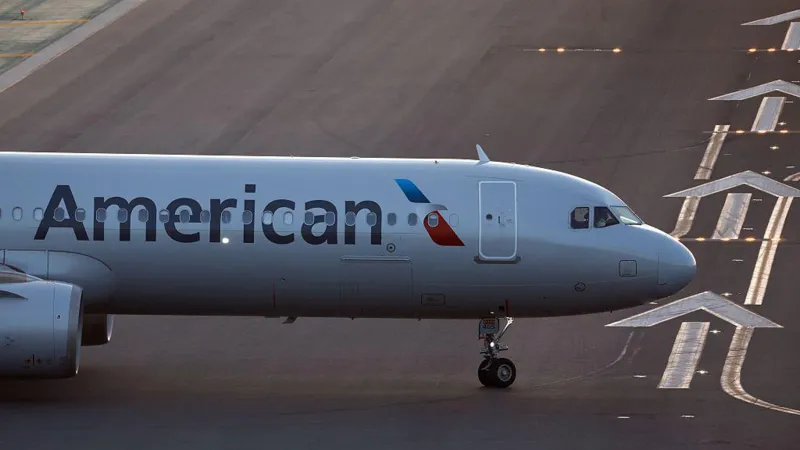
One passenger was treated after a laptop caught fire aboard an American Airlines flight during its approach to Dallas Fort Worth International Airport in Texas.
American Airlines Flight 2398, an Airbus A321 travelling from Atlanta, Georgia, landed safely at the airport on Friday after smoke was reported from a passenger’s electronic device.
According to audio obtained by the BBC’s US reporting partner, CBS News, the pilot informed air traffic control that there was a “cabin fire in the back of the airplane” and said, “the flight attendants are trying to put it out now”.
The pilot also reported, “I think we have about four to five passengers that were burned by the laptop. The laptop is contained about mid-aircraft.”
The airline said one passenger received medical attention after the aircraft landed and was later released.
American Airlines said the plane landed safely “after reports of smoke from a customer’s device during landing. We thank our crew for their professionalism and swift response to quickly contain the device.”
Emergency personnel met the aircraft at the gate as part of standard procedures.
The incident highlights ongoing concerns over lithium-ion batteries used in laptops and other electronic devices.
The US Federal Aviation Administration warns that such batteries can overheat if damaged, exposed to water, overcharged or improperly packed.
The FAA has recorded 58 verified incidents involving lithium batteries this year in which smoke, fire or extreme heat was reported.
Over the past two decades, laptops have been involved in 84 such cases.
The regulator requires lithium-battery-powered devices to be carried in passengers’ carry-on luggage rather than checked baggage.
The latest incident comes amid growing concerns about fires linked to power banks and other portable chargers on aircraft.
In May, an EasyJet flight travelling from Egypt to the UK was diverted to Rome after a power bank was found charging inside luggage stored in the aircraft’s hold.
UK aviation authorities have also warned that power banks are increasingly contributing to serious safety incidents on flights, citing the risk of overheating and fires.