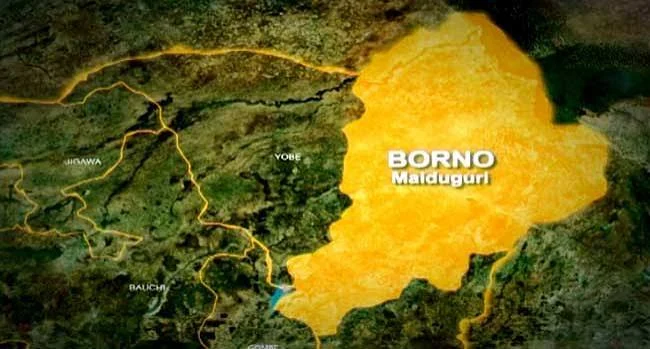
The Nigerian military says more than one million households displaced by years of Boko Haram insurgency have been resettled in different parts of Borno State following sustained security and stabilisation operations.
The Theatre Commander of Operation Hadin Kai, Major General Abdulsalami Abubakar, disclosed this while briefing journalists during a Defence Headquarters–organised media tour in Maiduguri on Wednesday.
Abubakar explained that the improved security situation has made it possible for thousands of families to return to communities that were previously deserted due to persistent terrorist attacks.
According to him, areas such as Malam Fatori, Kekeno, Mala Jamel and Yelwa have witnessed significant resettlement, with Malam Fatori accounting for a large portion of the returning population through phased programmes.
“Our stabilisation efforts are aimed at creating an environment where people can safely return to their ancestral homes and resume their means of livelihood,” the Theatre Commander said.
“In Malam Fatori alone, we have implemented phased resettlement, and as of now, over one million households have been successfully returned.”
He noted that Kukawa, once largely abandoned at the peak of the insurgency, has now regained economic life, while Kekeno has also been reopened for civilian habitation.
Abubakar attributed the success of the resettlement programme to close collaboration between the military and the Borno State Government, adding that most of the targeted locations are now secure.
“With the support of the state government, we have stabilised nearly 80 per cent of the areas earmarked for resettlement.
Communities like Kukawa are now active again, with visible socio-economic activities,” he stated.
The military commander also revealed that stabilisation operations are ongoing in Meirari, located about 30 kilometres from Monguno, to pave the way for the safe return of residents.
Beyond civilian resettlement, Abubakar said troops have helped restore critical infrastructure, including the construction of a Forward Operating Base and the rehabilitation of the Duji Bridge, which was destroyed by insurgents over a decade ago.
Duji, a border town linking Nigeria to the Republic of Niger, was abandoned for years due to insecurity.
The military says efforts are underway to fully reopen the area, including plans to restore immigration and customs services that were suspended during the height of the conflict.
Despite the gains recorded, Abubakar acknowledged that the use of improvised explosive devices remains a major threat, particularly along poorly maintained roads.
“IEDs remain one of our biggest challenges. Terrorists often resort to planting explosives when they cannot confront our troops directly,” he said.
“Poor road conditions, especially along routes like Gubio to Damasak, make it easier for them to carry out such attacks.”
He added that road rehabilitation efforts are ongoing to reduce the risk to civilians and security personnel, expressing confidence that continued stabilisation would lead to the return of more displaced families.
Years of insurgency in Nigeria’s North-East forced millions of residents to flee their homes, crippling livelihoods and destroying infrastructure.
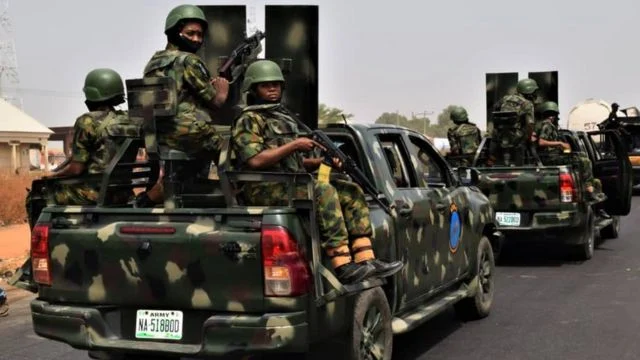
The military says sustained counter-insurgency operations under Operation Hadin Kai are gradually restoring stability and enabling long-term recovery across the region.