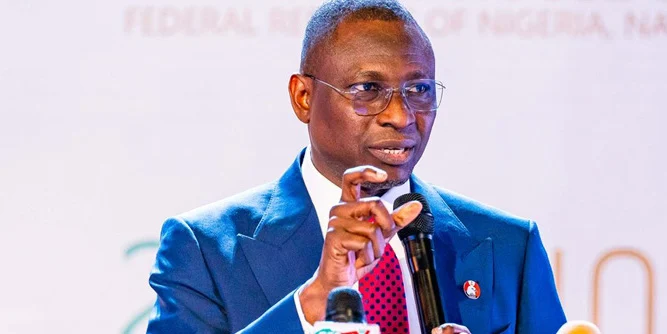
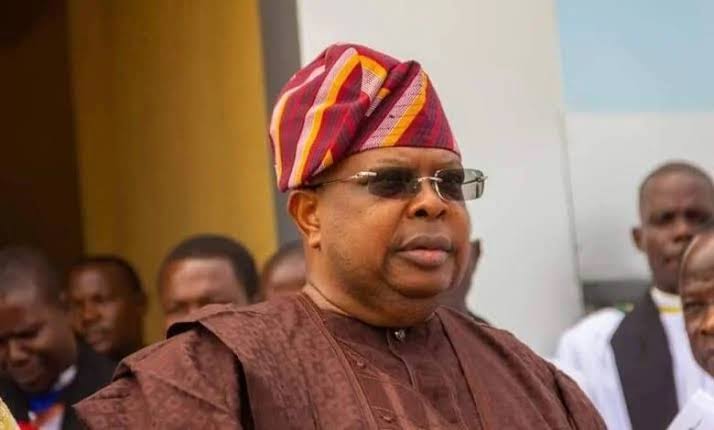
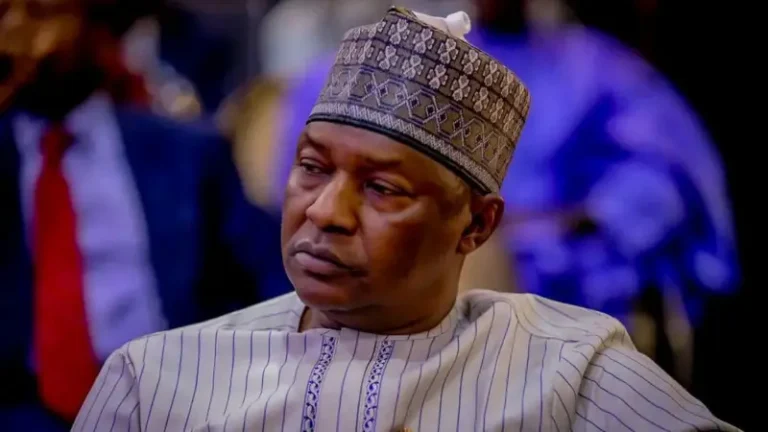
Former Attorney-General of the Federation and Minister of Justice, Abubakar Malami, SAN, has rejected allegations levelled against him by the Economic and Financial Crimes Commission insisting the claims lack merit and defy logic.
Malami, in a statement issued on Sunday by his media aide, Mohammed Doka, confirmed that he honoured an EFCC invitation on November 28, 2025, over allegations of abuse of office and money laundering relating to the recovery of the Abacha loot. According to him, the accusations “crumbled when confronted with verifiable facts.”
“The EFCC’s position is that I duplicated a recovery process allegedly completed by a Swiss lawyer, Mr. Enrico Monfrini, before I assumed office. This allegation collapses immediately when subjected to facts and elementary logic,” he said.
Malami maintained that contrary to the EFCC’s claim, no funds had entered the Federation Account as of 2016, which, he argued, made it impossible to classify the process as completed.
“Recovered funds can only be said to be complete when lodged into the Federation Account. As at 2016, there was no such lodgement. There was therefore no completed recovery in existence, and nothing whatsoever to duplicate,” he stated.
He further pointed out that Monfrini himself sought re-engagement in December 2016 for the same recovery effort, a development he described as clear evidence that the work had not been concluded prior to his tenure.
“It is entirely illogical for a lawyer to apply in December 2016 to be engaged to recover funds he purportedly recovered two years earlier. That singular fact exposes the internal contradiction and absurdity of the EFCC’s narrative,” Malami added.
The former AGF explained that Monfrini demanded a $5 million upfront payment and a 40 per cent success fee—later reduced to 20 per cent—terms rejected by the Buhari administration.
Instead, the government opted for a Nigerian law firm on a 5 per cent success-fee basis.
He said this decision saved the country between 15 and 35 per cent of the recovered funds, amounting to between ₦76.8 billion and ₦179.2 billion.
“These are concrete, measurable benefits to the Nigerian state,” he noted.
Malami also highlighted that the recoveries under his leadership were separate and distinct $322.5 million from Switzerland (2017–2018), deployed to Conditional Cash Transfers under a World Bank-supervised framework;
About $321 million from Jersey (2020), allocated to projects such as the Lagos–Ibadan Expressway, Abuja–Kano Road and Second Niger Bridge.
“Any attempt to conflate these distinct recoveries or to portray a lawful, cost-saving recovery process as duplication is misleading,” he said.
Malami insisted that all his actions as Attorney-General were carried out within his constitutional mandate and in the public interest.
“In the circumstances of this case, that discretion was exercised transparently and responsibly. Any claim suggesting abuse of office or money laundering is not rooted in any reasonable ground for suspicion,” he asserted.
He thanked supporters who stood by him, describing the probe as politically motivated.
“Together we shall continue to stand firm, and together we shall triumph against every form of political witch-hunt and intimidation,” he said.
Expressing confidence that the inquiry would vindicate him, Malami concluded, “The allegations remain baseless, illogical and entirely devoid of substance. I remain confident that truth, law and reason will ultimately prevail.”