The National Security Adviser, Nuhu Ribadu, and the President of the Senate, Godswill Akpabio, have called for stronger deployment of modern technology, improved intelligence sharing, and enhanced regional cooperation to address Nigeria’s worsening border security challenges.
They made the appeal on Tuesday during the opening of the 15th National Security Seminar organised by the Alumni Association of the National Defence College in Abuja, where stakeholders examined ways to strengthen Nigeria’s border security architecture.
Ribadu, who was represented by the Director of Policy and Strategy at the Office of the NSA, Yazid Gbemudu, said Nigeria’s security and stability were closely linked to how effectively its borders are managed.
He noted that while Nigeria’s vast land and maritime borders support trade and regional integration, they also expose the country to criminal infiltration and transnational threats.
“Nigeria’s territorial integrity and national stability are closely tied to the effectiveness of its border security framework,” Ribadu said, warning that weak border governance creates openings for terrorists, smugglers, arms traffickers, and human traffickers.
According to him, government efforts are already focused on strengthening border control through the National Border Management Strategy, which promotes integrated border operations and improved coordination among security agencies.
“The strategy seeks to enhance intelligence collaboration, strengthen border infrastructure, improve surveillance capabilities and modernise border management processes,” he added.
Ribadu also highlighted ongoing efforts to deploy Border Management Information Systems at entry points to improve data collection, traveller screening, and migration monitoring, stressing that such tools align Nigeria with global standards.
He, however, acknowledged persistent challenges, including porous borders, inadequate infrastructure, and limited technological capacity, noting that urgent reforms were needed.
“Effective intelligence sharing, joint operations and harmonised border procedures are essential for addressing contemporary security threats,” he said.
The NSA further urged increased investment in biometric systems, surveillance technology, and data-driven security tools, as well as stronger cooperation with neighbouring countries to address cross-border crimes.
“Modern challenges require modern solutions, including biometric identification systems, advanced border monitoring technologies and data-driven security frameworks,” Ribadu stated.
He also emphasised the need to support border communities through development projects and economic opportunities to reduce their vulnerability to criminal networks.
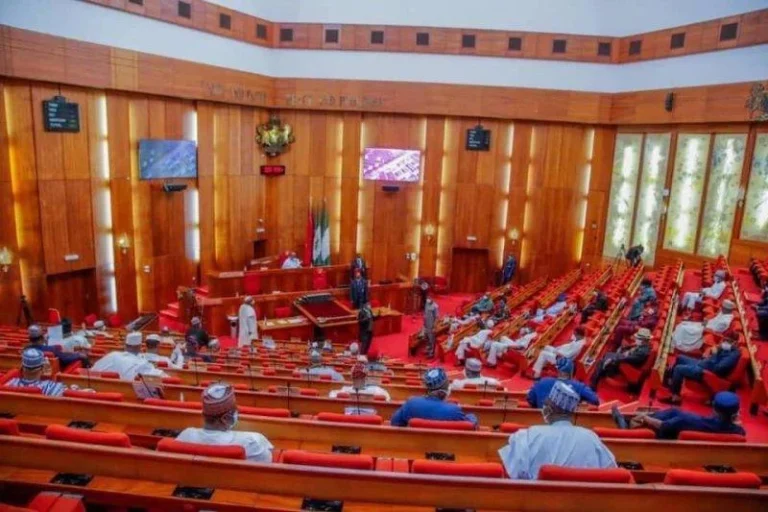
Speaking at the same event, Senate President Godswill Akpabio, represented by Senator Ahmed Lawan, Chairman of the Senate Committee on Defence, said Nigeria’s extensive borders present significant security risks that require coordinated national action.
“As a country with extensive land and maritime boundaries, Nigeria faces significant challenges relating to border control, illegal migration, arms trafficking, smuggling and the infiltration of criminal and extremist elements,” he said.
Akpabio stressed that strengthening border surveillance, improving infrastructure, and enhancing inter-agency cooperation were critical to national stability.
He added that insecurity in Nigeria often has transnational dimensions, making regional collaboration essential.
“There can be no meaningful development without peace and security. Porous and poorly managed borders can become vulnerabilities that undermine national security efforts and national stability,” he warned.
The Senate President also called for a whole-of-government and whole-of-society approach involving security agencies, civil society, traditional institutions, the private sector, and the media.
Earlier, the Acting President of the Alumni Association of the National Defence College, Commodore Amatare Kpou (retd.), said the seminar was designed to generate practical solutions to Nigeria’s security challenges, particularly those linked to irregular migration, smuggling, and trafficking.
Nigeria shares over 4,000 kilometres of land borders and a long coastline, a factor security experts say continues to expose the country to cross-border crimes despite ongoing government interventions.