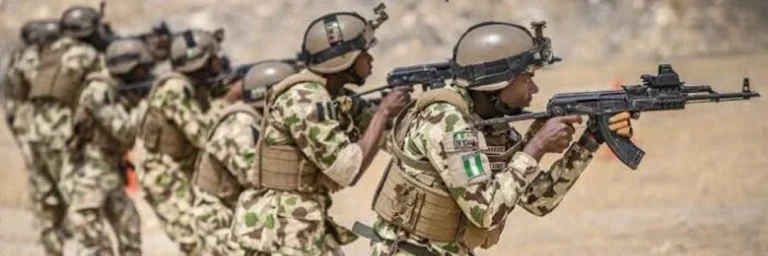
The Federal Government recorded a sharp rise in security-related expenditure, spending N57.78bn on defence and security projects between January and April 2026, even as insecurity deepened across the country with dozens of violent incidents reported within a single week.
According to The Punch, figures obtained from the Open Treasury Portal showed that the funds were deployed for defence equipment procurement, security infrastructure, military barracks, police facilities and other related projects.
The amount represents a 127.97 per cent increase compared to the N25.35bn spent in the same period of 2025.
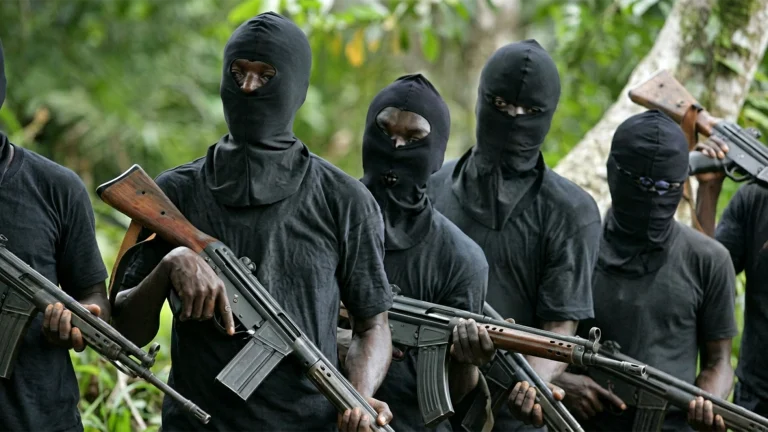
The spending comes against the backdrop of continued attacks by terrorists, bandits, kidnappers and other armed groups across several parts of the country, raising concerns among security analysts about the impact of rising budget allocations.
Data from the portal indicated that out of a total security budget of N4.66tn for 2026, only N57.78bn had been utilised by April, representing just 1.24 per cent implementation within the first four months of the year.
Breakdown of the expenditure showed that N21.39bn went into defence equipment procurement, accounting for about 37 per cent of total security spending in the period.
An additional N14.16bn was allocated to security equipment, while N5.84bn was used for the construction and provision of military barracks.
The government also spent N5.17bn on police stations and barracks, N3.26bn on rehabilitation of defence equipment, N2.39bn on defence facilities and N2.16bn on repairs of military barracks.
For operational needs, N3bn was spent on security services, while N320.94m was released as security votes.
However, no funds were recorded under the military operations budget line tagged “Operation Lafiya Dole and Other Operations of the Armed Forces,” despite a N500m provision in the 2026 budget. Similarly, no disbursement was made for the kitting of Armed Forces personnel, although N2.53bn had been allocated.
A year-on-year comparison showed a significant rise in some categories, with spending on defence equipment increasing from N9.48bn in the first four months of 2025 to N21.39bn in 2026. Military barracks construction also rose from zero expenditure in 2025 to N5.84bn in 2026.
Despite the increased spending, implementation levels remained low across several security projects, with many critical programmes recording less than three per cent execution.
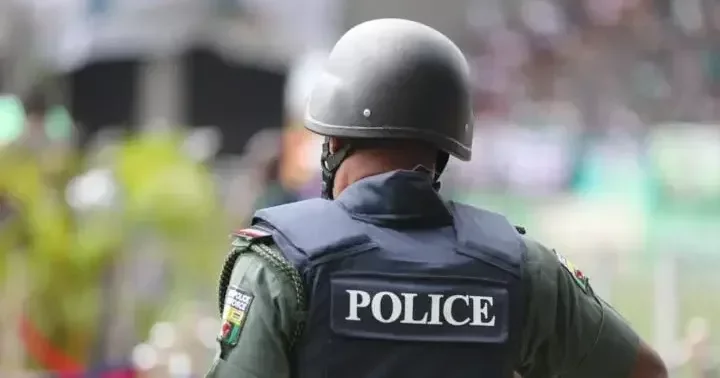
Meanwhile, a police security report obtained by The Punch revealed that at least 98 criminal incidents were recorded nationwide within a seven-day period, underscoring the continuing security crisis.
The report showed that the incidents included 37 homicide cases, 27 banditry attacks, 24 kidnappings, eight armed robbery incidents and two terrorism-related attacks.
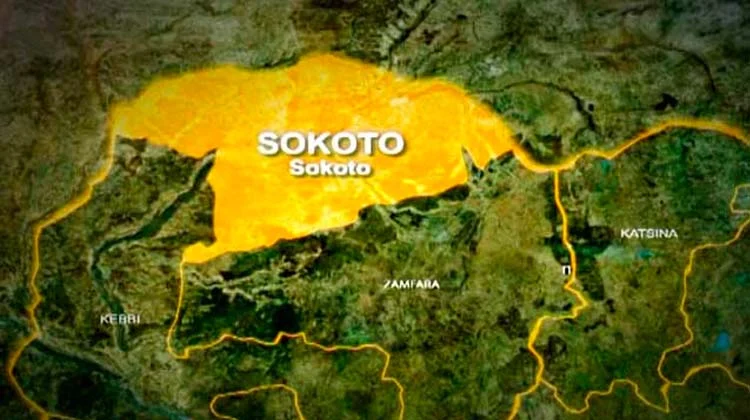
The incidents were spread across states including Kaduna State, Katsina State, Zamfara State, Kebbi State and other parts of the country, involving mass abductions, rural community raids and highway kidnappings.
One of the most disturbing cases was the abduction of 39 residents in Zamfara State after they reportedly entered the Fadama Forest to negotiate peace with a notorious bandit leader, Jimo Smally.
In Katsina State, armed bandits blocked the Katsina-Kankara highway and intercepted a commercial vehicle carrying 11 passengers. Police later rescued nine victims, while the driver and another passenger remained missing.
Reacting to the situation, security analyst Lekan Jackson-Ojo described the crisis as unprecedented in Nigeria’s history.
“This is the highest level of insecurity in the military and political history of the Federal Republic of Nigeria,” he said.
“It is an indirect pronouncement that Nigeria is an unsafe territory now. We are having a battered economy, and there is no economy anywhere in the world that thrives under insecurity.”
Jackson-Ojo argued that recent developments reflected deepening national security failures.
“During the civil war, I did not remember if a general died. In the war between Ukraine and Russia, a general has not lost his life. In the war between Iran, America and Israel, a general has not lost his life. But within the past three months, we have lost almost four generals — and there is no reprisal attack,” he stated.
He also criticised the reintegration of former militants and insurgents.
“I’ve never heard it anywhere in the world that terrorists who have terrorised, damaged and killed will be integrated back into society. To me, I think the government is totally helpless, total incapability, lack of political will. Something, or many things are wrong now,” he added.
According to him, political leadership has failed to prioritise security concerns.
“What preoccupies our political class is campaign, campaign, campaign and campaign. This is a sad situation,” he stressed.
Another analyst, Chidi Omeje, said the security forces were overstretched despite rising expenditure.
“The military, on their own, are completely overstretched. You can count almost over 30 terrorist operations in this country where military guys are deployed,” he said.
“One MRAP alone is almost N100 billion. If you put an aircraft in the sky to do an operation, do you know how much it costs for just one hour? By the time you put that N56 billion in dollars, it amounts to nothing.”
He argued that military spending alone cannot resolve the crisis.
“Unless we are able to deal with the root causes, we will keep going in circles. Most of the issues are born out of bad governance, wrong prioritisation, corruption and pervasive poverty, which has made people see crime and criminality as an option for survival,” Omeje said.
He also highlighted the impact of regional instability and weak border control.
“From Mali to Burkina Faso to Nigeria, those places are the epicentre of terrorism. Nigeria is an attractive destination because we have porous borders and poor border management,” he stated.
Omeje urged urgent reforms, insisting that government must take decisive action to reverse the trend.
“The government seems almost clueless about how to go about this matter. They are paid to find solutions, so they must find solutions,” he said.
Overall, the data points to a widening gap between rising security expenditure and persistent insecurity, with significant portions of the 2026 security budget still unutilised while violent incidents continue across the country.