The European Union has commended Nigeria’s creative industry for its growing contribution to youth employment, skills development, and economic growth, noting that film industries such as Kannywood are creating sustainable opportunities for young people.
This was disclosed in a statement issued by the European Union Delegation to Nigeria and ECOWAS following a visit by a Team Europe diplomatic delegation to the Kano Film Village.
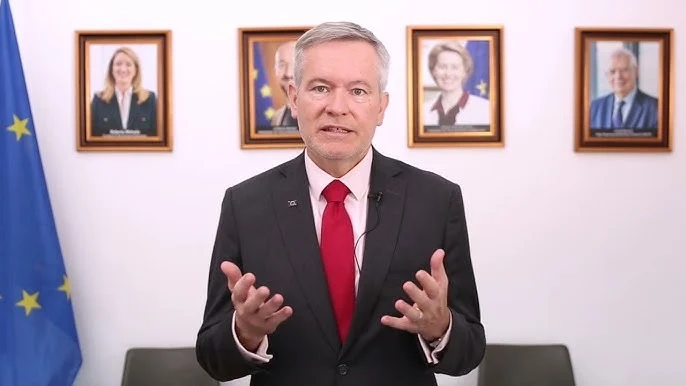
The delegation was led by the EU Ambassador to Nigeria and ECOWAS, Gautier Mignot, alongside ambassadors and deputy ambassadors from Denmark, Spain, Italy, France, Czechia, Finland, Belgium, and Austria.
According to the statement, the visit was aimed at understanding how Kannywood, the Hausa-language film industry, contributes to job creation, education, and economic development in Northern Nigeria while promoting positive social values through storytelling.
Speaking during the tour, Mignot described the creative industry as an important driver of employment and entrepreneurship.
“Creative industries are not only about culture. They are also about jobs, skills, entrepreneurship and creating opportunities for young people. Across Nigeria, young people are demonstrating remarkable talent and creativity, and industries such as Kannywood are helping transform that potential into livelihoods and economic opportunity,” he said.
The ambassador also highlighted the influence of film and storytelling in shaping societal values and encouraging development.
“Stories have the power to inspire change. Films that promote education, opportunity and inclusion can spark important conversations and encourage positive change within communities,” Mignot added.
During the visit, the diplomats observed the production of Hindatu, a film centred on a young girl striving to pursue her education and become a medical doctor despite pressure to enter an early marriage.
The Executive Secretary of the Kano State Films and Video Censorship Board, Abba El-Mustapha, said the industry continues to serve as a platform for promoting positive social messages while providing livelihoods for thousands of people.
“Our role is not only regulatory. We also work with filmmakers to strengthen professional standards, support capacity development and ensure that films contribute positively to society,” he said.
El-Mustapha revealed that more than 10,000 films have received approval from the board over the years, alongside initiatives aimed at improving industry standards through training and stakeholder engagement.
The delegation also toured the Kano Film Village, a production facility established by filmmaker and broadcaster Abdullaziz Dansmall.
Dansmall explained that the facility was developed gradually using proceeds from film productions.
“Our first major production was Gidang Haya. We used the revenue from that project to build little by little, expanding the facility over time. Our long-term ambition is to transform the site into a fully developed film village capable of supporting larger productions,” he said.
Also speaking, the Managing Director of the Nigerian Film Corporation, Ali Nuhu, described filmmaking as a significant contributor to youth employment in Kano State.
He cited research indicating that the film industry ranks as the second-largest employer of young people in the state after agriculture, while supporting numerous businesses across the creative value chain.
The EU noted that the visit aligns with its broader efforts to strengthen cultural partnerships between Africa and Europe through programmes such as the Africa-Europe Partnerships for Culture initiative, which supports collaboration, mobility, and creative exchanges between professionals on both continents.
Nigeria’s film and entertainment industry remains one of the country’s fastest-growing non-oil sectors, with Kannywood playing a key role in advancing conversations around education, gender equality, health, and social inclusion while creating economic opportunities for young people.