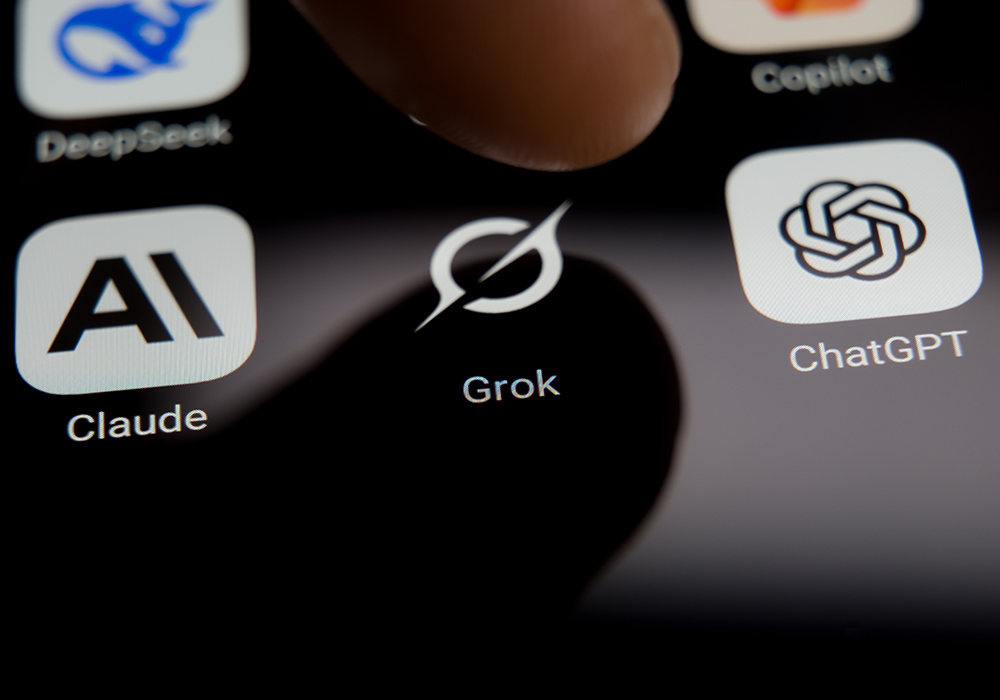
An increasing number of Americans are turning to artificial intelligence for spiritual guidance, prayer and Bible study, according to a new NPR/Ipsos poll.
The survey of 1,011 US adults conducted from August 7 to 9 found that 61 per cent of respondents had used an AI tool such as ChatGPT, Google Gemini or Claude for at least one purpose.
Among those who use AI, 11 per cent said they had sought spiritual guidance from the technology, while 13 per cent had used it to generate prayers and 15 per cent had used it to study Scripture.
One of those users, 43-year-old construction worker Rudy Vazquez, said he turned to AI after struggling to understand a passage from the Book of Isaiah and feeling dissatisfied with previous attempts to get explanations from religious leaders.
“I read, you know, the Book (of) Isaiah, and never understood what it really means,” Vazquez said.
“I never got an answer — like a legit answer — from them,” he said.
“Sometimes I just don’t understand what he’s talking about.”
Vazquez said AI helped him understand the fifth chapter of Isaiah, particularly its warning about people confusing good and evil.
However, Ipsos senior vice president, Mallory Newall, said seeking spiritual counsel from AI remained relatively uncommon, with nearly seven in 10 AI users saying they would never seek religious or spiritual guidance from the technology.
“When it comes to counsel, people are still significantly more likely to turn to their family members or their friends than they are to AI,” Newall said.
Some users see AI as a supplement to traditional religious study.
Brent Hill, a 68-year-old retired audiologist and Christian, said he used AI to explore different Christian interpretations of biblical teachings about the end times.
“Certainly, AI is making that so much easier with the wealth of knowledge that’s out there to be able to pull that into a concise, quick reference,” Hill said.
Hill, however, said he checks AI-generated answers against the Bible rather than accepting them without verification.
Other users have employed AI in developing personal spiritual practices.
Amy Wight, a 50-year-old transportation policy analyst who has practised witchcraft for three decades, said she sometimes uses AI for ideas for prayers and rituals.
She said she recently consulted Google Gemini before placing a broom, known as a besom, above a door as part of a protection ritual.
“That made me a lot more confident in an act that is critically important to protecting me and my energy and my home,” Wight said.
“I’ve never been part of a coven, so now it’s not as big a deal that AI is not a human,” she said.
Meanwhile, 91-year-old Charles Niederman, a retired US Coast Guard officer active in his Southern California synagogue, said AI could alter the traditional Jewish practice of studying religious texts with a partner, known as chavrusa.
“You’re training yourself to listen,” he said. “So the relationship would be a little bit different if you were using it with AI.”
Niederman said AI had proved useful when he researched the history of false messiahs for a synagogue presentation, but he remained cautious about relying too heavily on the technology.
He said AI could provide information and different perspectives, but determining what to believe ultimately remained a human responsibility.