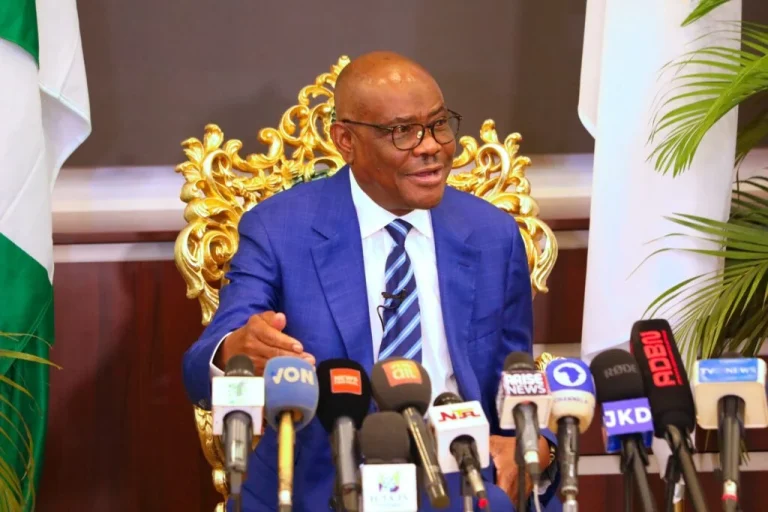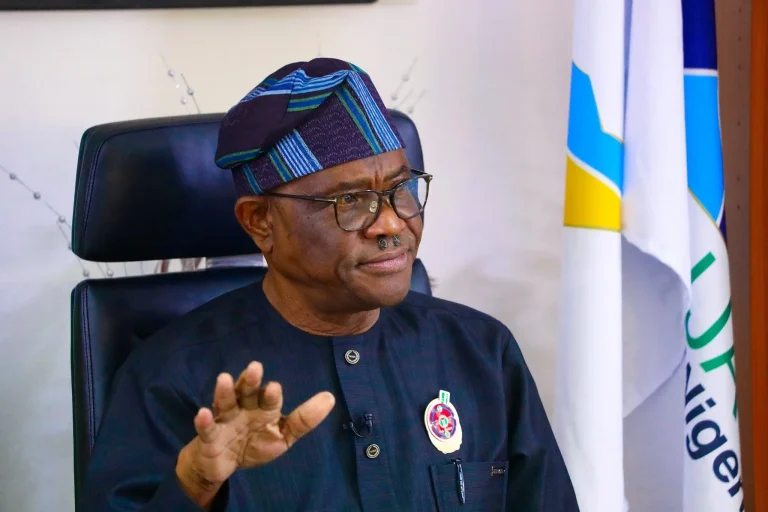
Students of the University of Abuja were stranded on Wednesday after the institution shut its gates amid a three-day protest over the alleged reduction of its land by the Minister of the Federal Capital Territory, Nyesom Wike.
The shutdown disrupted movement in and out of the university as students, lecturers, non-academic staff and alumni continued demonstrations, demanding the reversal of the decision.
The protest, which began on Monday, November 16, followed concerns over the reduction of the university’s land from 11,824.04 hectares to 4,685 hectares.
A video shared on social media by Henry Tyohemba showed the university gates locked, preventing students from accessing the campus.
Members of the Academic Staff Union of Universities, ASUU, the Senior Staff Association of Nigerian Universities, SSANU, the Non-Academic Staff Union of Educational and Associated Institutions, NASU, alongside students and alumni, participated in the demonstration.
The protesters, carrying placards and chanting solidarity songs, appealed to President Bola Tinubu to intervene and reverse the land reallocation.
However, the Federal Capital Territory Administration dismissed the protest, maintaining that Wike acted on the recommendations of a committee established in 2016 and approved by the previous administration.
In a statement issued on Monday and signed by the Senior Special Assistant to the FCT Minister on Public Communications and Social Media, Lere Olayinka, the administration described the demonstration by the university’s Joint Action Committee as misplaced.
According to the FCTA, the committee was inaugurated on November 10, 2016, to examine the university’s land size, alleged encroachment by indigenous settlers, developments around its Gwagwalada Mini Campus and the issuance of land titles.
The administration said five of the committee’s 12 members were representatives of the university.
It claimed that the committee recommended allocating 100 hectares to the institution in line with the National Universities Commission’s recommendation, noting that the report was approved by the immediate past FCT Minister, Mohammed Musa Bello.
The FCTA further stated that Wike approved 4,519.80 hectares for the university, exceeding the 100 hectares recommended by the committee.
It argued that the approved land could accommodate more than 80,000 buildings on 500-square-metre plots.
The administration also alleged that the university had allocated portions of its land to individuals and corporate organisations, including the Economic and Financial Crimes Commission, which it claimed received 100 hectares without consulting the FCTA.
Defending the decision, Olayinka questioned the university community’s opposition to a recommendation allegedly involving its representatives.
He also challenged the institution to justify retaining more than 11,000 hectares after 38 years of existence.
The FCTA insisted that the land adjustment would not affect students’ academic activities or workers’ salaries, arguing that the government had the authority to review land allocated to an institution under its control.
However, the protesters maintained that the decision could undermine the university’s future expansion and development.
They argued that the institution required sufficient land for additional lecture halls, hostels, research facilities and other infrastructure to accommodate its growing population.
The university community has consequently called for greater transparency in decisions affecting the institution’s land and urged the relevant authorities to engage stakeholders to resolve the dispute.
With the protest entering its third day, the continued closure of the university gates has raised concerns over possible disruptions to academic activities and access to essential services.