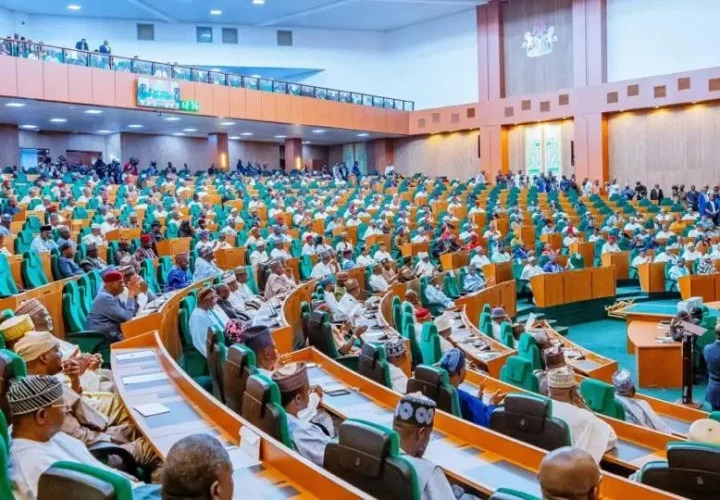
Telecommunications operators in Nigeria have filed a suit at the Federal High Court in Abuja, seeking to prevent the House of Representatives from encroaching on the regulatory authority of the Nigerian Communications Commission over service quality in the sector.
The operators, in a statement on Friday, disclosed that the suit was instituted on November 4 by the Registered Trustees of the Association of Licensed Telecommunications Operators of Nigeria, MTN Nigeria Communications Plc, Airtel Networks Limited, Globacom Limited and Emerging Markets Telecommunication Services Limited, which operates 9mobile.
The case, marked FHC/ABJ/CS/2713/2026, lists the House of Representatives, the Speaker, the Clerk of the House and the Inspector-General of Police as defendants.
The dispute followed summonses issued on October 29 by the House’s ad hoc committee on quality of service, directing the chief executives of the telecommunications firms to appear before it and submit relevant documents.
The companies are asking the court to determine whether the lawmakers have the constitutional mandate to investigate telecommunications service quality, which they maintain is within the statutory jurisdiction of the NCC.
They argued that Sections 88 and 89 of the 1999 Constitution limit the investigative powers of the National Assembly to specified purposes, including facilitating lawmaking, uncovering corruption, inefficiency or waste in the implementation of laws, and scrutinising the management of public funds appropriated by the legislature.
The plaintiffs said, “the telecommunications companies are private operators and do not fall within the constitutional provisions governing the execution or administration of laws or the management of public funds.
“They also rely on Sections 4, 70 and 105 of the Nigerian Communications Act, 2003, as well as the Nigerian Communications (Quality of Service) Regulations, 2024, which vest the NCC with responsibility for setting, monitoring and enforcing service quality standards in the telecommunications industry.”
The operators further contended that the House’s planned probe could undermine the NCC’s statutory regulatory functions.
They also expressed concern that the proposed investigation could affect two ongoing court cases concerning telecommunications service quality.
The cases are HCS/261/2025, filed by Fatokunboh Fagun and another on behalf of themselves and MTN subscribers, and FHC/ABJ/CS/1886/2026, instituted by Kaatruths Podcast Limited.
Among the reliefs sought, the plaintiffs want the court to invalidate the summonses issued by the House committee and restrain the lawmakers and other defendants from enforcing them.
They are also seeking an order prohibiting the House from issuing arrest warrants or employing other enforcement mechanisms to compel the telecommunications companies’ chief executives to appear or submit documents.
Additionally, the operators want an injunction preventing the House from investigating telecommunications service quality in circumstances that fall outside the scope of Section 88(2) of the Constitution or encroach on the NCC’s statutory responsibilities.
The suit raises concerns about the constitutional limits of the National Assembly’s investigative powers and the extent of the NCC’s regulatory authority over the telecommunications industry.
The court is expected to decide whether the proposed legislative investigation is consistent with the powers vested in the House by the Constitution.
The PUNCH had earlier reported that the House of Representatives gave MTN Nigeria, Airtel, Globacom, Mafab Communications and other telecommunications operators seven days to account for the persistent poor quality of network services nationwide.
The House also warned that the companies’ chief executives could face arrest summonses if they failed to honour the directive.