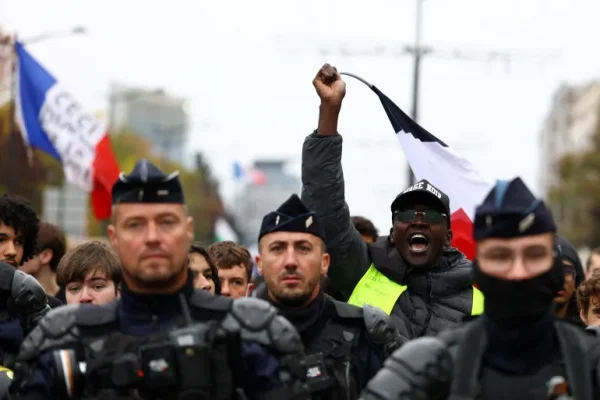
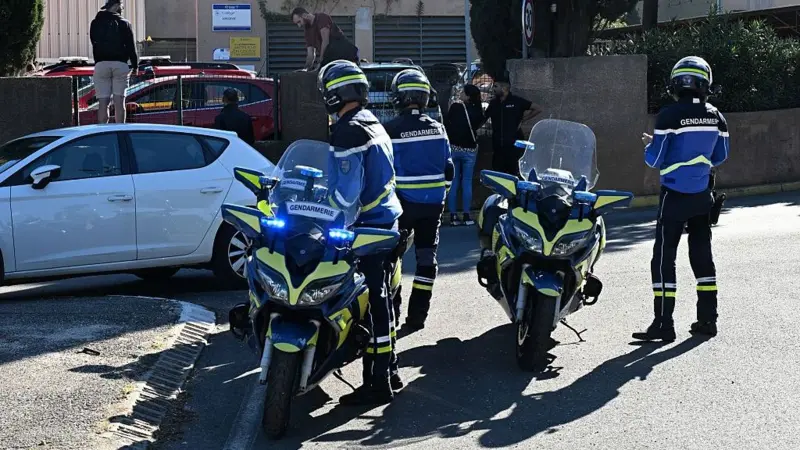
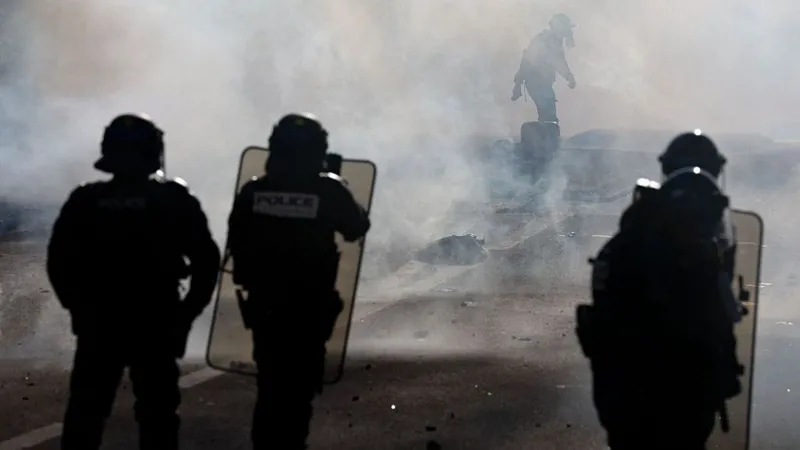
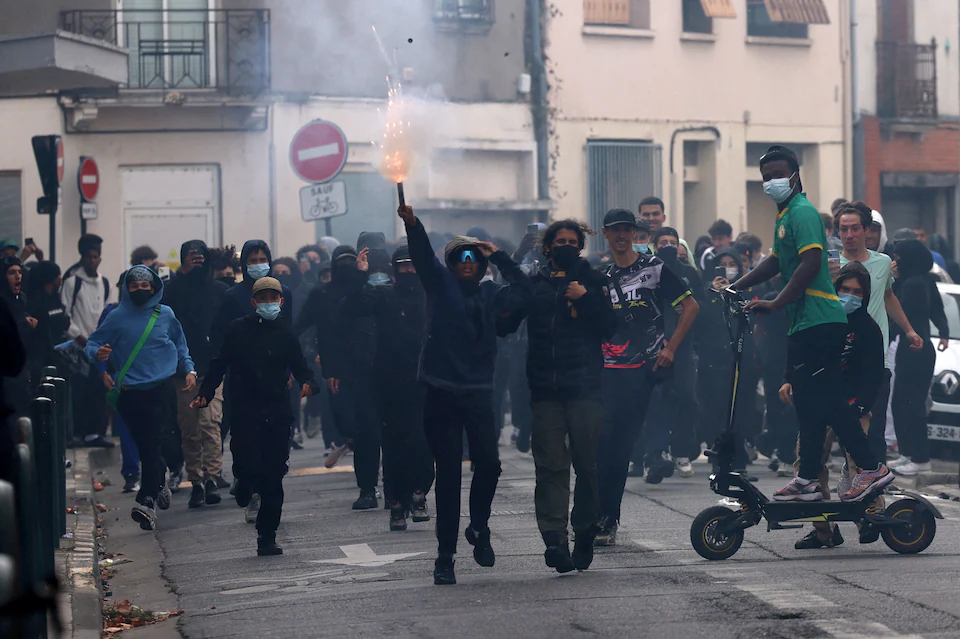
France will deploy about 70,000 security personnel across the country on Saturday as authorities prepare for another wave of protests following violent clashes that accompanied demonstrations last weekend.
President Emmanuel Macron convened a meeting of his defence council on Friday to discuss the crisis and was scheduled to meet security officials.
His planned visit to Nigeria and Senegal later this month is reportedly being postponed as his government struggles to contain the unrest.
The protests initially began as demonstrations by secondary school students over poor school conditions but have expanded into a nationwide movement against the rising cost of living.
Macron also met representatives of high school students for the first time to discuss their grievances.
Interior Minister Laurent Nunez announced the deployment of 70,000 security personnel at a press conference in Paris, warning that social media platforms were being used to circulate calls for violence and looting.
The unrest comes six months before France holds elections to choose Macron’s successor.
A new opinion poll indicates that far-right candidate Marine Le Pen has strengthened her position following the violence, emerging as the frontrunner in the presidential race.
Le Pen’s National Rally party is scheduled to hold its congress in Orleans this weekend, with thousands of supporters expected to attend.
However, authorities are concerned about possible confrontations with opponents planning demonstrations in the city.
Between 20,000 and 30,000 people are expected to protest against the party in Orleans, although the local prefecture has prohibited demonstrations in the city centre.
Similar restrictions have been introduced in Lyon, while protesters in Paris will be limited to a designated route between Bastille and Nation squares.
Authorities in Marseille initially banned demonstrations but announced on Friday that a union-organised protest would be permitted under exceptional circumstances.
Officials also reversed plans to suspend all public transport in the city on Saturday.
In Paris, several major cultural institutions, including the Louvre, will remain closed on Saturday, while the Art Basel art fair has been shortened because of security concerns.
The deployment represents a 20 per cent increase in security personnel compared with previous arrangements, following criticism of the police response and intelligence gathering ahead of last weekend’s violence.
“In a country governed by the rule of law, the police have a responsibility both to ensure that protests can take place peacefully and safely and to protect the public from violent disorder,” said Eva Cosse, senior Europe researcher at Human Rights Watch, expressing alarm over reports of children being severely injured by crowd-control weapons.
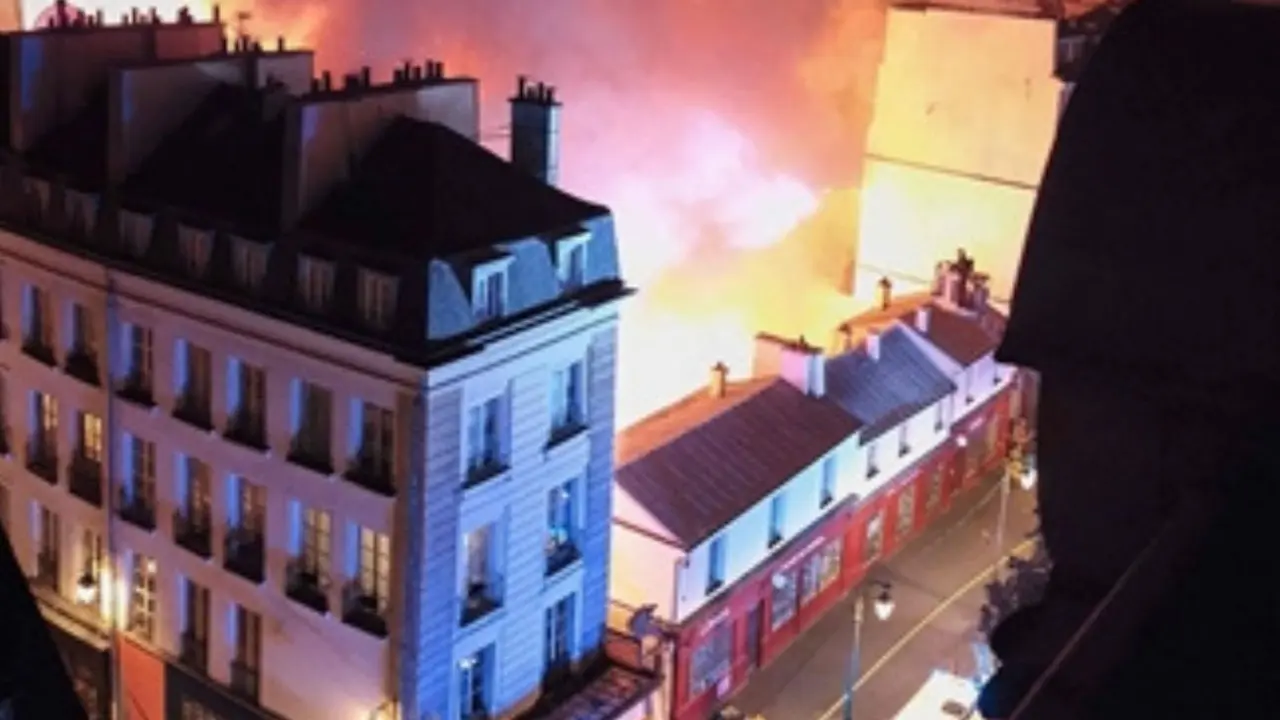
The government has attempted to distinguish between peaceful demonstrations and the looting, arson and vandalism that occurred during last Saturday’s protests.
Justice Minister Gerald Darmanin said courts had already sentenced 217 people to prison over the violence, with first-time offenders accounting for approximately half of those convicted.
On Thursday, Macron demanded “the utmost severity” against “acts of delinquency”, accusing “ultra-left” groups of attempting to “bring down the republic” during the previous weekend’s unrest.
The violence has damaged France’s international image ahead of a presidential election expected to shape the country’s political future.
The government’s mounting debt has also raised concerns among investors.
A poll conducted by Harris Interactive for M6/RTL after the unrest placed Le Pen at between 33 and 35 per cent in the first round of the presidential election.
The survey projected that hard-left leader Jean-Luc Melenchon could face Le Pen in the run-off, where she was forecast to secure a decisive victory with approximately 70 per cent of the vote.