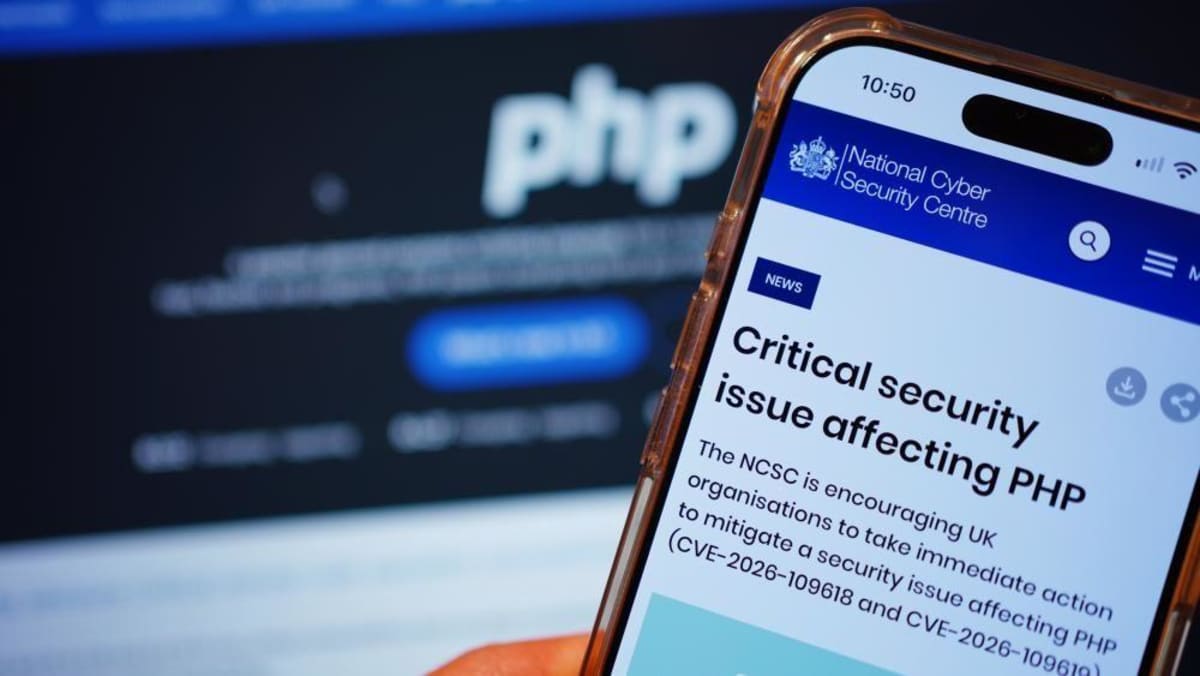
At least 32 government services in the United Kingdom have been temporarily taken offline, while four others are partially unavailable, following a major cybersecurity threat affecting websites worldwide.
The disruption followed the discovery of a critical vulnerability in PHP, a programming language used to power a significant portion of websites globally.
Cybersecurity experts warned organisations to address the flaw after it was found to potentially expose websites to hacking.
According to cybersecurity firm Cloudflare, PHP powers almost 70 per cent of websites.
The discovery has prompted organisations across the world to introduce security updates and temporarily suspend some online services to prevent potential attacks.
However, the UK government said no major public-facing critical systems had been affected, stressing that some services were taken offline as a precaution while security measures were implemented.
A Downing Street spokeswoman said, “Work has already taken place across government to identify and fix potential exposures to our systems, and our experts are continuing to work closely with both OpenAI and international partners on this issue.
“No large public-facing critical services are being affected by the exercise, but some limited services may temporarily be offline while security work is carried out.
“But this does not mean they were hacked, and work continues to resolve any issues.”
She added that it was not “standard practice” to disclose the specific government services affected.
Technology minister Baroness Lloyd of Effra told the House of Lords that 32 government services were unavailable, while four others were experiencing partial disruption.
She said the situation “has largely resulted from precautionary measures taken to protect systems while security updates and mitigations are applied”.
Meanwhile, Scotland Secretary Douglas Alexander assured the public that the cybersecurity issue had not compromised the UK government’s forthcoming Budget, scheduled for next week.
The website of the Office for Budget Responsibility, the official public spending watchdog, was among the platforms affected by the incident.
“This is not a breach of government systems,” Alexander told Times Radio.
He advised businesses concerned about the vulnerability to consult the National Centre for Cyber Security for guidance on protecting their websites and digital infrastructure.
Asked about the Office for Budget Responsibility taking its website offline, he said, “I’ve had no indication whatsoever that there’s any problem in terms of breach of budget security.”
Alexander also highlighted the role of artificial intelligence in identifying cybersecurity weaknesses, noting that the same technology could contribute to resolving them.
The vulnerability was discovered using artificial intelligence developed by OpenAI, triggering emergency shutdowns affecting banking, airline, rail, tax and government services from Wednesday night.
PHP developers released urgent security fixes on Wednesday and urged users to install the updates immediately to protect their systems against potential exploitation.
Cloudflare chief executive Matthew Prince said attempts to exploit the vulnerability increased sharply after the threat became public.
“In the 10 hours before it was publicly announced, across the network we saw thousands of attempts to exploit it,” he said in a post on X late on Wednesday.
“That jumped to tens of thousands in the 45 minutes post announcement, hundreds of thousands within 2 hours, and millions now.”