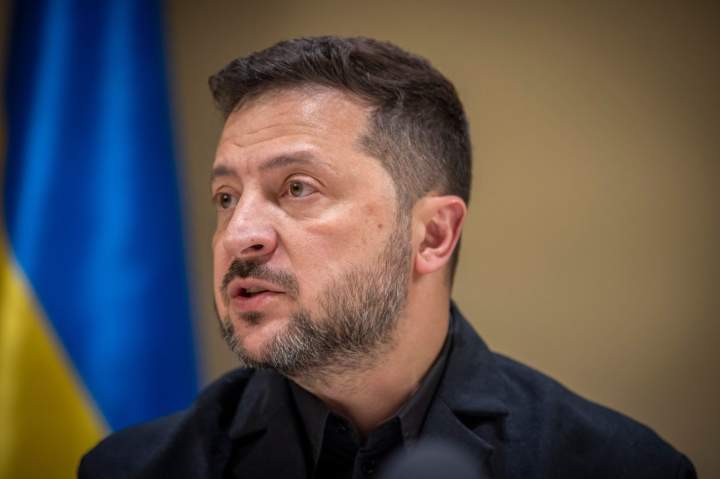
Ukraine’s military operations have been disrupted by new restrictions on the speed of weapons and other equipment connected to Starlink satellite internet, an adviser to President Volodymyr Zelensky has said, alleging that the move could be linked to the current political situation.
Serhiy Beskrestnov, an adviser to the Ukrainian president, said Elon Musk’s SpaceX introduced a speed limit of 100mph (160km/h) on some Starlink terminals overnight without informing Ukraine beforehand.
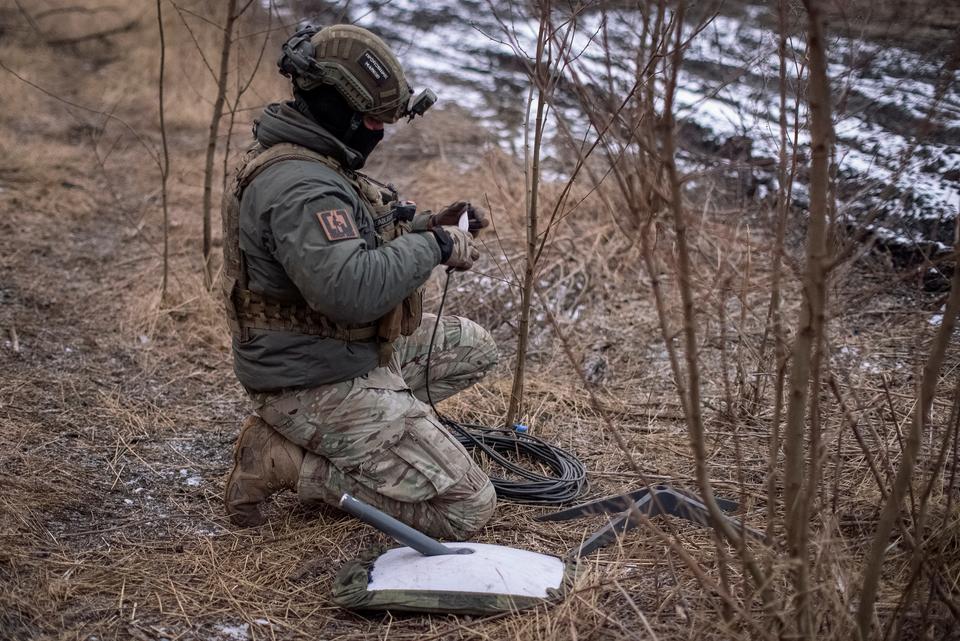
Starlink provides a crucial internet connection for Ukrainian forces, enabling them to guide drones towards Russian targets and strengthen the country’s air defences.
In a post on Telegram on Wednesday, Beskrestnov said the restrictions had already affected military operations, adding that the decision “cannot be a coincidence and is related to the current political situation”.
SpaceX has yet to comment on the reported restrictions.
A source in Ukraine’s defence ministry told the BBC that officials had detected connectivity restrictions affecting Starlink terminals operating at speeds above 160km/h.
The source said the “root cause” of the problem was still being investigated.
Other defence ministry sources explained that Starlink terminals lost their connection whenever a vehicle or military asset exceeded the specified speed limit.
According to the sources, the restrictions had complicated drone operations, particularly those involving interceptor drones and medium-range strike drones.
They also affected frontline logistics, reconnaissance and the relaying of signals.
Beskrestnov later emphasised that Starlink remained the most effective system for enabling Ukrainian interceptor drones to shoot down Russia’s newly developed jet-powered drones.
The development comes amid intensified Russian attacks on Ukraine’s energy infrastructure, which left at least 600,000 people without electricity, according to Zelensky.
The Ukrainian president said critical energy facilities had been struck in Kyiv and the surrounding region, as well as in the northeastern city of Kharkiv.
Three people were killed in attacks on Kyiv, local officials said, while Russia claimed its “massive” strikes targeted communications and energy facilities used by the Ukrainian military.
At least six other people were killed later on Wednesday when a Russian drone struck a warehouse in the northwestern city of Lutsk, according to local authorities.
The latest attacks came despite US President Donald Trump’s announcement on Sunday that an “energy ceasefire” had been agreed between Russia and Ukraine.
Trump had declared on social media, “Effective immediately, there is an ENERGY CEASEFIRE in the War between Russia and Ukraine. Both parties have agreed. Do not break it!”
Zelensky has repeatedly said Ukraine is prepared to stop attacking Russian oil refineries and other energy facilities if Moscow agrees to halt similar strikes.
However, Russian Foreign Minister Sergey Lavrov said Ukraine did not deserve the “respite” that a ceasefire would provide, arguing that such an arrangement would allow Europe to “pump [Ukraine] with new weapons”, enabling Kyiv to continue fighting.
Zelensky has also claimed that Washington threatened to restrict intelligence sharing with Ukraine unless he agreed to Trump’s proposed energy ceasefire.
Trump denied on Tuesday that the US was withholding intelligence.
According to Ukraine’s air force, Russia launched 39 ballistic and cruise missiles and 128 drones overnight. Ukrainian forces said they intercepted four of the missiles and 115 drones.
It was the second consecutive night that Kyiv had come under Russian missile attacks, with some ballistic missiles striking the capital before air raid sirens could be activated.
Ukraine relies on US satellite systems to track incoming Russian missiles, allowing authorities to issue warnings and attempt to intercept the weapons.
Meanwhile, Russia’s defence ministry claimed that its forces had shot down 902 Ukrainian drones overnight across several Russian regions, including Moscow and Crimea, the Ukrainian peninsula annexed by Russia in 2014.
Russia launched its full-scale invasion of Ukraine in 2022 and currently controls about 20 per cent of the country’s territory.
In February, Musk’s decision to block Russian forces from accessing Starlink disrupted Moscow’s military operations and reportedly caused confusion among Russian commanders.
The latest restrictions raise further concerns for Ukraine, which depends heavily on satellite internet connectivity for battlefield communications, drone operations and military coordination.