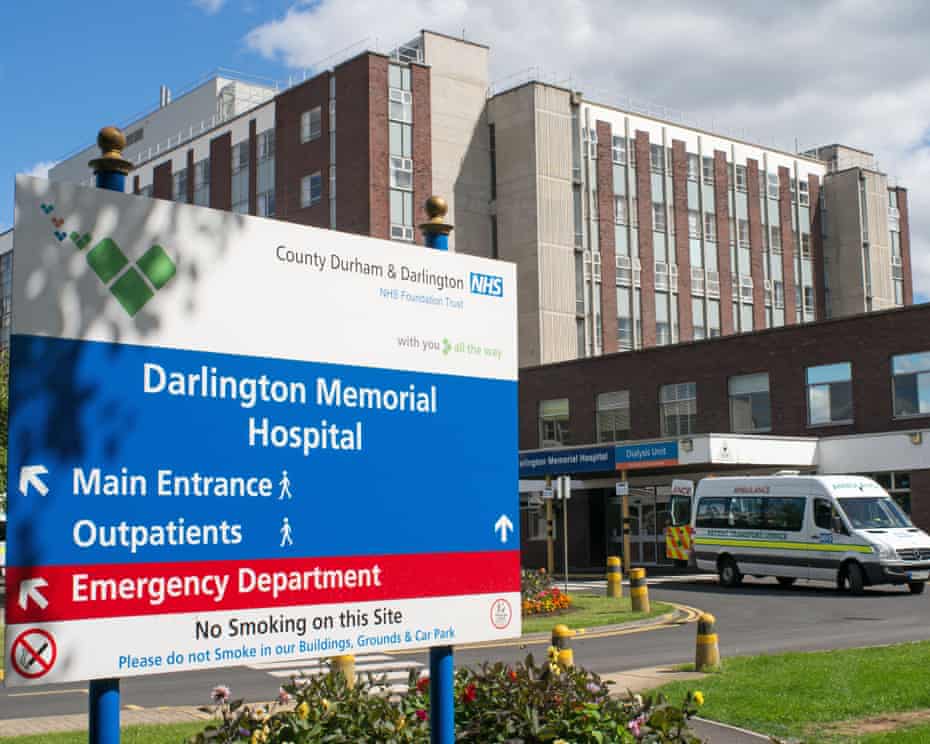
Twenty women in the United Kingdom had their breasts unnecessarily removed while undergoing treatment for breast cancer, an NHS trust in north-east England has admitted.
The women were among hundreds of patients who suffered harm at the breast unit of County Durham and Darlington Foundation Trust between 2023 and 2025.
The admission followed investigations into serious failures at the unit, including an unusually high rate of mastectomies, procedures allegedly carried out too quickly and the outsourcing of some treatments to private clinics operated by the trust’s former breast cancer clinical lead.
Steve Russell, who recently became the trust’s chief executive, apologised to the affected women and their families, saying the harm caused was unacceptable.
“There are no words I could use to convey how personally distressed I am,” he said. “What happened was utterly unacceptable.”
The trust is reviewing breast cancer cases treated between January 2023 and February 2025, as well as complaints from 640 former patients who contacted a dedicated helpline.
So far, 514 cases have been examined, with 315 patients found to have suffered harm, including 77 who were significantly harmed. One patient is known to have died.
The review also found cases in which cancer diagnoses were missed or delayed, with some patients later developing advanced disease.
Russell said the trust would meet in the coming week to consider whether to expand the review to as many as 10,000 cases dating back to 2015.
The National Crime Agency is working with Durham Police to investigate allegations made by former patients and establish whether any criminal offences were committed.
One of the women affected, 51-year-old Denise Howarth from Consett, County Durham, said she was diagnosed with grade one breast cancer in 2023 after discovering a lump.
She initially underwent a lumpectomy before later having a mastectomy, as well as chemotherapy and radiotherapy.
In September 2025, she was informed by the NHS that her entire breast could have been spared and that she could instead have been offered another lumpectomy.
Denise said the option had never been discussed with her.
She said the apology from the trust was “all good and well” but could not restore what had been taken from her.
Another former NHS worker, identified as Jo, said she was told earlier this year that a mastectomy she underwent in 2021 could have been avoided.
“You go to work to do your best, don’t you?” she said. “So why would I think that anybody else wouldn’t?”
Jo said she now felt “mutilated” by what happened and described the mistakes made by the trust as “absolutely unforgivable”.
The consultant who oversaw the care of both Denise and Jo was Amir Bhatti, who served as the trust’s clinical lead for breast services from 2013 to 2024.
He has since been suspended from clinical practice but remains employed by the trust on full pay.
A previous BBC investigation found that almost £6m had been paid by the trust over six years to private breast cancer diagnostic and surgical companies operated by Bhatti.
A 2025 review into the governance of the breast surgery service warned that the outsourcing arrangement created financial incentives that could pose “a risk to clinical standards”.
Russell acknowledged that there had been a conflict of interest that was not properly managed and said the trust had since ended the arrangement for breast cancer services.
A Royal College of Surgeons report also raised concerns about the unit’s failure to properly discuss cases at multidisciplinary team meetings, where surgeons, radiologists, pathologists and cancer specialists are expected to review and challenge treatment decisions before major procedures.
The report said there was little evidence that the breast unit was contributing adequately to such meetings and that some treatment decisions appeared to have been based on the unchallenged opinions of individual surgeons.
The trust was also criticised over practices including a high rate of repeat procedures, low uptake of immediate breast reconstruction following mastectomy and operations that may have been carried out too quickly.
The Department of Health and Social Care said it was thinking of the women and their families but could not comment further on the past failures while investigations were ongoing.
It said the trust was working with NHS England, the Care Quality Commission and independent experts to address the problems and ensure future patients received safe care.
Bhatti, who was approached by the BBC for comment, said, “I am grateful for the opportunity to respond, but I remain committed to the ongoing trust investigation, and it would be inappropriate for me to discuss this whilst proceedings are ongoing.”
Meanwhile, affected women and their families have formed a support group and are calling for a public inquiry into the failures at the breast unit.
Lynn, one of the group’s organisers, said she underwent surgery in 2016 and had also been informed that her breast removal was unnecessary.
“I didn’t realise how many ladies lived so near me that had been affected,” she said. “I’m just totally overwhelmed.”