Subsidy wasn’t Nigeria’s real problem, says Economist
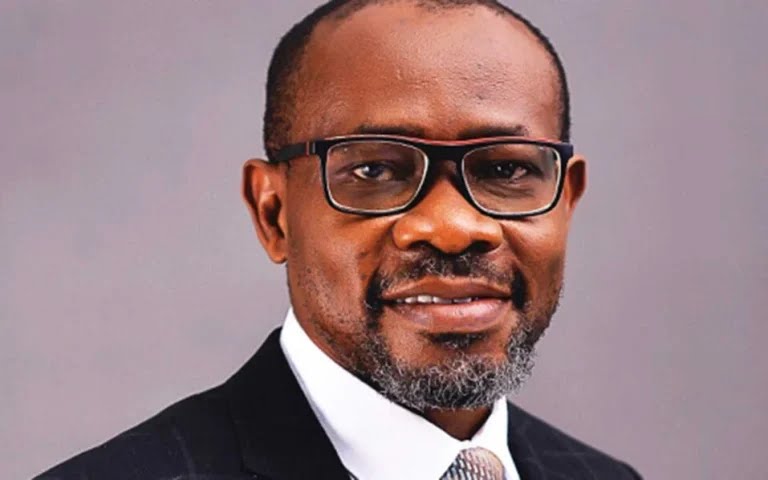
Professor of Economics and Data Analytics at Lagos Business School, Bongo Adi, has argued that fuel subsidy was not the fundamental problem confronting Nigeria, insisting that the country’s major challenge was poor revenue generation and widespread misgovernance.
The Punch reported that Adi stated this in a response to Hon. Gboyega Isiaka’s recent contribution to the debate over the Federal Government’s economic reforms and the removal of petrol subsidy.
He said while subsidy could legitimately be used as a public policy tool to protect consumers and cushion economic shocks, Nigeria’s focus should have been on whether the subsidy was properly designed, targeted and accounted for, as well as whether its removal had produced better outcomes for citizens.
Adi said Nigeria’s economic growth had failed to translate into significant improvement in living standards, noting that the country’s real GDP per capita remained below its 2014 level.
He argued that although the economy grew by 4.01 per cent in 2025, real GDP per capita had increased by only 1.79 per cent annually since 2021.
According to him, Nigeria’s real GDP per capita stood at $2,369 in 2025, compared with $2,584 in 2014, representing an 8.3 per cent decline over the period.
He further challenged the argument that subsidy had held back economic growth, pointing out that Nigeria recorded an average growth rate of 6.75 per cent between 2003 and 2014 when subsidy was in place, compared with an average of 4.04 per cent in 2024 and 2025 after its removal.
Adi also cited international data to argue that Nigeria’s fuel subsidy was relatively small compared with subsidies provided by wealthier countries.
He said the International Monetary Fund’s Fossil Fuel Subsidies Database showed that Nigeria’s explicit fossil-fuel subsidy in 2022 was $64 per person, compared with $1,137 in Germany, $790 in Italy and $2,857 in Saudi Arabia.
He argued that the subsidy appeared disproportionately expensive in Nigeria because of the country’s weak revenue collection, noting that general government revenue was only 8.4 per cent of GDP in 2022.
Adi said, “That is a revenue failure, not a subsidy failure. We diagnosed the wrong organ.”
The economist also rejected the argument that Nigeria’s economic growth between 2002 and 2014 was driven solely by the oil boom.
He noted that non-oil sectors recorded strong growth during several years when oil production declined.
He cited data showing that while the oil sector contracted in 2006 and 2007, Nigeria’s economy grew by 6.1 per cent and 6.6 per cent respectively, driven largely by non-oil sectors.
Adi further argued that the major structural break in Nigeria’s economic growth occurred in 2015, when oil prices fell sharply and crude production began to decline, rather than when fuel subsidy was introduced or maintained.
Turning to the argument that subsidy savings should have been redirected to infrastructure, healthcare, education and other productive sectors, Adi questioned the extent to which such funds had actually been deployed for those purposes.
He cited the Federal Ministry of Health’s 2025 capital allocation, saying only N36m was released from the N218bn appropriated for capital projects at the ministry’s headquarters, according to the Coordinating Minister of Health.
Adi also referenced Finance Minister Taiwo Oyedele’s August 19, 2026 disclosure that the removal of subsidy saved N15.8tn between June 2023 and December 2025.
He said the government’s figures showed that a large proportion of incremental spending went into wages and debt servicing, while only a small share was allocated to social welfare transfers.
According to Adi, “The subsidy did not end. It changed meter.”
He also criticised the government’s borrowing despite the reported savings from subsidy removal, arguing that the development suggested that the problem was not simply a shortage of funds.
Adi said the government had also failed to adequately compensate Nigerians for the sharp increase in transport and living costs following subsidy removal.
He argued that several programmes introduced after the subsidy removal, including student financing, consumer credit and mortgage schemes, were largely loans and therefore could not be equated with direct compensation for poorer households.
“You cannot compensate a household for a permanent 570 per cent rise in the price of transport fuel by offering it debt.
Compensation and credit are different instruments with different consequences for a poor family’s balance sheet,” he said.
Comparing Nigeria with other countries that had implemented subsidy reforms, Adi said successful reforms in countries such as Iran and Indonesia were accompanied by compensation measures that were put in place before or alongside price increases.
He said Nigeria took the opposite approach in 2023, with petrol prices rising sharply before the compensation system was adequately established.
Adi said the government’s conditional cash transfer programme reached only a fraction of its targeted beneficiaries, while concerns had also been raised about the verification of some payments.
He maintained that he was not advocating a return to the former subsidy regime, which he described as opaque and poorly administered.
“I am not calling for the restoration of the old regime – the opaque NNPC “under-recovery,” deducted at source, never appropriated by the National Assembly, never independently audited, arbitraged across our borders,” he said.
Instead, Adi advocated a temporary and transparent consumer energy support programme that would be properly appropriated, independently monitored and gradually phased out under a clearly defined pricing mechanism.
He said, “Reform is not a synonym for withdrawal. It is a synonym for competence.”
Adi acknowledged improvements in Nigeria’s foreign reserves and credit ratings but argued that such gains had yet to translate into substantial improvements in Nigerians’ living standards.
He said the success of the reforms should ultimately be measured by the quality of life and economic opportunities available to citizens, rather than by macroeconomic indicators alone.
Adi is a Professor of Economics and Data Analytics at Lagos Business School, Pan-Atlantic University.