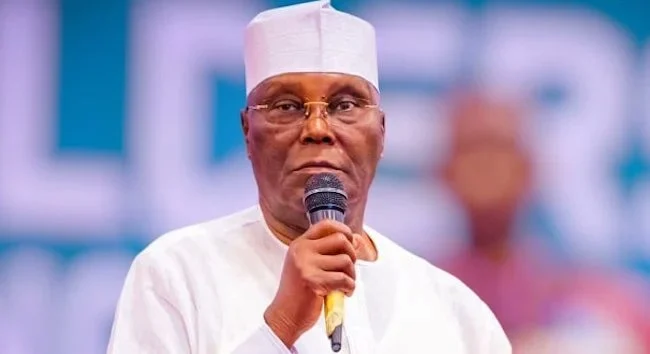
Presidential candidate of the African Democratic Congress, Atiku Abubakar, has reaffirmed his commitment to restoring fuel subsidy if elected president in 2027, while distancing himself from any conflicting interpretation of his position by one of his media aides.
Atiku made the clarification on Tuesday in Abuja while receiving the Osun State leadership of the ADC.
The former vice president said his position on subsidy remained unchanged, stressing that his proposed intervention would be aimed at reducing the financial burden on Nigerians.
He said, “When I said I would return to subsidy, I will. Nigeria is rich enough to look after the welfare of its citizens.”
Atiku later explained in a statement shared on X that the policy he envisaged would be different from the former system of subsidising imported petrol.
According to him, the objective would be to restore purchasing power, reduce transportation and production costs, and make essential goods more affordable.
He said, “I believe the wealth of a nation is not measured by how much government collects, but by how much the money in the pockets of its people can buy.”
The ADC candidate added that his administration would introduce a targeted subsidy linked to domestic production, particularly local refining, rather than return to the import-driven system that operated in the past.
Atiku’s Senior Special Assistant on Public Communication, Phrank Shaibu, said the proposed intervention would be capped, transparently budgeted and independently audited.
He explained that government support would gradually end when domestic refining capacity increased, fuel supply became stable and competition was strong enough to deliver affordable prices without state intervention.
Shaibu said, “For the avoidance of doubt, policy belongs to the candidate, not the spokesperson.”
He added that the proposed subsidy should be viewed as temporary support for the domestic petroleum industry rather than a permanent government obligation.
“You do not remove scaffolding because the calendar says so. You remove it when the building can stand securely on its own,” Shaibu said.
The clarification followed comments by Atiku’s media aide, Paul Ibe, during an interview on AIT, where he explained that an Atiku administration would restore subsidy temporarily and phase it out as the economy recovered.
Ibe said the proposed arrangement would involve supplying crude oil to local refiners at a discounted rate, allowing them to produce petrol and diesel at lower costs.
He said, “The crude oil will be sold at a discounted price, subsidised to refiners, and that will enable refiners to be able to produce fuel and diesel at a cheap cost.”
According to Ibe, an independent committee would determine the appropriate crude oil price while government would monitor the downstream market to ensure the policy achieved its intended purpose.
The subsidy debate has again become a major issue ahead of the 2027 presidential election following President Bola Tinubu’s removal of petrol subsidy at his inauguration on May 29, 2023.
The policy led to a significant increase in petrol prices and contributed to rising transportation and living costs, although the Federal Government has continued to defend the reform as necessary to improve public finances and attract investment.
Atiku, however, has argued that the economic reforms placed too much pressure on households and businesses.
He said his proposed policy would focus on strengthening domestic refining, lowering energy and transportation costs and restoring the purchasing power of Nigerians.
“The choice is not removal of subsidy versus restoration of subsidy. It is Expensive Nigeria versus Affordable Nigeria,” Shaibu said.