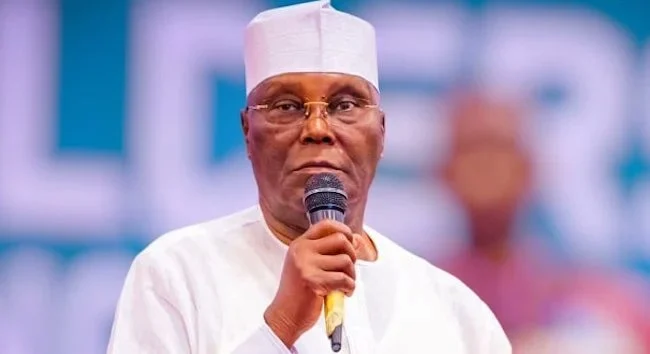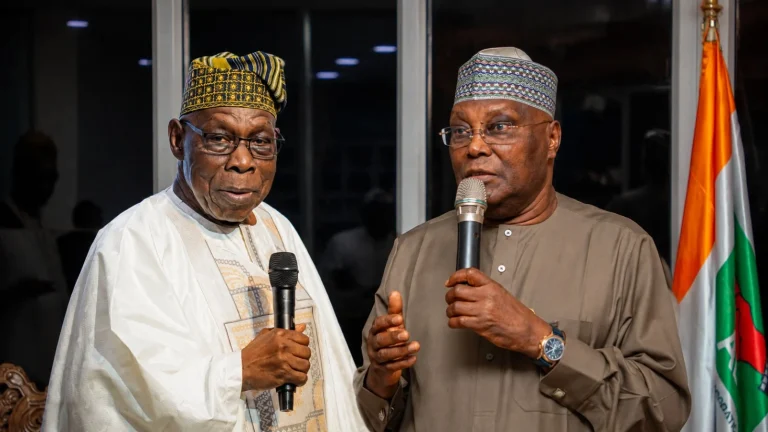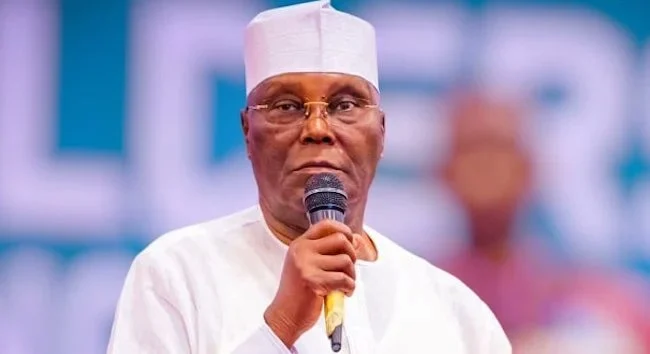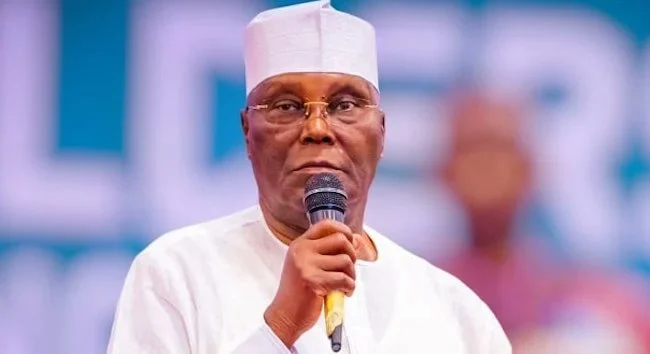
Former Vice President and African Democratic Congress presidential candidate, Atiku Abubakar, has criticised the economic policies of President Bola Tinubu, blaming them for worsening living conditions and putting businesses under increasing pressure.
According to The Punch, Atiku, through his Senior Special Assistant on Public Communication, Phrank Shaibu, made his position known in a statement on Sunday.
He argued that the government could not rely solely on economic statistics while Nigerians continued to struggle with rising prices of essential commodities, fuel and transportation.
According to Atiku, the removal of the fuel subsidy has contributed to increased living costs, while households and businesses have seen their purchasing power decline.
The statement read, “Atiku said the position being canvassed by the Crude Oil Refinery Owners Association of Nigeria for support for domestic refining, alongside President Donald Trump’s intervention to strengthen petroleum production and refining in the United States, further exposes the weakness of Tinubu’s argument against targeted support for Nigerian production.
“Tinubu did not inherit this cost-of-living crisis from Nigerians. His policies created and deepened it. He took away relief from the people, made fuel, food, transport and basic survival more expensive, and now wants Nigerians to applaud statistics while their pockets are empty.
“Recent reports that a significant share of the short-term assets of some of Nigeria’s biggest companies is now trapped in unpaid customer bills tell the same story: companies may record sales, but customers increasingly cannot pay because Tinubu’s economy has drained their purchasing power.
“Take a woman selling frozen food in Kubwa. She pays more to transport her goods, more to power her freezer and more to restock. Her customers are poorer, so they buy less or ask for credit. Soon she cannot restock, her supplier is owed, and Tinubu’s economic pain spreads through the entire chain.”
Atiku said the current economic situation required urgent intervention rather than continued calls for Nigerians to endure the hardship.
He cited increases in the prices of fertiliser, petrol and cement, as well as the depreciation of the naira, as evidence of the pressure facing households.
The statement added, “Nigerians know the prices they meet every day. Fertiliser has moved from about N9,000 to around N50,000; petrol from about N199 to around N1,400 per litre; cement from roughly N4,000 to around N13,500; and the dollar from around N450 to about N1,400.
“And after all this pain, what has the ordinary Nigerian received? No reliable electricity. Loan for a degree. No security. No N-Power. Food is expensive. Transport is expensive. Life itself has become expensive. What exactly are Tinubu’s defenders defending?
“This is why my production subsidy is about putting money back into people’s pockets. Support what we produce and refine here, increase supply, monitor the price and make sure Nigerians feel the benefit at the pump.
“CORAN is saying support domestic production. America understands the importance of supporting strategic energy production. Yet Tinubu attacks relief for ordinary Nigerians while his government understands perfectly well how to grant waivers, incentives and concessions to multinational oil companies and businesses close to his administration.”
Atiku maintained that increased domestic production should translate into lower prices and improved household purchasing power.
He added, “So why does intervention suddenly become bad economics when ordinary Nigerians are meant to benefit?
“Nigerians have now seen what Tinubu’s economics means in their daily lives: higher fuel prices, higher food prices, higher transport costs, weaker businesses and emptier pockets. They do not need another lecture on patience. They need relief.
“The choice before Nigeria is therefore clear: continue with an economy that takes more from the people, or build one that puts money back in their pockets. Support production. Refine in Nigeria. Create Nigerian jobs. Lower the cost of living.
“Nigerians must reject a government that has made life harder and embrace a plan that makes life affordable again.”
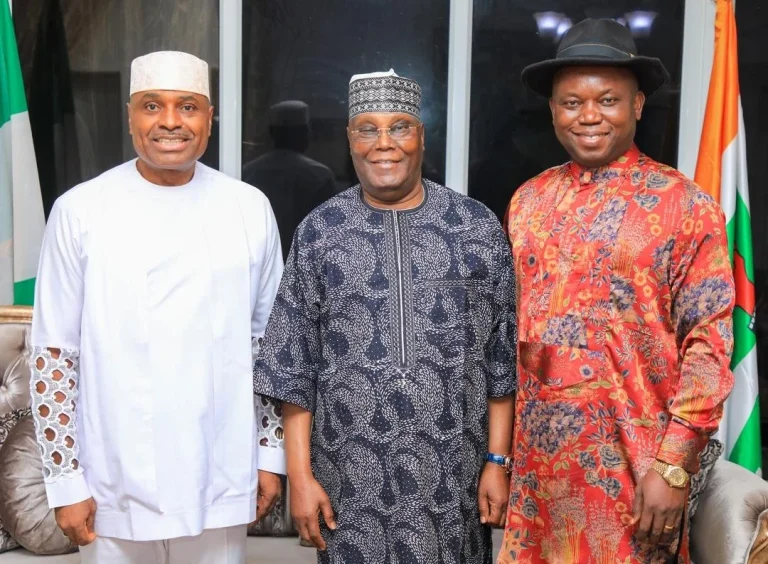
Also speaking on the state of the economy, an ADC stalwart and former Edo State governorship aspirant, Kenneth Imasuagbon, accused the Tinubu administration of worsening economic hardship and weakening the productive sector.
Imasuagbon spoke with journalists in Benin on Sunday ahead of the 2027 general election.
He said many Nigerians had lost their sources of livelihood as businesses struggled with the prevailing economic conditions.
The ADC chieftain advocated improved trade relations with neighbouring countries, arguing that reopening Nigeria’s borders would strengthen supply chains and help moderate the prices of goods.
“The economic reforms introduced by the administration of President Bola Tinubu have imposed severe hardship on citizens, increased the cost of living and weakened the productive sector.
“The reopening of the borders will restore legitimate trans-border trade, encourage investors, stimulate local businesses and ultimately reduce the prices of food and other essential commodities through healthy competition,” he added.
He also linked insecurity in parts of northern Nigeria to reduced agricultural activity, saying regional trade could complement domestic food production.
Imasuagbon further pointed to the reported departure of ride-hailing company Uber from Nigeria after more than a decade as a sign of the challenges confronting businesses and investors.
He alleged that unfavourable economic policies had discouraged investment and contributed to rising unemployment, particularly among young graduates.
The ADC stalwart, who is known for his annual free rice distribution to indigent Nigerians, expressed concern about worsening poverty and what he described as desperate survival measures among some citizens.
He accused the APC-led Federal Government of failing to make basic necessities affordable but said an Atiku-led administration would introduce policies aimed at addressing the country’s economic difficulties.
The 2027 presidential election is already taking shape, with Tinubu seeking a second term under the All Progressives Congress, while Atiku is contesting on the ADC platform.
With presidential campaigns scheduled to commence in August, economic management, security and governance are expected to remain major issues in the contest.
The removal of the fuel subsidy remains one of the major areas of disagreement. While the APC-led government maintains that its reforms are necessary to achieve long-term economic stability, Atiku and the ADC have continued to criticise their immediate impact on Nigerians and advocate alternative measures, including a review of the subsidy policy.