The Federal Government has directed Ministries, Departments and Agencies to stop the unauthorised redeployment of civil servants posted to them through recognised professional pools.
The directive was issued by the Office of the Head of the Civil Service of the Federation as the Federal Government intensifies efforts to address alleged fake government agencies, ghost workers and weaknesses in its personnel management system.
In a circular dated August 24, 2026, with reference number HCSF/3065/V.I/275, the OHCSF warned that officers assigned to MDAs through recognised professional pools must remain in the offices, departments, divisions, units or sections specified in their posting instructions unless approval for a change is obtained.
The circular was addressed to senior government officials, including the Chief of Staff to the President, ministers, the Secretary to the Government of the Federation, permanent secretaries, service chiefs, the Inspector-General of Police and heads of major Federal Government institutions.
According to the OHCSF, some MDAs had continued to move officers posted to them from professional pools without obtaining approval from the authorities responsible for their deployment.
“The Office of the Head of the Civil Service of the Federation has observed that some Ministries, Extra-Ministerial Departments and Agencies have continued to redeploy officers posted to them from the professional pools of the OHCSF and other recognised pool offices without the approval of the relevant posting authorities,” the circular stated.
The OHCSF said the practice contravened an earlier directive issued on January 2, 2025, which prohibited the internal redeployment of pool officers within MDAs.
Under the new directive, permanent secretaries are permitted to deploy or redeploy only officers on the local staff establishment of their respective MDAs to areas where their services are needed.
However, officers posted to an organisation by the OHCSF or another recognised professional pool are subject to separate rules.
The circular stated, “Officers posted to Ministries, Extra-Ministerial Departments and Agencies by the OHCSF or any other recognised professional pool shall remain in the offices, departments, divisions, units or sections to which they were specifically posted, in accordance with their posting instructions.”
It added that such officers “shall not be redeployed internally without the prior approval of the relevant posting authority.”
The OHCSF made an exception for officers on Grade Levels 07 to 14 who are posted to departments to fill vacancies. Such officers may be moved internally to divisions, units or sections where vacancies exist, provided the deployment remains within their respective professional pools or cadres.
Where operational needs require a change to an officer’s posting, the OHCSF directed the affected MDA to seek approval from the appropriate authority.
“Where operational exigencies necessitate any review of such postings, the matter shall be referred to the appropriate posting authority for review and necessary approval,” the circular said.
The document concluded with the instruction: “Please ensure strict compliance.”
The directive comes against the backdrop of the Federal Government’s ongoing investigation into purported government agencies and weaknesses in its personnel and institutional control systems.
President Bola Tinubu had, on August 28, approved a comprehensive forensic audit of the Integrated Personnel and Payroll Information System, Federal Government agencies, ministries and their internal control mechanisms.
The Presidency said the decision followed the August 19 resolution of the Federal Executive Council on findings by the Independent Corrupt Practices and Other Related Offences Commission concerning fake agencies, ghost workers and other control deficiencies.
The audit is expected to determine how fictitious or ineligible individuals were enrolled on government platforms and examine the identity, biometric and bank-account verification mechanisms supporting the system.
It will also produce an authoritative list of Federal Government agencies, departments, commissions, councils, parastatals and other bodies while determining their legal status and how they obtained recognition, budgetary consideration, office facilities and access to government systems.
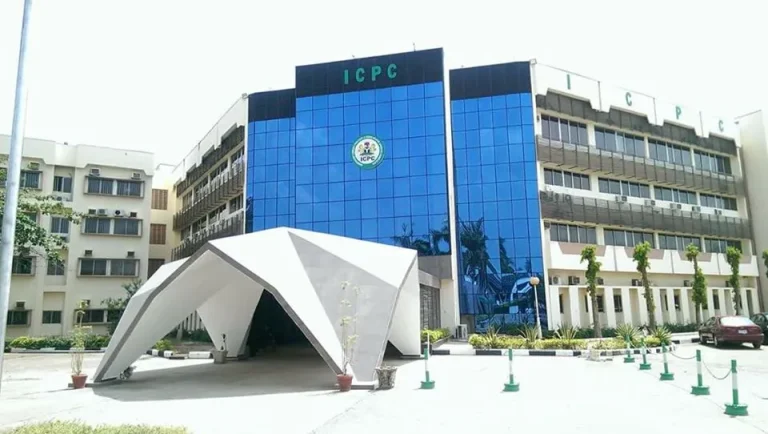
The fake-agency controversy emerged prominently in July when the President directed the ICPC to investigate the Presidential Foreign Intervention Promotion Council after the Presidency said the organisation was not established by the Federal Government.
The commission subsequently found that the purported council had no legal foundation and that the appointment letter used by its promoter was allegedly forged.
The issue resurfaced on August 21 when the ICPC announced the discovery of another purported government body, the National Brands Development and Made in Nigeria Special Project Office.
The commission alleged that the organisation was promoted by George Nwabueze, with the suspected involvement of some senior officials in the Office of the Secretary to the Government of the Federation.
Following the development, Tinubu ordered Nwabueze’s arrest and approved the suspension of three permanent secretaries in the OSGF.
The revelations have prompted wider scrutiny of how unauthorised organisations may obtain access to government offices, correspondence channels, personnel, funding processes and official systems.
The forensic audit will therefore examine the relationship between IPPIS and other government financial platforms, including the Government Integrated Financial Management Information System, Remita, the Treasury Single Account and the Sub-Treasury Single Account.
According to the Presidency, the exercise will also determine whether weaknesses in the system were caused by technical defects, procedural failures, poor separation of responsibilities or deliberate attempts to circumvent established controls.
The government said the audit was designed to “strengthen the architecture of Government, close systemic loopholes, improve data verification and reconciliation, reinforce accountability, and ensure that only duly constituted entities and eligible personnel have access to Government resources.”
The OHCSF circular further identifies the recognised professional pools and the authorities responsible for their administration.
The OHCSF manages cadres including Administrative Officers, Executive Officers (General), Store Officers, Stock Verifier Officers, Confidential Secretaries, System/Programme Analysts, Statistical/Data Processing Officers and Library Officers.
The Federal Ministry of Justice oversees the State Counsel pool, while the Bureau of Public Procurement manages Procurement Officers.
Similarly, the Federal Ministry of Information and National Orientation is responsible for Information, Press and Public Relations Officers, while the Office of the Accountant-General of the Federation manages Account Officers and Executive Officers (Accounts).
The Office of the Auditor-General for the Federation is responsible for Resident Auditors, while other duly recognised professional pools remain under their respective managing authorities.
The Federal Government’s latest action effectively places tighter controls on the movement of professional officers and ensures that changes to their postings can be traced to the appropriate authorities.
Although the OHCSF did not expressly link the circular to the fake-agency investigations, the directive comes as the administration seeks to strengthen oversight of government establishments, personnel and access to public resources.
The government’s position is that civil servants posted through recognised professional pools should not be moved into unauthorised establishments through informal arrangements, with the relevant pool authorities retaining control over their deployment.