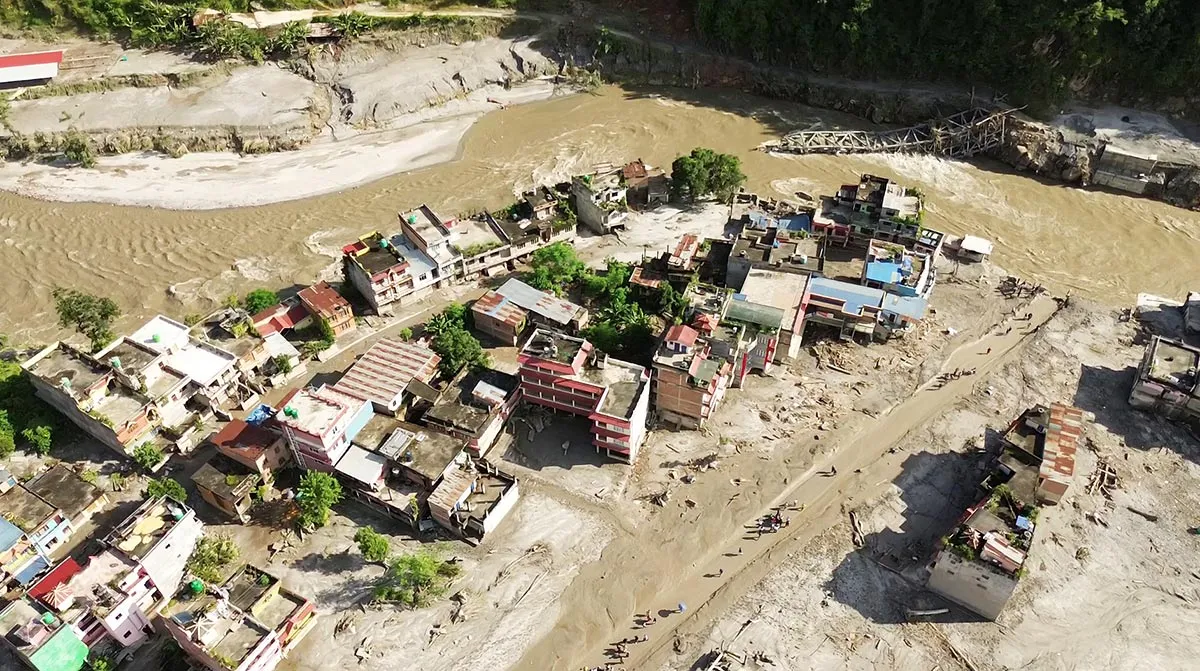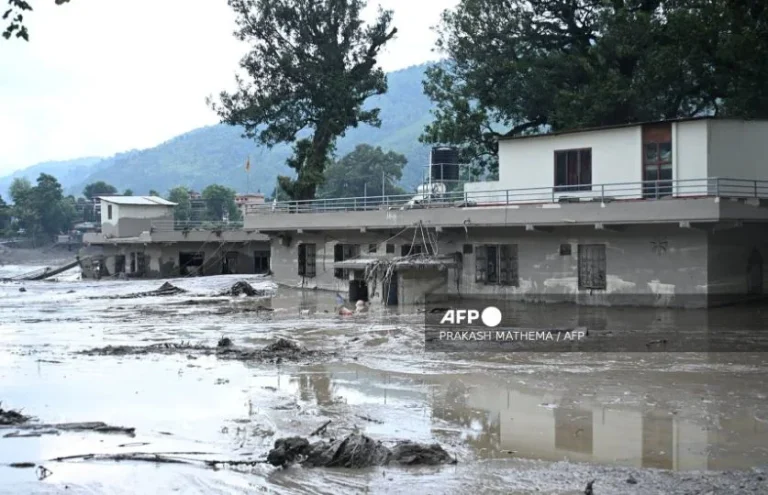
At least 160 people have died and 647 others remain missing after a sudden deluge of floodwater, mud and debris swept through Himalayan communities on both sides of the Nepal-Tibet border.
Nepali authorities said 391 people were missing in Nepal, including 291 foreign nationals, while Chinese state media reported another 265 missing in Tibet.
Nepal recorded 157 deaths, with three fatalities reported in Tibet.
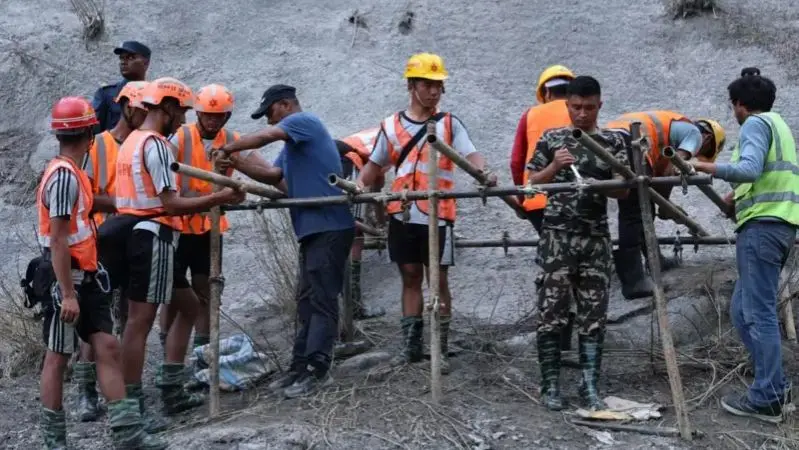
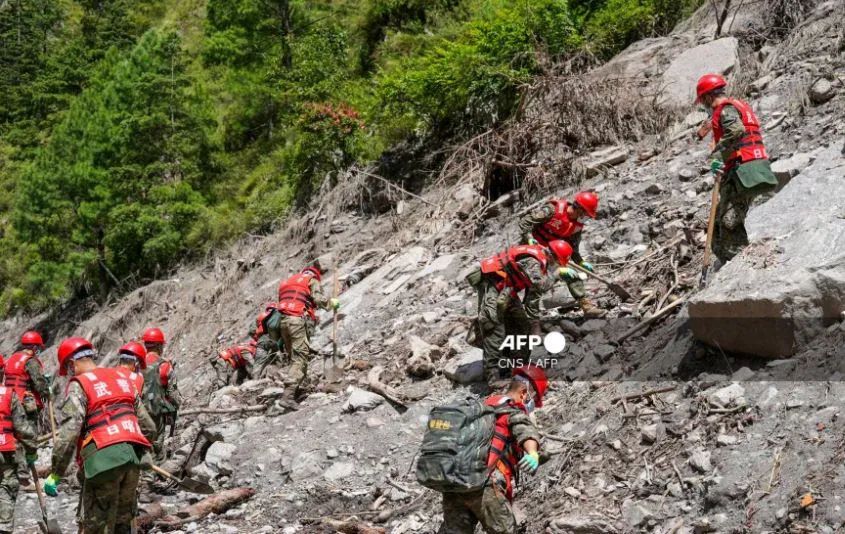
The disaster has prompted a massive search-and-rescue operation, with authorities trying to locate residents, tourists, pilgrims, border officials and security personnel caught in the floods.
The affected area is a major religious and trekking route, particularly for pilgrims travelling towards Mount Kailash and Lake Manasarovar in Tibet, sacred sites for Hindus, Buddhists and Jains.
Others were travelling towards Nepal’s Gosaikunda Lake for religious observances.
More than 100 Indian nationals were among those reported missing, alongside visitors from Britain, the United States, Australia, the Netherlands, Malaysia and South Africa.
The Isha Foundation said 77 people taking part in its pilgrimage tours were at an immigration centre close to the Nepal-Tibet border when the flooding occurred.
“There has been no official information on the whereabouts of any of the people who were at the immigration office,” the foundation’s leader, Sadhguru, said, adding that efforts were being made with authorities to locate them.
In Tibet, the Chinese state news agency Xinhua reported that a mudslide struck the Gyirong border port, a major crossing between Nepal and Tibet.
Images released by Chinese state media showed water and mud rushing through the area, destroying buildings, uprooting trees and cutting off roads.
Nepal also suffered extensive infrastructure damage, with at least 19 vehicle bridges and about 40 kilometres of roads destroyed. Schools, hydropower facilities and other infrastructure were also affected.
The cause of the disaster initially remained unclear because there was no significant rainfall in the area.
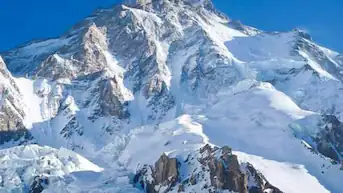
Nepal’s Foreign Minister, Shisir Khanal, said preliminary information indicated that an avalanche had occurred in the affected region.
The United States Geological Survey initially detected ground movement equivalent to a 5.2-magnitude earthquake but later determined that the seismic signal had been caused by a landslide.
Scientists subsequently indicated that an ice avalanche may have triggered the sudden flooding.
“There was no rain in Nepal, so we were not expecting anything like this,” said Narendra Pariyar, the chief district officer of Rasuw, according to The New York Times.
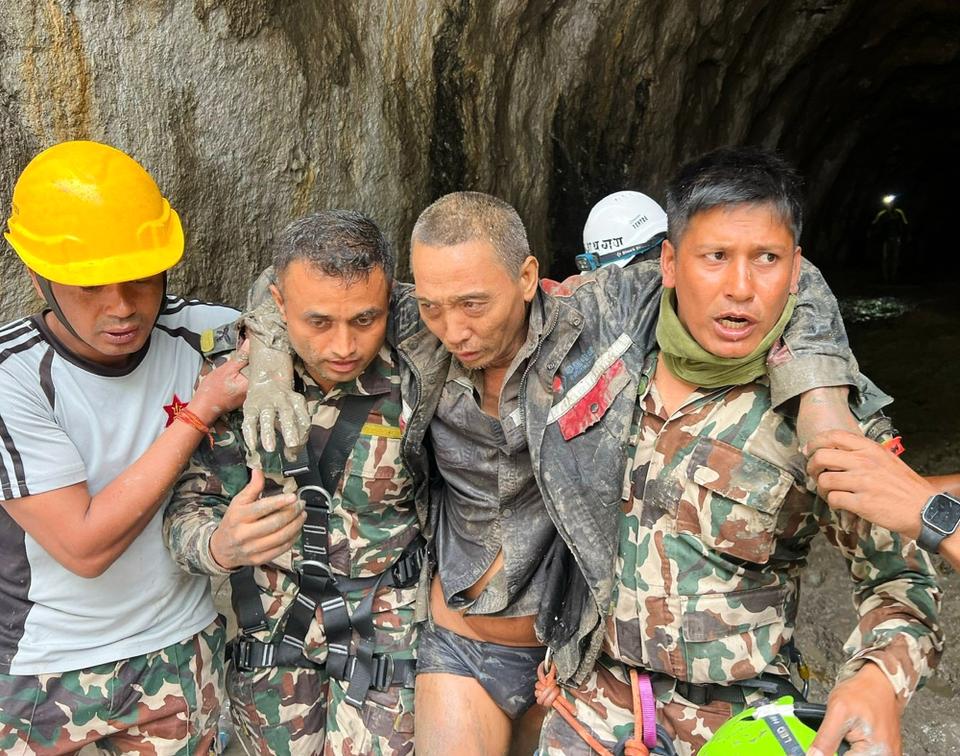
The Nepalese Army is leading the rescue operation, deploying 12 helicopters and setting up a temporary hospital in the affected area.
At least 114 people have so far been airlifted to safety, while 25 seriously injured victims have been evacuated to Kathmandu for treatment.
The disaster has renewed concerns about the vulnerability of Himalayan communities to sudden mountain hazards.
Scientists have warned that landslides, ice avalanches and the rapid movement of water can cause devastating floods even without heavy rainfall, while climate change and accelerating glacier melt could increase such risks.
Nepal has experienced several deadly floods and landslides in recent years. However, the latest disaster has presented an especially severe challenge, with hundreds still unaccounted for and major sections of the transport network destroyed.