The Federal Government invested N6.47tn in strategic infrastructure projects between June 2023 and December 2025, with major highway developments accounting for more than half of the total expenditure.
The Punch reported that this was contained in the newly released Federal Government’s Nigeria Reform Scorecard on savings from the removal of petrol subsidy, titled “The Benefits, Costs and Harm Prevented.”
According to the report, the Lagos-Calabar Coastal Highway received the largest share of the infrastructure spending, with N2.23tn disbursed for its construction.
The Sokoto-Badagry Superhighway followed with N1.11tn, while N489.3bn was spent on the Trans-Sahara Superhighway.
Combined, the three projects accounted for approximately N3.83tn, representing nearly 60 per cent of the N6.47tn allocated to strategic infrastructure during the period under review.
The scorecard stated that the government recorded N30.64tn in incremental expenditure between June 2023 and December 2025, following the implementation of major economic reforms.
It also revealed that the removal of petrol subsidy and the unification of the foreign exchange market generated N15.8tn in additional resources for the Federation.
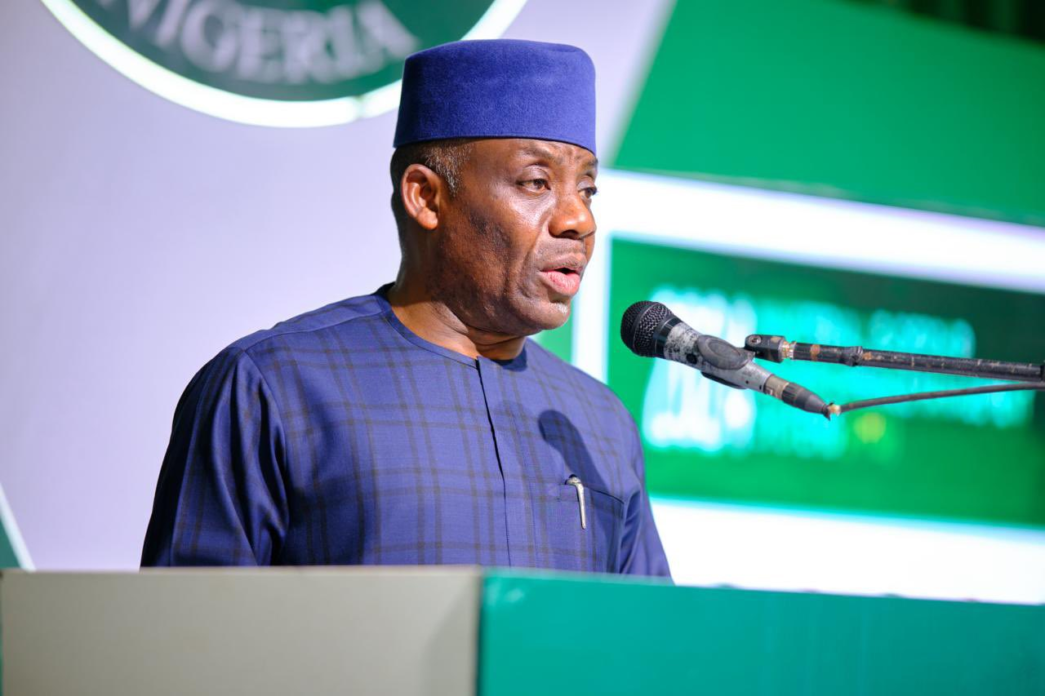
Finance Minister and Coordinating Minister of the Economy, Taiwo Oyedele, explained that the savings did not appear as a separate item in the Federation Account.
Oyedele said, “Between June 2023 and December 2025, subsidy savings mobilised a sum of N15.8tn in resources for the Federation.
Many people will say, ‘Where is the subsidy saving?’ As a matter of fact, there wasn’t any line in the Federation Account with the description, ‘subsidy savings.’
“So, the subsidy savings showed up in the form of higher collection by Customs because, for every one dollar of import duty before, at N460, it became one dollar at N1,004, N1,003, N1,005. The NRS, Petroleum Profit Tax that it collected before, same dollar, higher amount in naira. So, the savings showed up in the Federation accounts by way of higher revenue collections as a result of the reforms.”
Further details from the scorecard showed that the N2.23tn spent on the Lagos-Calabar Coastal Highway represented about 34 per cent of the total strategic infrastructure expenditure.
Other major allocations included N366bn for road emergency intervention projects, N304.2bn for the Abuja-Kaduna-Kano Road, Section II, and N291.3bn for the Lekki Deep Sea Port Access Road.
The government also spent N250bn on the Renewed Hope Smallholder Support Programme and N228.4bn on the Ilesha-Akure-Benin road section.
In addition, N124.7bn was allocated to the construction of 1,550 housing units for Nigerian Armed Forces personnel, while N109.9bn went to Operation Lake Sanity, a multinational security operation.
The Ministry of Finance said the infrastructure investments were designed to tackle persistent challenges limiting investment, productivity and economic expansion.
“The objective is to use improved fiscal capacity to address infrastructure constraints that limit investment, productivity and economic growth,” the report stated.
The Lagos-Calabar Coastal Highway is among the administration’s four legacy road projects and is designed to connect nine states along Nigeria’s southern coastline.
Construction has progressed across several sections, including the 47.47km first section in Lagos, a 28km dual carriageway in Ogun, a 52km stretch in Ondo and sections in Calabar and Akwa Ibom.
The project has also generated public debate over its cost, funding arrangement and the pace of government disbursements.
The N6.47tn infrastructure expenditure formed only part of the N30.64tn increase in Federal Government spending during the period.
Wage adjustments accounted for the largest share at N9.39tn, while the impact of foreign exchange movements on external debt service amounted to N9.37tn.
A further N1.24tn was attributed to monetary policy effects on domestic debt service, while social welfare transfers received N424bn.
The FCT, Ecological Fund and Natural Resources-related interventions accounted for N419bn, while the higher naira cost of foreign obligations was put at N201bn.
The scorecard also disclosed that the Federal Government recorded N11.85tn in incremental borrowing during the period, underscoring the financial pressure associated with its reform and spending programmes.
Overall, wage adjustments and the foreign exchange impact on external debt service jointly accounted for N18.76tn, or about 61.2 per cent of the N30.64tn incremental expenditure recorded between June 2023 and December 2025.