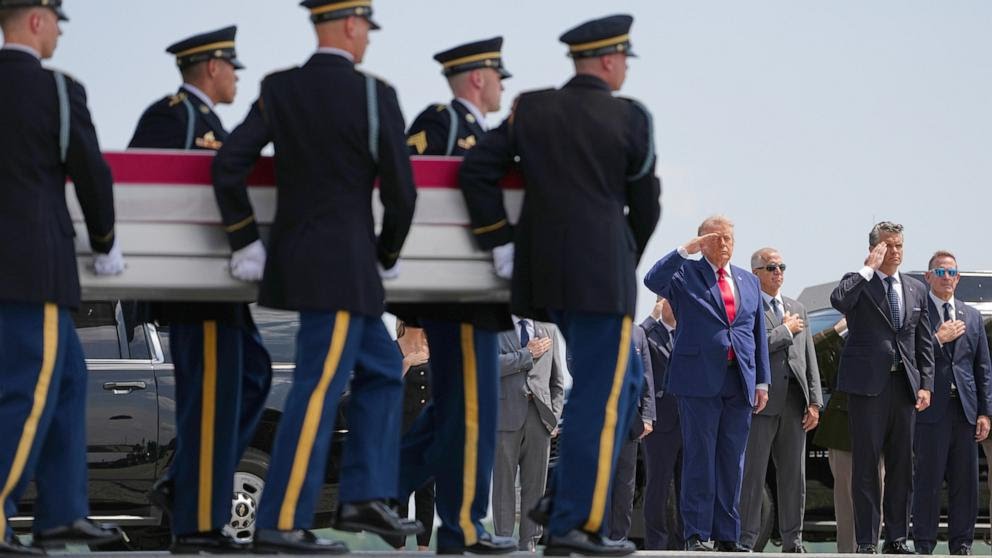
The Pentagon has revised its military casualty records, adding more than 140 wounded service members and reinstating the four soldiers killed in recent Iranian attacks, following growing criticism over inconsistencies in its reporting of the conflict’s human toll.
According to the updated Defence Casualty Analysis System released on Saturday, a new reporting category titled “Overseas Operations” has also been introduced to track personnel killed or wounded “starting July 7.”
With the latest revisions and updated figures for Operation Epic Fury, the US military has now recorded 18 troop deaths and 624 injuries since launching military operations against Iran on February 28.
The latest injury count marks a sharp increase from the previous total of 482 reported last week.
The Pentagon came under scrutiny after casualty figures on the DCAS website temporarily declined despite ongoing Iranian attacks.
In response, the 12 Democratic members of the Senate Armed Services Committee wrote to Defence Secretary Pete Hegseth on Thursday, seeking an explanation for the discrepancies.
The Defence Department’s acting press secretary, Joel Valdez, maintained in a Thursday social media post that the lower figures resulted from “temporary data disruptions on the (DCAS) website.” CNN also reported observing technical glitches that caused casualty numbers to fluctuate while monitoring the database.
CNN said it requested additional details from the Pentagon on Friday regarding the reported disruption, but the department had not responded as of Sunday afternoon.
Although the newly introduced “Overseas Operations” category begins from July 7, it does not specify which conflict the casualties relate to.
However, it includes a list of fallen personnel, among them three US Army soldiers killed in Jordan in an Iranian strike and another soldier who died in northern Iraq during the controlled detonation of an Iranian drone.
The July 7 start date aligns with President Donald Trump’s assertion in a War Powers notification to Congress that a new phase of the conflict with Iran began on that date. Under the War Powers Act of 1973, the president is generally required to end military operations within 60 days unless Congress authorises an extension.
The Trump administration argued that the ceasefire reached in April effectively reset the timeline on May 1.
That interpretation has drawn criticism from lawmakers across party lines, although some legal experts and officials argue that the War Powers Act imposes unconstitutional limits on presidential authority.
Secretary of State Marco Rubio defended that position during a White House briefing in May, stating the law is “unconstitutional, 100 percent.”
Speaking during a July 21 Senate hearing, Republican Senator Lisa Murkowski of Alaska questioned the administration’s interpretation, telling Hegseth she is “concerned” that it could undermine Congress’ constitutional role.
“The claim essentially allows the president to extinguish the War Powers clock just at the moment that it becomes legally inconvenient … avoiding the congressional authorization that the Constitution requires and the War Powers (Act) intends,” she said.