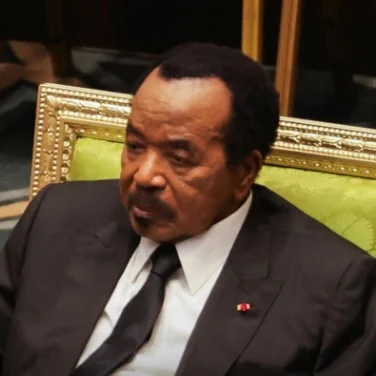
Cameroon’s political landscape is once again under scrutiny as President Paul Biya’s extended stay in Switzerland fuels renewed concerns over governance and succession in the Central African nation.
As of Saturday, Biya, 93, will have spent 48 days outside the country after departing Cameroon on June 7 for what officials described as a “short, private stay in Europe” with First Lady Chantal Biya.
The veteran leader, who has ruled Cameroon for more than four decades and remains the world’s oldest serving head of state, has frequently travelled to Geneva over the years.
His overseas trips have often triggered speculation about his health.
On June 18, Communication Minister Rene Emmanuel Sadi dismissed reports claiming the president had been admitted to a Geneva hospital, insisting the media reports were false.
Despite the government’s assurances, opposition figures argue that Biya’s prolonged absence reflects a growing leadership vacuum.
The vice-president of the Cameroon Renaissance Movement, Mamadou Mota, described the situation on Facebook on Friday as evidence of a “glaring institutional vacuum”.
Calls for clarity
Earlier this month, Cameroon Democratic Union (UDC) leader Patricia Tomaino Ndam Njoya urged the government to establish “an impartial procedure for determining the temporary or permanent incapacity” of the head of state.
The government has rejected claims that the president’s absence has affected the functioning of the state.
Speaking on Tuesday, Higher Education Minister Jacques Fame Ndongo said, “Wherever he is, the head of state is meticulously following the files submitted to him… by his aides.”
Questions over the country’s leadership are not new. Similar concerns surfaced in late 2024 when Biya spent nearly 50 consecutive days outside Cameroon.
On Friday, the opposition Social Democratic Front said the country was effectively operating “on autopilot”.
For many Cameroonians, Biya’s recurring absences over the past two decades have deepened frustration over what they see as a lack of decisive governance.
“People are worn out from waiting,” Viviane Ondoua Biwole, a professor of public management at the University of Yaounde, told AFP.
“First of all because the current government has been in place for eight years, which is a record. Next, because we are coming out of an election with very mixed results. Many people consider after an election, it is time for renewal,” she said.
Biya secured an eighth presidential term in October, an election that triggered demonstrations which were violently suppressed.
Authorities have admitted that “several dozen” people died during the unrest, although no official death toll has been released.
The election outcome was disputed by opposition parties and drew cautious reactions from several Western embassies.
In his New Year’s Eve address, Biya pledged to appoint a new cabinet “in the coming days”, but seven months later no reshuffle has taken place.
Meanwhile, municipal and legislative elections have been postponed repeatedly, allowing current officeholders to remain in office beyond their original mandates.
Succession speculation grows
Although the government has introduced some institutional reforms, uncertainty over Cameroon’s future leadership remains.
In March, the presidents of both houses of parliament were replaced, while constitutional amendments approved in May created the position of vice-president.
However, the office remains vacant.
The uncertainty has also fuelled misinformation.
Last month, forged documents imitating a presidential decree were sent to a state-owned radio station in Yaounde, falsely claiming that a vice-president had been appointed.
Journalists at the station verified the documents as fake and declined to report them as genuine.
The episode has intensified speculation over who could eventually succeed Biya.
“There is, more or less visible, a crisis at the highest levels of government between those close to the president,” Ondoua Biwole said.
Political scientist Stephane Akoa also pointed to growing tensions within the presidency.
“Increasingly leaks mention infighting between the various factions in his inner circle,” he told AFP.
According to Akoa, one of the competing factions is associated with First Lady Chantal Biya, who is “increasingly present in state affairs”, with “her name often being mentioned in decision-making and appointments”.
Under Cameroon’s constitutional order, if the presidency becomes vacant before a vice-president is appointed, Senate President Aboubakary Abdoulaye would assume interim leadership until a presidential election is held.