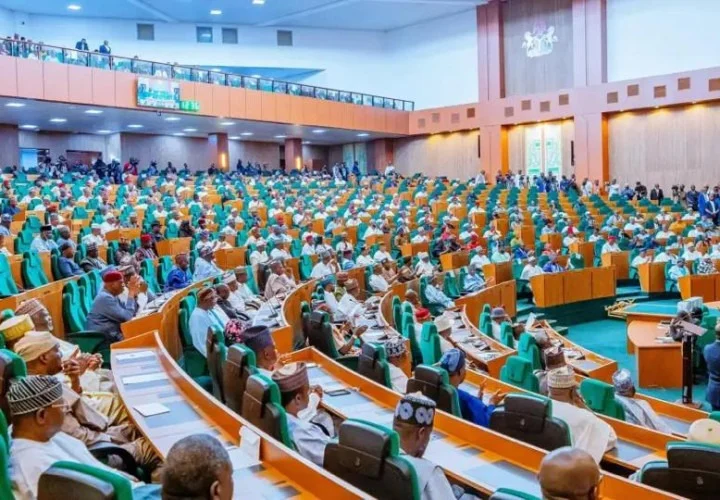
The House of Representatives has commenced consideration of President Bola Tinubu’s executive bill proposing the creation of state police, signalling its willingness to align with the version already approved by the Senate, subject to only minor amendments.
The Punch reported that the move represents another significant milestone in the constitutional amendment process designed to establish a multi-level policing system to tackle Nigeria’s escalating security challenges, including terrorism, banditry, kidnapping and communal conflicts.
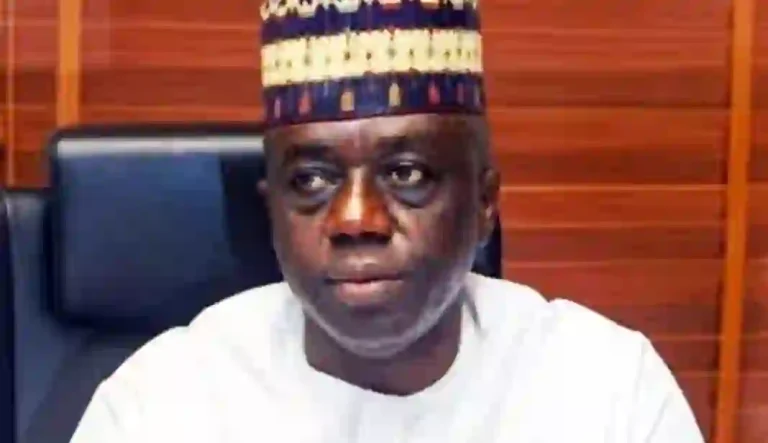
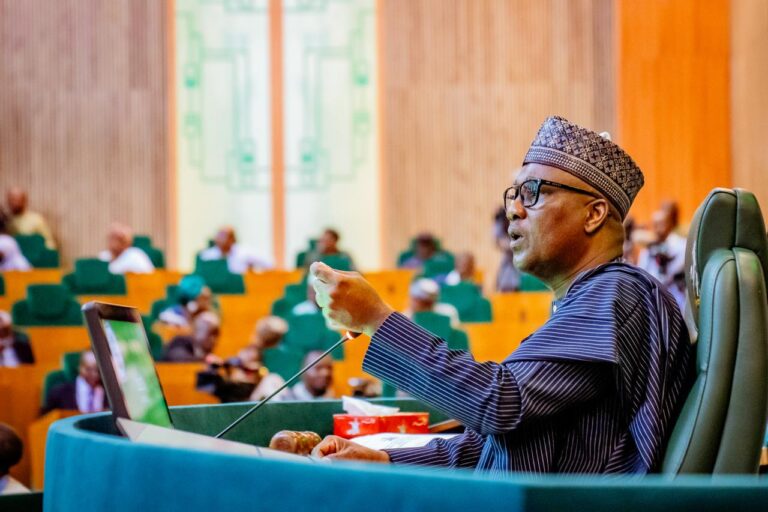
Speaking during a meeting of the House Committee on Constitution Review on Monday, the Deputy Speaker of the House of Representatives and Chairman of the Constitution Review Committee, Benjamin Kalu, said the committee would examine the executive bill clause by clause, adopting the Senate-approved version as its principal working document.
Kalu noted that the House was not expected to make substantial changes because the executive bill closely mirrors the version earlier considered by the Senate.
“The purpose of today’s meeting is to consider the executive bill clause by clause and make appropriate recommendations to the House. We must note that the Senate has already considered and adopted the bill with certain amendments, and copies of that version have been circulated to members. This document will serve as our working draft throughout this exercise.
“On the clause-by-clause consideration, the executive bill is substantially similar to what we have previously worked on, with only minor adjustments. Therefore, we do not anticipate any major departure from the work already undertaken,” Kalu said.
He disclosed that senators introduced about eight minor amendments, in addition to new provisions relating to interpretation, transitional arrangements and implementation, all of which would be carefully reviewed by the committee.
“You will see the introduction of Section 318 dealing with interpretation, as well as transitional and saving provisions to facilitate the implementation and operationalisation of the state police framework, together with other consequential amendments. The Senate also introduced about eight minor clauses with slight adjustments that are not too significant.
“So, as we proceed with this amendment process, we shall take into consideration the work already done by the Senate and adopt it where applicable,” he added.
Kalu reminded members that before the National Assembly went on recess, the House had passed its own Constitution Alteration Bill on State Police on June 11.
He explained, however, that the House later rescinded that decision on July 14 after President Tinubu transmitted his executive bill, allowing lawmakers to consider the President’s proposal instead.
“You may recall that on the June 11, before the recess, the House considered and passed the Police Constitution Alteration Bill. However, following the introduction of an executive bill by the President, that decision was reversed by the House on July 14, to enable consideration of the Executive Bill coming from the Commander-in-Chief of the Armed Forces,” Kalu said.
According to him, the President, as Commander-in-Chief of the Armed Forces, is in the best position to initiate broad constitutional reforms capable of addressing the country’s complex security situation.
He further stated that the executive bill had already passed first and second readings in the House, while consultations conducted during the National Assembly Open Week had effectively fulfilled the public hearing requirement.
Describing the proposal as one of President Tinubu’s flagship constitutional reform initiatives, Kalu said the President had consistently championed decentralised policing since his time as Governor of Lagos State.
“I must emphasise that the State Police Bill remains one of the signature constitutional reform initiatives of His Excellency, President Bola Tinubu. As Governor of Lagos State, he was among the earliest advocates of multi-layered policing as a strategic solution to Nigeria’s security challenges. Today, as President, he is championing the same cause, demonstrating consistency between his convictions and his actions,” he added.
Kalu stressed that both the executive and legislative arms of government shared a common commitment to strengthening national security.
“As we have always argued, although we are three arms of government, we are one government. There is a national objective, and all we do is align ourselves with it, especially when that objective is in the best interest of Nigerians. Today, there is a national consensus that security must remain at the forefront of governance, and both the executive and the legislature are committed to achieving that objective,” he stated.
He explained that the committee met on Monday, despite the House’s normal legislative schedule beginning on Tuesdays, because of the urgency attached to the proposed amendment.
“We are here today not because it is convenient for us. Our parliamentary week ordinarily begins on Tuesday, but duty calls, and time is of the essence. We are joining hands with the executive to ensure that this collaborative effort results in the successful passage of this priority constitutional amendment,” he stressed.
The Deputy Speaker also revealed that both chambers of the National Assembly were collaborating closely to ensure the constitutional amendment process is concluded without unnecessary delay.
“Historically, the House and the Senate are working in tandem to ensure this significant constitutional amendment is achieved. I am confident that once it returns to the executive, it will receive expeditious assent,” he noted.
The proposal to establish state police has remained one of Nigeria’s most debated constitutional issues for over two decades.
Proponents argue that the country’s centralised policing system is overstretched and no longer able to respond effectively to increasingly localised security threats. They believe state-controlled police services would improve intelligence gathering, enhance response times and strengthen community policing.
Opponents, however, maintain that state police could be exploited by governors for political purposes, particularly during elections and periods of heightened political rivalry.
To allay such concerns, the proposed constitutional amendments are expected to include safeguards regulating the establishment, funding, oversight and operations of state police formations.
If approved by both chambers of the National Assembly, endorsed by at least two-thirds of the 36 state Houses of Assembly and signed into law by President Tinubu, the legislation would rank among the most significant reforms to Nigeria’s policing architecture since the country returned to democratic governance in 1999.