Nigeria has taken a significant step towards establishing state police services after the Senate approved the Constitution Alteration Bill aimed at decentralising policing powers.
The Punch reported that the development now places the proposal before the 36 state Houses of Assembly, where endorsement by at least 24 legislatures is required before it can become law.
The Senate’s approval marks a major milestone in a debate that has shaped Nigeria’s security discussions for years, particularly amid escalating concerns over terrorism, banditry, kidnapping, communal clashes and other forms of criminality across the country.
The proposed legislation seeks to create state-controlled police formations that would operate alongside the existing Nigeria Police Force.
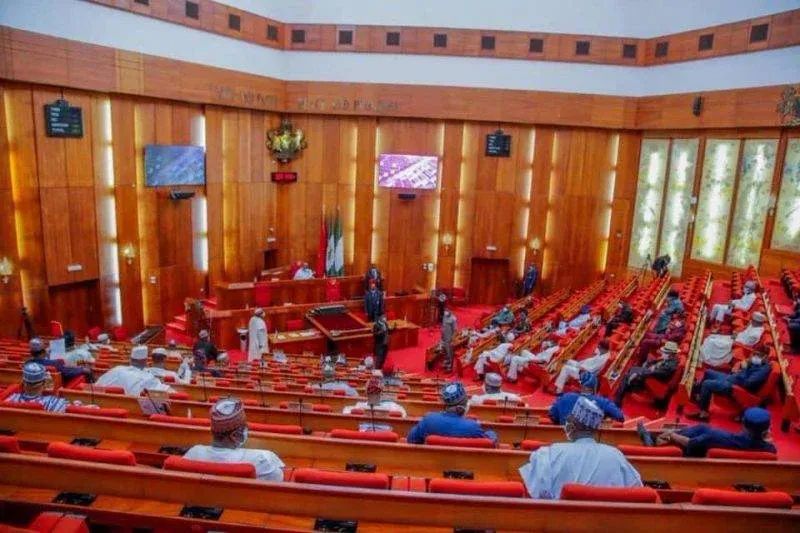
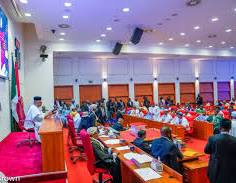
Senators adopted the bill after securing the constitutionally required two-thirds majority through manual voting following technical issues with the chamber’s electronic voting system.
With both chambers of the National Assembly now supporting the initiative, attention has shifted to state legislatures, whose decisions will determine whether Nigeria moves away from its long-standing federal policing structure.
The proposal is widely considered one of the most far-reaching constitutional reforms since Nigeria’s return to democracy in 1999.
A key provision of the amendment grants governors the authority to appoint Commissioners of Police for their states, subject to confirmation by the respective state Houses of Assembly.
Clause 17 of the proposed amendment states that, “while the Federal Police Service will continue to be headed by the Inspector-General of Police, each State Police Service shall be headed by a Commissioner of Police appointed by the governor and confirmed by the legislature of the state.”
The arrangement would establish a dual policing framework, with federal and state police agencies operating simultaneously.
The Senate approved the measure after considering recommendations submitted by the Senate Committee on the Review of the Constitution, chaired by Deputy Senate President Barau Jibrin.
The bill was first examined at the Committee of the Whole before lawmakers adopted its provisions and proceeded to the final vote.
Presenting the case for the amendment, Senate Leader Senator Opeyemi Bamidele described it as a balanced framework designed to accommodate local security needs without undermining national unity.
“The bill is intended to retain the Nigeria Police Force for federal policing duties while providing for the establishment of state police services in states that choose to adopt them,” he stated.
Bamidele explained that state police would focus on enforcing state laws, maintaining public order, preventing and detecting crimes, protecting lives and property, and handling other security responsibilities within their jurisdictions.
He added that the federal police would continue to oversee matters such as counter-terrorism, organised crime, cybercrime, border protection, arms trafficking and interstate criminal offences.
The Senate Leader further clarified that federal authorities would only intervene in state security matters under exceptional circumstances, including situations where there “is outright breakdown of public order at a specific subnational entity; when state police are incapable of functioning; when there is serious violation of fundamental rights; when there is an established record of electoral intimidation and when national security is under threat.”
According to him, any intervention would require written approval from the President and Commander-in-Chief and would remain subject to oversight by the Senate and judicial review.
Safeguards Against Abuse
To address fears that governors could misuse state police for political purposes, lawmakers included several constitutional safeguards.
One such provision states that “a state Commissioner of Police shall not arrest, detain, investigate or deploy force against any person, political party or group merely for criticising the government except in accordance with the law.”
The Senate also proposed that the National Assembly should establish minimum nationwide standards covering recruitment, training, promotions, discipline, firearms usage, complaints procedures, accountability measures, data management and professional conduct for state police organisations.
Bamidele maintained that the amendment seeks “to balance local policing autonomy with national cohesion, accountability with operational effectiveness and federal oversight with state responsibility.
“The bill provides robust safeguards against abuse, preserves federal authority where necessary, protects constitutional rights and creates a modern policing framework capable of addressing contemporary security challenges.”
The issue of state police has remained controversial since the beginning of the Fourth Republic, with supporters arguing that a centralised police structure is inadequate for a country of over 200 million people.
Advocates believe locally recruited officers would possess better knowledge of their communities, languages and security realities, thereby enhancing intelligence gathering and crime prevention efforts.
Opponents, however, have consistently expressed concerns that state governments could use the proposed police formations to suppress political opponents and influence elections.
Manual Voting Adopted
The significance of the amendment was reflected in the Senate’s decision to switch from electronic voting to a manual process after technical problems affected some voting devices.
Explaining the move, Bamidele said, “Rather than go by way of electronic voting, which obviously now will disenfranchise a few or some of our colleagues whose machines are not working, I am moving that we allow every distinguished senator to answer his or her father’s name by doing manual voting.”
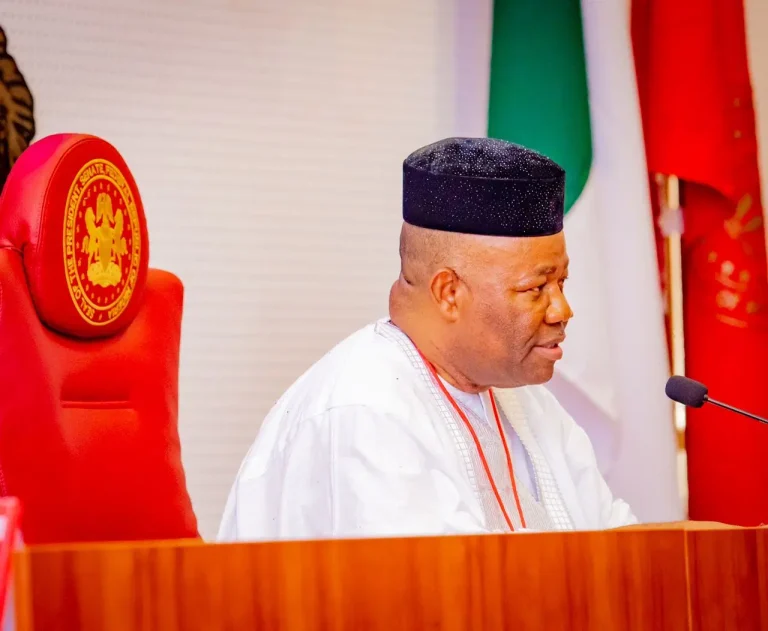
Senate President Godswill Akpabio supported the proposal.
“For transparency, and the need for the constituents to know where you stand on every issue, it is good for us to go into manual voting,” Akpabio said.
The Senate subsequently suspended relevant provisions of its Standing Rules and conducted clause-by-clause voting.
Several prominent political figures observed proceedings from the gallery, including Kaduna State Governor Uba Sani, Ogun State Governor Dapo Abiodun, Ondo State Governor Lucky Aiyedatiwa and Chief of Staff to the President, Femi Gbajabiamila.
Retired Police Chief Endorses Proposal
Retired Assistant Inspector-General of Police, Aare Tunji Alapinni, welcomed the Senate’s decision, describing state police as a potential boost for grassroots security and community policing.
Speaking on Frontline, a programme on Eagle 102.5 FM in Ilese-Ijebu, Ogun State, Alapinni urged Nigerians to support the initiative.
“I’m not saying it has failed. It has not failed. But people are clamoring to see that things could be better. There’s always room for improvement in anything. So, if there’s room for improvement, there’s room for state police. That’s the way I look at it,” he said.
He added, “The security situation, in the country calls for doing same thing in a different manner and I think the introduction and the clamour for state police is a welcome development, nothing ventured, nothing gained. If we explore it and see how it works, no matter what, we stand to benefit from it. Forget about the pros and the cons. We have lived over the years with entry policing.”
Addressing concerns over funding and training, Alapinni said, “The issue of funding and lack of training or retraining has been part of the malaise that has been affecting the constitutional responsibility of policing in the country.
“Whether funding or no funding, we have to look at it from the angle of what can we do to make police solid. And I think the present inspector-general of police is trying to do his best by giving directives and that’s okay.”
He also emphasised the importance of restoring community intelligence networks.
“Twenty years ago, if a stranger comes into town, people walking around would notice that this man is a stranger and the community will watch him. That’s part of the things we have lost. Those are the things we want to gain with community policing,” he said.
Amotekun Expresses Readiness
The Western Nigeria Security Network, known as Amotekun, also declared its readiness for a transition to state policing.
Chairman of Amotekun Commanders in the South-West, Adetunji Adeleye, described decentralised policing as the most effective response to Nigeria’s security challenges.
He said, “On the issue of state policing in the last couple of years, the position of the Council of Amotekun Commanders of the South West has always been that state policing remains the only viable solution to the present insecurity in the country because it’s easier, especially by adopting the Amotekun initiative, to identify criminals.”
Highlighting the outfit’s achievements, he added,”That is why you find out that this year alone we have arrested and prosecuted well over 500 suspected criminals, and in so many of those cases we’ve been vindicated. Some of them are serving their various jail terms.
“So, I think it is a giant stride in the right direction, adopting state policing as a way of decentralising the security architecture of the country.”
“As per our readiness, as far as the southwest is concerned, we are ready to adjust and conform to whatever is put in place to ensure the smooth takeoff of state policing.”
Former Ondo State House of Assembly Speaker Jumoke Akindele also backed the initiative.
“As for the quest to have the requirement of state police entrenched in our Constitution, suffice it to say that methinks that the success of the Amotekun Corps of Ondo State is the strongest case for state police in Nigeria,” she said.
States Hold Decisive Vote
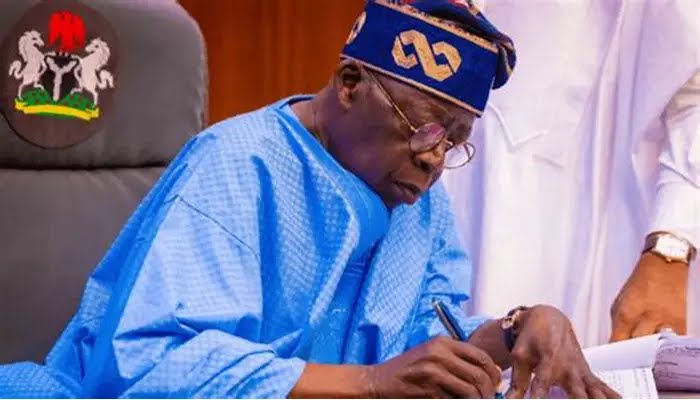
Despite the Senate’s approval, the constitutional amendment must still secure endorsement from at least 24 state Houses of Assembly before it can be sent to President Bola Tinubu for assent.
The next phase is expected to trigger intensive consultations among governors, legislators, security experts and other stakeholders nationwide.
If successful, the reform would usher in one of the most significant changes to Nigeria’s security architecture in recent history.
DAWN Commission DG Welcomes Development
Director-General of the Development Agenda for Western Nigeria Commission, Seye Oyeleye, also praised the passage of the bill, describing it as an important step towards addressing insecurity.
Speaking with The Punch he said, “State police is not the silver bullet to our security challenges. There is no silver bullet for now, but it will go a long way.”
He argued that a centralised police system is no longer suitable for Nigeria’s population and diversity.
“We are a country of 230 million people with different ethnic groups. One-size-fits-all policing is no longer adequate,” he said.
Oyeleye noted that many communities remain vulnerable due to limited security presence.
“Some of these places where bandits invade to kill people do so because they know there is no security presence. In some communities, the nearest police station is three hours away. When states have their own police forces, they will know the critical areas and where to deploy officers, and people will feel more secure,” he added.
Describing the development as historic, he said, “Today is a momentous day and an epochal day for Nigeria. For those who have been clamouring for true federalism over the years, this is a great day.”
He also highlighted the limitations faced by governors under the current structure.
“We keep calling governors the chief security officers of their states, but that is only on paper. The state commissioner of police still takes orders directly from Abuja, even though state governments provide vehicles, equipment and other logistics for the police,” he said.
Commending President Tinubu, Oyeleye added, “One has to congratulate President Bola Tinubu for being bold enough to go down this route. The reality of Today is totally different from what it was in the 1970s and 1980s when we could get away with a single police force.”
Addressing concerns over abuse, he said, “There have to be safeguards, and if we discover areas that require improvement, they can always be amended. In this age of technology and modern communication, the chances of governors misusing state police are quite remote.”
He further pointed to the Amotekun model as evidence that decentralised security outfits can operate without political interference.
When asked whether Amotekun should be integrated into future state police structures, Oyeleye replied, “I would not like to pre-empt my principals, so I will leave that to the state governors.”