At least 8,521 Nigerians fled to neighbouring countries between December 2025 and May 2026, seeking refuge in Niger Republic, Cameroon and Chad due to worsening insecurity in Nigeria’s North-West and North-East regions.
According to The Punch, this figure is drawn from an analysis of data on the UNHCR Nigeria Forcibly Displaced Populations dashboard covering the six-month period.
The dataset, jointly compiled by the UNHCR, the National Commission for Refugees, Migrants and Internally Displaced Persons, the Nigeria Immigration Service, and the International Organisation for Migration Displacement Tracking Matrix, indicates a net rise in Nigerian refugees across the three neighbouring countries during the review period.
Overall, the registered Nigerian refugee population in Niger, Cameroon, and Chad now stands at 416,184.
Niger Republic recorded the most significant increase, with figures climbing from 258,359 in December 2025 to 268,967 by May 2026, an addition of 10,608 people within six months.
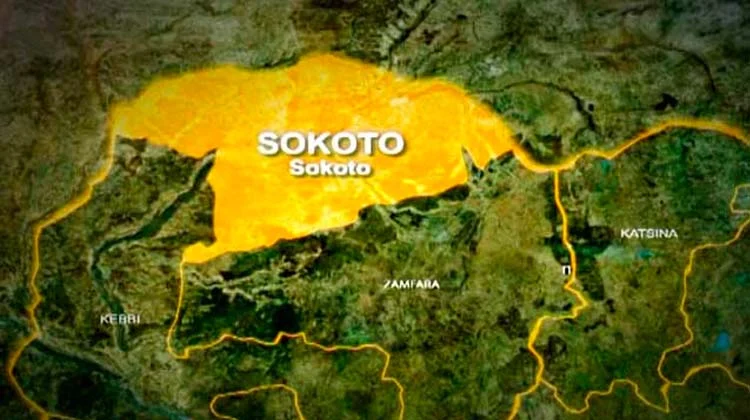
The country shares a long and porous border with Nigeria’s insecurity-hit North-West states, including Sokoto State, Zamfara State and Katsina State.
During the same period, internally displaced persons in Sokoto State also surged sharply, rising from 88,562 to 181,526.
In Cameroon, about 125,192 Nigerian refugees are currently hosted, mainly in the Far North Region and around the Minawao refugee camp.
Meanwhile, Chad shelters 22,025 Nigerians, largely concentrated in the Lac Province, particularly around Baga Sola and Ngala.
According to the UNHCR Nigerian Refugees and Repatriation Overview, most of those displaced originate from Borno State, Yobe State and Adamawa State—states long affected by Boko Haram and ISWAP insurgency since 2009.
In Niger, many of the displaced are settled in the Diffa region near the Nigerian border, spread across about 135 informal encampments along a 200-kilometre stretch of Route Nationale 1, close to the Komadougou River.
Border communities receiving refugees include Kuluk, Gashua, Machina, and Malkotan.
The report also noted that the recent spike in displacement toward Niger aligns with worsening insecurity in Sokoto and Zamfara states.
In the first half of 2025, at least 2,266 people were killed by insurgent and bandit attacks, surpassing the total fatalities recorded in 2024.
A broader assessment covering two years of President Bola Tinubu’s administration shows that at least 10,217 people were killed in attacks across Benue, Edo, Katsina, Kebbi, Plateau, Sokoto and Zamfara states.
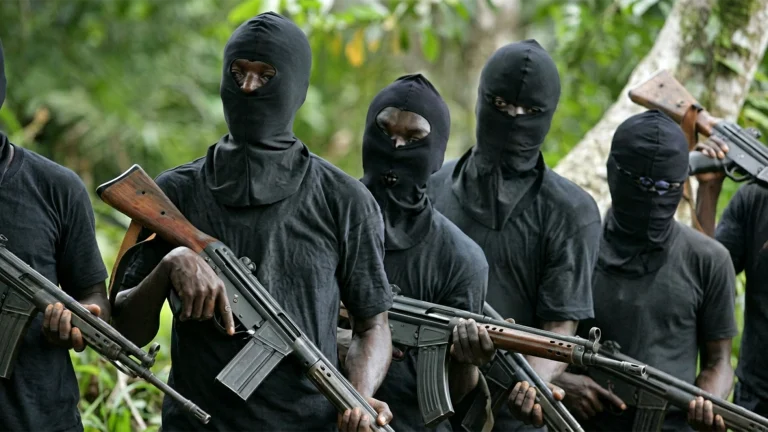
In 2025, the emergence of Lakurawa, a new armed group operating across Niger and Mali borders, further intensified insecurity in the North-West and North-Central regions.
In Niger’s Diffa region, which has remained under a state of emergency since 2015, ISWAP continues to maintain operational presence.
The Famine Early Warning Systems Network has projected Crisis-level food insecurity outcomes for the region through May 2026, driven by ongoing conflict.
Among displaced populations there, 63 per cent reportedly have inadequate access to food, while 43 per cent lack sufficient access to clean water.
UNHCR’s repatriation overview further shows that 37,911 Nigerians have returned from the three countries since 2019.
In 2025 alone, 26,775 returned, including over 17,000 who were repatriated from Niger by the Federal Government between April and November 2025, as well as more than 7,000 from Chad after a tripartite agreement concluded in 2025.
By April 2026, another 3,510 Nigerians had returned, all resettling in Borno State.
Despite these returns, voluntary repatriation remains limited. In December 2025, Governor Babagana Zulum visited the Minawao camp and announced a cash incentive of N500,000 per returning household.
However, only 3,122 of more than 50,000 refugees in the camp have so far agreed to return.
A separate UNHCR survey also found that just 32 per cent, about 23,000 respondents across the three countries, expressed willingness to return to Nigeria.
As of the time of filing this report, no formal tripartite repatriation framework has been concluded with Niger, which hosts the largest number of Nigerian refugees.
A draft agreement between Nigeria, Niger, and UNHCR is still awaiting review, according to the February 2026 dashboard.
The Federal Government, through the North-West Governors’ Forum and with support from the United Nations Development Programme, launched the State-Level Adoption of the National Policy on IDPs and corresponding State Action Plans for Durable Solutions in Katsina and Zamfara on February 16, 2026.
The IOM has also expanded its humanitarian response beyond the North-East to include Katsina and Zamfara states.
In his third-anniversary address on May 29, President Bola Tinubu acknowledged ongoing security challenges but maintained that progress was being recorded nationwide.
He said, “Our Armed Forces and security agencies have intensified operations against terrorists, bandits, kidnappers, oil thieves, and criminal networks. While challenges remain, many communities and highways are becoming safer and more economically active.”
At the time of filing this report, the Special Adviser to the President on Information and Strategy, Bayo Onanuga, had not responded to phone calls or a text message sent to his line.