Senegal’s President, Bassirou Diomaye Faye, has appointed a senior economist as prime minister following the sudden dismissal of his former ally-turned-rival, in a major political shake-up driven by efforts to tackle the country’s worsening debt crisis.
The move comes after President Faye on Friday removed his estranged former mentor Ousmane Sonko from office and dissolved the government, deepening months of political tension within the ruling establishment.
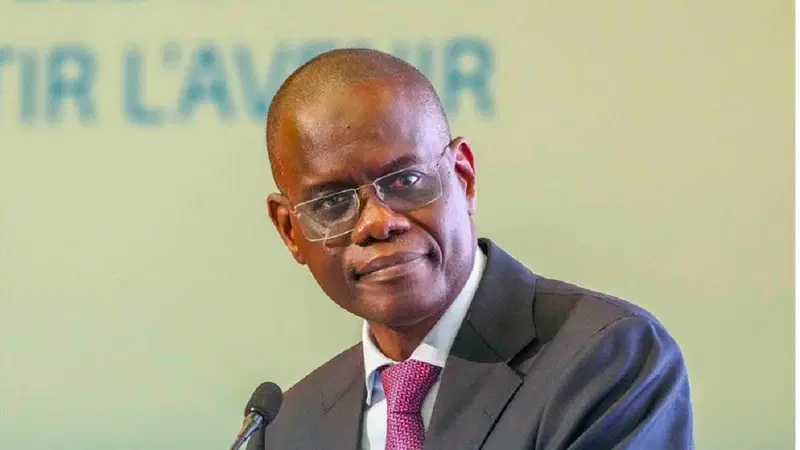
The new prime minister, former central banker Ahmadou Al Aminou Lo, previously worked with the Central Bank of West African States.
His appointment decree described him as someone who understands “the inner workings of the economy and finance”.
Senegal is currently grappling with a severe debt burden estimated at around 132 percent of GDP.
When Faye and Sonko assumed power in 2024, they accused the administration of former president Macky Sall of concealing part of the country’s debt, a claim that contributed to the suspension of a $1.8 billion IMF support programme agreed in 2023.
In his first remarks after being named prime minister, Lo sought to reassure the public, saying, “Senegal is a safe and viable country and intends to remain so,” while acknowledging the nation’s “difficult financial situation”.
He added, “This is not a change of direction but of method,” stressing principles of integrity, transparency, and “economic and cultural sovereignty”, language long associated with Sonko’s political message.
Meanwhile, Senegal’s parliament is expected to vote on Tuesday on whether Sonko should be reinstated as a lawmaker and possibly elected speaker of the National Assembly, a proposal that has sparked fierce backlash from the opposition, which has described it as an institutional power grab.
Faye, who relied heavily on Sonko during his rise to the presidency, would have likely lost his chance at the top job had Sonko not been barred from contesting due to a defamation conviction.
Although the two leaders once shared a close political alliance under their Pastef party, their relationship has deteriorated as disagreements mounted over how to manage Senegal’s economic crisis.
Faye has leaned toward renewed engagement with the IMF, while Sonko has advocated a more sovereign, domestically driven economic approach.
Their party secured a strong mandate in the 2024 elections on a platform of reform, anti-corruption, and economic renewal, with Sonko attracting significant support from younger voters.
Despite Sonko’s popularity and influence, executive power remains firmly with President Faye, who has the authority to dismiss the head of government by decree.
Sonko was elected to parliament in the November 2024 legislative elections but later requested that his mandate be suspended after being appointed prime minister shortly after the election victory.
On Sunday, parliamentary speaker and Sonko ally El Malick Ndiaye resigned, paving the way for Sonko’s potential return to a leadership role in the legislature, where Pastef holds a commanding majority.
Lawmakers are scheduled to meet at 9:00 am Tuesday (0900 GMT) to vote on the “reinstatement of the deputy Ousmane Sonko” and to elect a new National Assembly president.
Opposition figures have condemned the developments, with Aissata Tall Sall, leader of the main opposition coalition, describing the situation as an “institutional coup” allegedly driven by political pressure from the ruling bloc.
She argued that Sonko should have formally resigned as prime minister before returning to parliamentary duties, and called on President Faye to seek guidance from the Constitutional Council to prevent what she termed an “illegal diktat of the majority”.
Under current rules, parliament must approve the president’s choice of a new prime minister within three months of appointment.
However, the president is restricted from dissolving the legislature until November, two years after the last parliamentary elections.
A recent electoral code reform also makes Sonko eligible to run for president in future elections, raising the possibility that the former allies could eventually face each other as rivals in a presidential contest.