The Socio-Economic Rights and Accountability Project has taken the Federal Government of Nigeria to the ECOWAS Community Court of Justice, challenging regulations that permit the interception of communications.
In the suit filed against the administration of President Bola Tinubu, the organisation is asking the court to compel the government to withdraw the Lawful Interception of Communications Regulations, 2019 (LICR 2019), which it described as enabling unlawful mass surveillance.
The regulations allow telecommunications companies to install systems that enable security agencies to monitor communications such as voice calls, emails, text messages, data and internet browsing for security and crime-fighting purposes.
SERAP disclosed the legal action in a statement issued on Sunday by its Deputy Director, Kolawole Oluwadare.
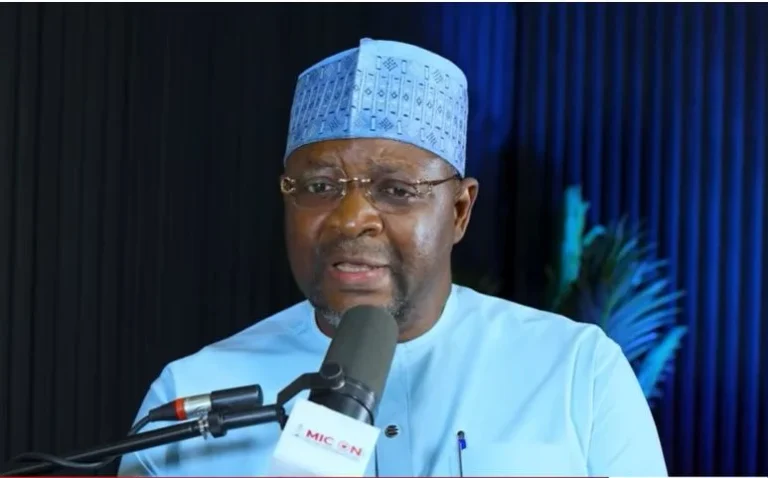
According to the organisation, the lawsuit was prompted by claims from former Kaduna State governor, Nasir El-Rufai, who alleged that the phone conversation of the National Security Adviser, Nuhu Ribadu, had been intercepted.
El-Rufai reportedly said, “The NSA’s call was tapped. They do that to our calls too, and we heard him saying they should arrest me.”
The suit, numbered ECW/CCJ/APP/11/26, was filed last Friday in Abuja by lawyers representing SERAP, including Oluwadare, Oluwakemi Oni, Valentina Adegoke and Maryam Mumuni.
The organisation is asking the court to declare that the government’s failure to withdraw the interception regulations violates Nigeria’s obligations under international human rights law.
SERAP argued that the rules effectively create a sweeping surveillance framework that threatens citizens’ rights to privacy and freedom of expression.
The group stated, “The failure of the government to withdraw the Interception of Communications Regulations amounts to an endorsement of unlawful mass phone-tapping rules which undermine democratic principles, the rule of law and the right to privacy.”
SERAP is also seeking an order directing the government to immediately withdraw the regulations and begin a legislative process to ensure that any future interception laws comply with international human rights standards.
The organisation warned that unchecked surveillance powers could be abused against journalists, civil society actors, political opponents and election observers.
It added, “Where powers affecting fundamental human rights are exercised in secrecy and concentrated in political authorities without independent supervision, the risks of arbitrariness are substantial.”
SERAP further expressed concern about the implications of the regulations as Nigeria moves closer to the 2027 general elections, noting that broad interception powers could be misused during politically sensitive periods.
According to the organisation, “Even the perception that private communications are being monitored can discourage political organising, investigative reporting and voter mobilisation.”
The group insisted that any limitation on privacy rights must meet the standards of legality, necessity and proportionality, stressing that the current regulations do not satisfy these requirements.
It also cited the Office of the United Nations High Commissioner for Human Rights as warning that indiscriminate mass surveillance programmes are arbitrary and incompatible with international human rights obligations.
SERAP maintained that the Nigerian government must ensure clear legal safeguards, independent oversight mechanisms and accessible remedies to prevent abuse by security agencies and telecommunications providers.
No date has yet been fixed for the hearing of the case at the ECOWAS court.