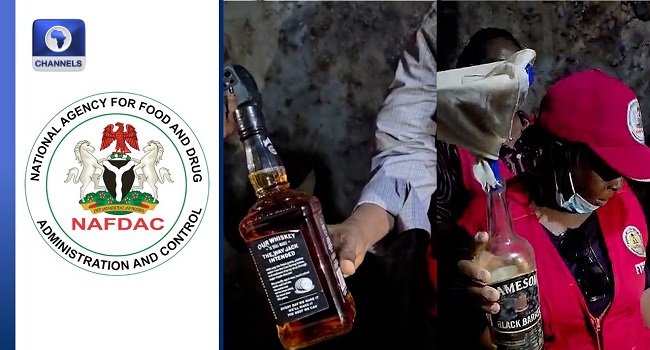
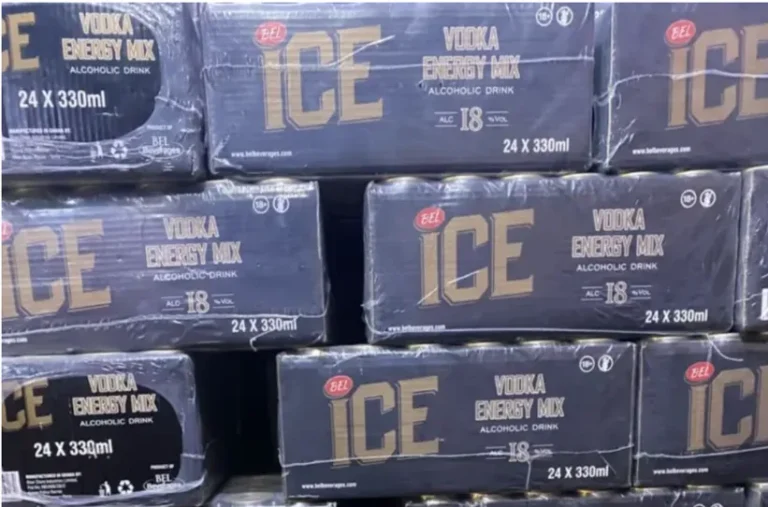
The National Agency for Food and Drug Administration and Control (NAFDAC) has dismissed claims that a court order has stopped the enforcement of the ban on sachet alcohol, insisting that no injunction has been served on the agency.
The Director-General of NAFDAC, Prof. Mojisola Adeyeye, stated this on Friday during an interview on ARISE News, amid reports that the crackdown on sachet alcohol had been suspended by a court ruling.
“NAFDAC has not been served with any court order. If we had been served, I would have been officially informed,” Adeyeye said.
She explained that the agency resumed enforcement based on legislative backing, noting that the Senate had directed NAFDAC to proceed with implementation.
“The Senate instructed us to resume enforcement, and that is exactly what we have done,” she added.
Defending the policy, Adeyeye said the ban was driven by public health concerns, particularly the protection of children, and not an attempt to stifle business activities.
“This is about health and safety, not about destroying businesses. We cannot sacrifice our children on the altar of trade,” she said.
According to her, sachet alcohol poses a serious risk due to its high alcohol content and ease of concealment, making it readily accessible to minors.
“These products contain between 43 and 45 per cent alcohol and can easily be slipped into the pockets of primary and secondary school students,” she explained.
Adeyeye said NAFDAC began raising concerns about sachet alcohol as far back as 2018 and later reached an agreement with manufacturers, under the supervision of the Federal Ministry of Health, to phase out the products within five years.
“We all signed an agreement that after five years, alcohol would no longer be sold in sachets,” she said.
She noted that although the initial deadline expired in January 2024, the agency granted an additional one-year extension following appeals from lawmakers and industry stakeholders, which elapsed in December 2025.
“Despite further pressure for extensions, enforcement resumed after Senate intervention,” Adeyeye stated.
The NAFDAC boss rejected arguments that warning labels could curb underage consumption, questioning the effectiveness of such measures.
“Labels like ‘Not for under-18s’—who is going to enforce that in Nigeria? Are we really kidding ourselves?” she asked.
She also clarified that the ban does not amount to a prohibition of alcohol altogether.
“We are not banning alcohol. Alcohol is approved in various packaging formats. What we are banning is alcohol in small sachet packs,” she said.
Addressing criticisms that NAFDAC continued registering sachet alcohol products during the moratorium, Adeyeye admitted that the agency acted in line with legislative directives at the time.
“In hindsight, we have learnt that perhaps we should not have continued registering those products during that period,” she said.
Adeyeye further explained that enforcement actions were targeted at production lines rather than entire companies.
“We are shutting down production lines, not companies,” she clarified.
She added that consultations with manufacturers were ongoing throughout the process, including regular meetings with the Manufacturers Association of Nigeria.
Reiterating her position, the NAFDAC chief accused some industry players of prioritising profit over public health.
“Their focus is on money, not health. Our responsibility is to protect Nigerians, especially our children,” she said.