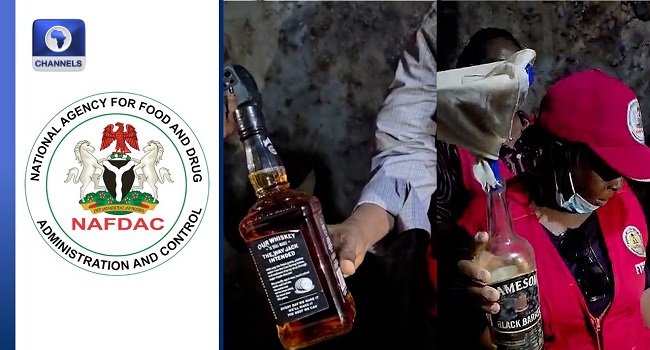
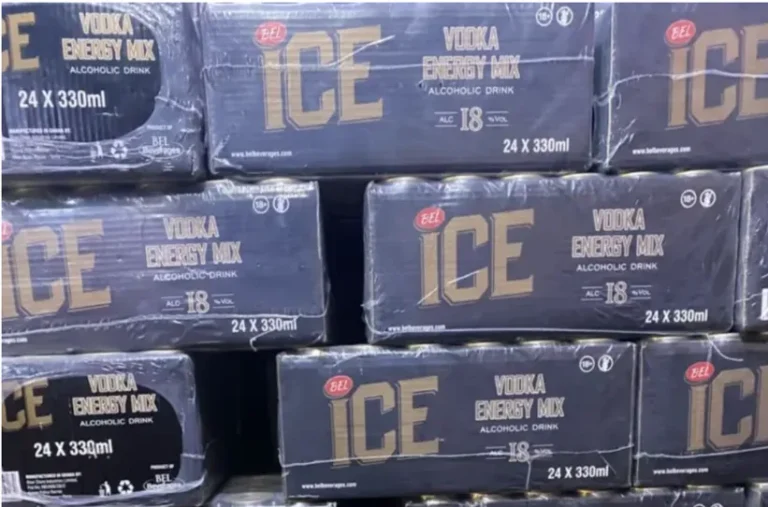
The National Agency for Food and Drug Administration and Control has explained the rationale behind its enforcement ban on alcoholic beverages sold in sachets and in PET or glass bottles below 200ml, citing grave public health risks, especially to children.
In a video shared on Tuesday via the agency’s X handle, the Director-General of NAFDAC, Prof. Mojisola Adeyeye, addressed journalists and clarified that the policy is not targeted at restricting adult alcohol consumption but is focused on preventing early exposure of minors to high-alcohol products.
“I’m not opposed to use of alcohol for adults. Adults’ physiological makeup is more matured to handle alcohol. But the point is, children are not small adults. Children are children. Their physiology is for children.
“When a child consumes alcohol or starts consuming alcohol early, their systems are exposed to alcohol early. So what the systems, their physiological systems cannot handle. Their physiological systems are exposed to alcohol early and there is always damage.”
Adeyeye warned that alcohol sold in sachets often contains dangerously high concentrations.
“Alcohol has concentration of like 43% alcohol. You can drink 2 sachets that are 10 times more than beer… because beer is about 6 to 8% alcohol. But some of the sachets of alcohol contain up to 43% alcohol,” she explained.
She traced the history of the policy, revealing that discussions around regulating sachet alcohol had been ongoing for several years before enforcement began.
“I joined NABLAC in 2017… and we said, OK, we cannot ban it now. Let’s reduce the concentration. But as we were doing all this, they went to the Ministry of Health in 2018 to report NABLAC. So meetings were called… finally, in 2018, the Ministry of Health said, OK, let’s give a moratorium of five years. Because the complaints were going to affect jobs in 2018.
“Moratorium of five years for them to re-evaluate their work business plan. So that at the end of five years, there will not be sachet of alcohol, or alcohol in PET less than 200ml. All of us signed. NABLAC, Ministry of Health, D-BAN, and AFBT,” she stated.
According to her, enforcement initially commenced in early 2024 but was paused to allow for further stakeholder engagement.
“We started enforcing February 1st, 2024… then we had to stop… Just to make sure that we agreed, come to some agreement. At the end of 2024, December, the minister said we should give a moratorium, an extra one year, to 2025, December. And that’s what we are doing.”
She also cautioned that improper alcohol use poses risks even for adults.
“Even taking it, even as an adult, while working, may be dangerous. That is how easy a sachet of alcohol can be accessed,” she said.
The renewed enforcement aligns with NAFDAC’s November 11, 2025 announcement to fully implement the ban by December 2025, following a directive from the Senate.
However, the policy has drawn resistance from civil society groups and workers in the sachet alcohol industry, who argue it could trigger widespread job losses.
Members of the Food, Beverages and Tobacco Senior Staff Association and the National Union of Food, Beverages and Tobacco Employees had earlier staged protests at NAFDAC’s Lagos office, warning that “no fewer than five million Nigerians would be affected, directly and indirectly, by the ban.”
Adeyeye, however, maintained that the decision is backed by scientific evidence and international agreements.
“The World Health Assembly had a meeting before my time, 2010, that all countries should debate on making alcohol inaccessible to children. And over 183 countries signed, including Nigeria, that we will not make alcohol accessible to children,” she said.
Reiterating NAFDAC’s position, the Director-General concluded that protecting children remains non-negotiable.
“Children cannot handle alcohol the way adults can. Their organs are still growing. Adults can decide to drink themselves to death. I’m sorry. They are responsible. But children, no. That is why we are enforcing this ban.”