In a renewed drive to achieve self-sufficiency in fish production, the Federal Government has pledged to curb Nigeria’s reliance on fish imports by strengthening local aquaculture and offering start-up grants to empower women and youth in the sector.
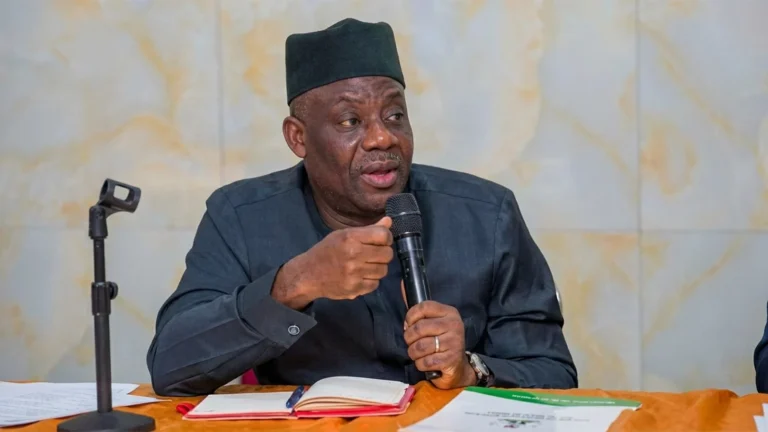
The commitment was made by the Minister of Marine and Blue Economy, Mr. Adegboyega Oyetola, during a consultative meeting with fisheries cooperative groups held on Wednesday in Abuja.
Oyetola shared the government’s strategic vision to make aquaculture a cornerstone of food security, employment generation, and export competitiveness, stressing the urgent need for Nigeria to shift from dependence on imported fish to robust local production.
“The Federal Government is fully committed to supporting the fisheries and aquaculture subsector through policy, technical support, and financial inclusion,” the minister said.
“We will scale up domestic fish production, reduce dependency on imports, and reposition the sector for sustainable growth.”
Highlighting the importance of youth participation, Oyetola described their inclusion as vital not only for boosting fish production but also for tackling the nation’s unemployment challenge.
He reaffirmed the administration’s resolve to economically empower young people and women, noting that several initiatives were already in motion.
He also assured stakeholders of ongoing engagements with both local and international partners to overcome industry hurdles.
The minister further disclosed that the government was in discussions with the World Bank to secure funding for fish farmers.
Additionally, efforts were underway to collaborate with the Nigerian Agricultural Insurance Corporation (NAIC) to offer affordable insurance packages for players in the sector.
“We are also in talks with the Federal Ministry of Water Resources to replicate the successful aquaculture model at the Oyan Dam across other regions,” he said.
“This meeting is only the beginning of a sustained and transformative dialogue. Integrated planning and inter-ministerial cooperation are key pillars of our strategy.”
In his remarks, the ministry’s Permanent Secretary, Mr. Olufemi Oloruntola, emphasized the government’s openness to forming strong alliances with cooperative societies to foster inclusive development in the fisheries industry.
Earlier, the President of the Fisheries Cooperative Federation of Nigeria, Mr. Mashi Sani, presented a proposal titled the Sustainable Livelihoods and Fish Food Security Initiative, aimed at boosting productivity and job creation across the fisheries value chain.
Sani outlined a N75 billion three-year action plan under SLESI to create one million sustainable jobs, cut post-harvest losses by 50 percent, and raise national fish output by 35 percent.
He emphasized the sector’s critical role in enhancing food security, rural income, and nutrition but noted that challenges such as overfishing, weak infrastructure, and limited access to finance continued to impede growth.
Calling on the ministry to adopt and fund the proposed initiative, Sani urged a collaborative approach with FCFN to promote sustainable livelihoods, strengthen food security, and fully develop the nation’s blue economy potential.
He also pressed for solutions to lingering issues, including poor transportation systems, weak market linkages, and insufficient technical support.