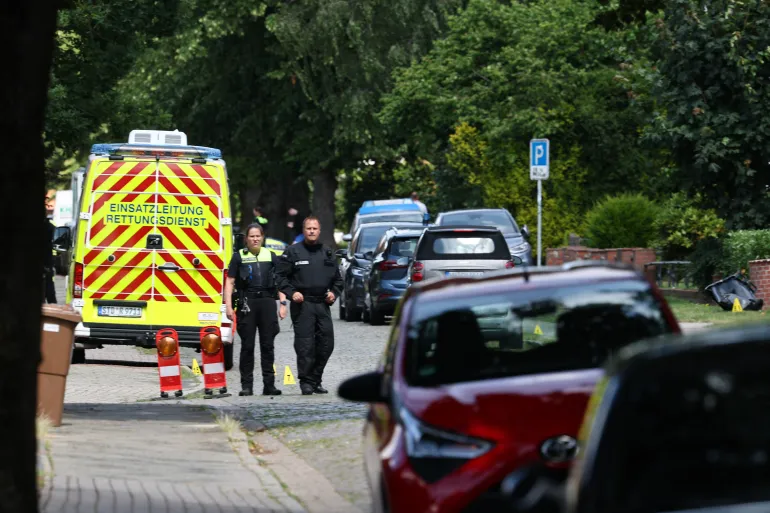
Nearly 100,000 people in Germany were left without power for several days after an alleged left-wing arson attack on Berlin’s electricity network caused a massive blackout amid heavy snow and subzero temperatures.
The disruption began in the early hours of Saturday when a fire broke out on a cable duct over the Teltow Canal, damaging several high-voltage cables near the Lichterfelde power plant.
Power was cut around 6 a.m., affecting roughly 45,000 households and more than 2,200 businesses across the districts of Nikolassee, Zehlendorf, Wannsee, and Lichterfelde, according to Stromnetz Berlin, the city’s electricity operator.
The outage left residents without heating, disrupted overground train lines, and hampered mobile phone connections.
Battery-operated Christmas decorations glowed in windows across the affected neighborhoods on Sunday morning, highlighting the stark impact of the blackout.
The activist group Vulkangruppe, also known as Volcano Group, later claimed responsibility in a letter sent to police.
“We successfully sabotaged the gas-fired power station in Berlin-Lichterfelde,” the group wrote, explaining that the attack targeted the fossil fuel industry. “Power outages were not the goal of the action; the fossil fuel industry was.”
The group apologized to less wealthy residents in southwestern Berlin, calling the act a “necessary measure against the expansion of fossil fuel-fired power plants” in Germany.
“We know we must stop this destruction. We know we are not alone. Don’t give up hope for a world where life has space, not greed for money, power, and destruction,” the letter said. “People call us eco-terrorists, yet we respect life. They call us irresponsible, yet we take responsibility to end this imperial, destructive way of life.”
Berlin Mayor Kai Wegner described the incident as “not a minor arson attack, not sabotage, but a terrorist attack by a left-wing extremist organization with massive consequences for the supply of many Berliners.”
German federal prosecutors have launched an investigation for membership in a terrorist organization, anti-constitutional sabotage, and arson.
The blackout had tragic consequences. Deputy police chief Marco Langner reported that an 83-year-old woman died during the outage.
He also confirmed reports of burglaries in the affected areas. Hospitals switched to emergency generators, and train services on several S-Bahn lines were suspended. Residents struggled with the cold and limited communication.
Thomas Ohm of Nikolassee said, “Information came extremely late because there was no mobile reception and we did not know whether it was in Berlin and all of Germany or even worldwide.”
Gradual power restoration began at 11 a.m. Wednesday, though Stromnetz Berlin warned against using high-powered electrical appliances immediately. Residents described the experience as chilling.
“My coldest room was 4 degrees celsius (39 degrees Fahrenheit) and my warmest was 8 degrees celsius (46 degrees Fahrenheit)… I was afraid of my pipes freezing,” said Thomas Dastig.
Daniel Wöste added that he and his sister organized generators for eight homes, paying special attention to the elderly.
Local businesses were also hit hard. Domenico Castronovo, owner of a small pizzeria in Nikolassee, said, “Due to the interruption in our electricity supply, we were forced to temporarily close, resulting in the loss of large quantities of food and stored supplies.”
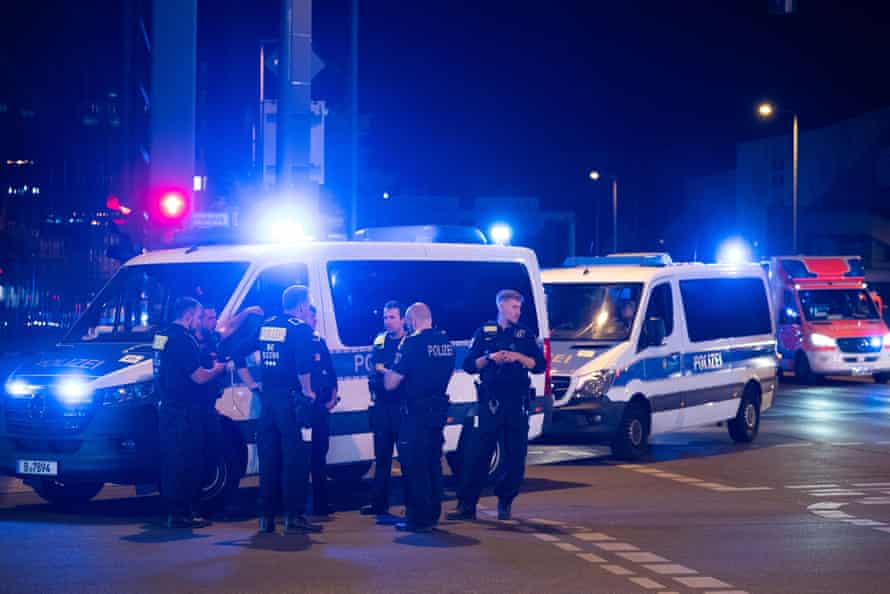
Authorities deployed hundreds of police officers to the affected neighborhoods, illuminating areas at night with mobile lighting masts and establishing temporary stations and hotlines for residents.
The Vulkangruppe is a far-left extremist group in Germany with anarchist, anti-capitalist, and radical environmental ideologies. Known for arson attacks, the group has targeted critical infrastructure since 2011.
In March 2024, it claimed responsibility for a major fire at the Tesla Gigafactory near Berlin, which halted production for several days.