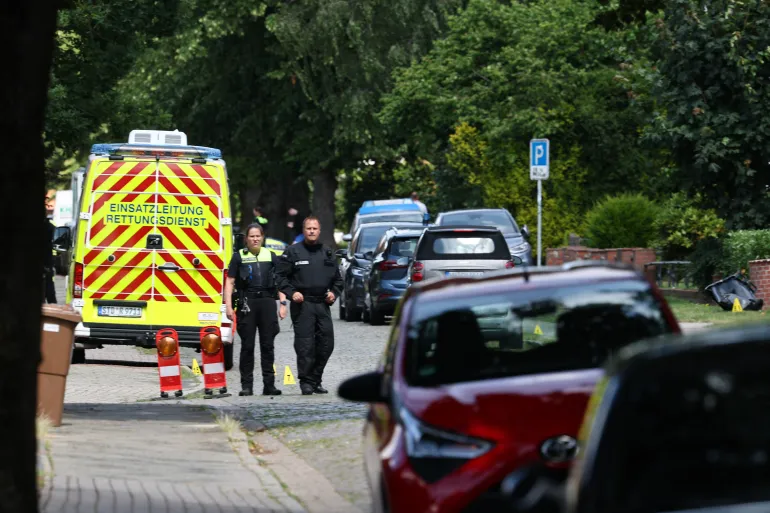
A small town in eastern Germany has come under criticism after its council approved a ban on the installation of new memorial plaques commemorating victims of the Holocaust and Nazi persecution.
The council in Heidenau, near Dresden in Saxony, voted on Thursday to stop the installation of new Stolpersteine, or “stumbling blocks”, on public streets.
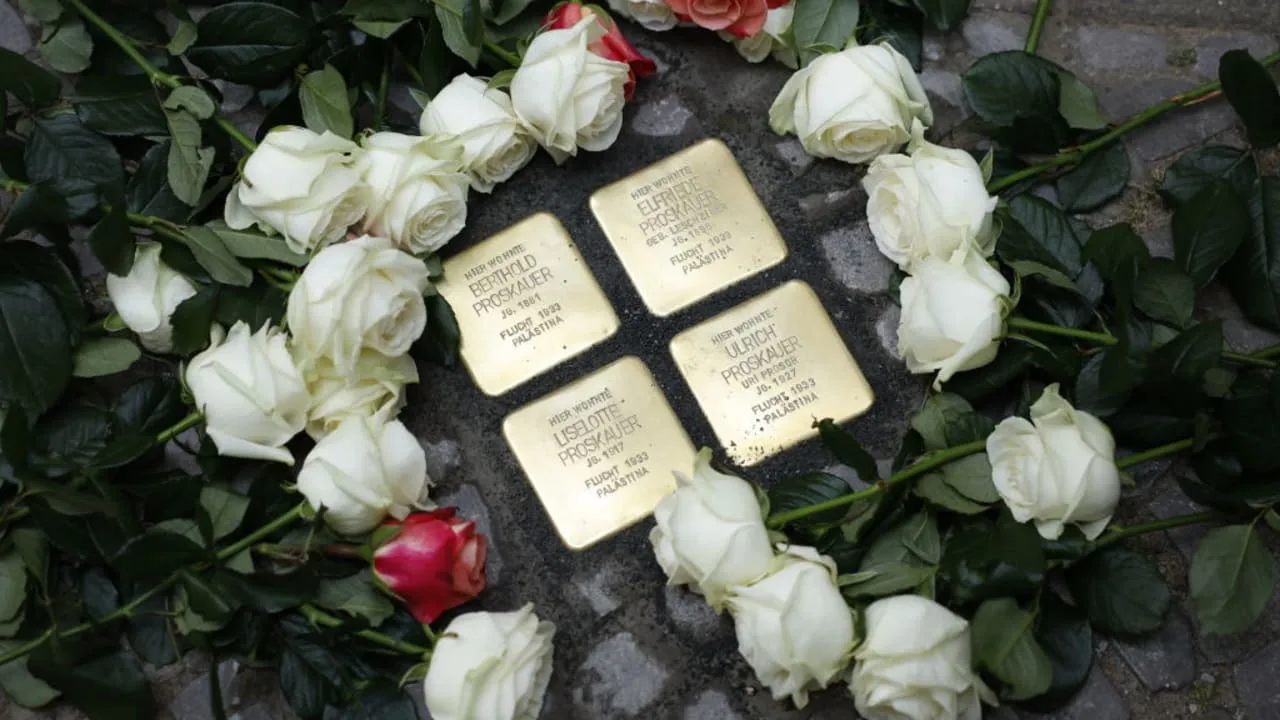
The brass plaques are placed outside homes and workplaces where Jews and other victims of Nazi persecution once lived or worked.
The motion was jointly proposed by the far-right Alternative for Germany and the centre-right Christian Democratic Union, which argued that pedestrians were “walking over or even stepping onto the names of the victims.”
The two parties’ local branches instead proposed that future Holocaust commemorations be held at a memorial site in the town’s northern cemetery, according to German media reports.
Opponents of the decision argued that placing the memorials in everyday public spaces is central to their purpose, as they serve as reminders of Nazi atrocities in the places where victims once lived.
The Stolpersteine project was launched by German artist Gunter Demnig in the 1990s.
The 10-centimetre brass cubes typically bear the name of a victim, the date of deportation and the place where the person died.
More than 116,000 Stolpersteine have been installed across 31 countries, with the vast majority located in Germany.
Demnig criticised the Heidenau decision, saying the memorials need to remain at the specific locations where victims lived or worked because they help bring history to life for younger generations.
He said he was not surprised by the decision given the AfD’s recent electoral successes and criticised the CDU, saying the party “should perhaps drop its ‘C’. Because they’ve clearly left Christianity behind.”
Green Party co-leader Felix Banaszak also condemned the council’s decision, describing it as a scandal.
He rejected the argument that people stepping on the plaques justified the ban, calling the reasoning “absurd.”
“They bring the names and fates of the victims into our everyday lives and prompt us to pause for a moment,” he told German media.
Charlotte Knobloch, president of a Jewish association in Bavaria and a Holocaust survivor, described the decision as the “completely wrong path.”
Although Knobloch said she was not personally a supporter of the Stolpersteine concept, she told Germany’s Funke Media Group that “decentralized commemoration that is not banished from public spaces” was important to the country’s culture of remembrance.
The AfD has previously challenged some of Germany’s established forms of remembrance for Nazi-era atrocities.
The party has also faced scrutiny over its positions on how the period should be taught and commemorated.
The Heidenau decision has additionally reignited debate over Germany’s political “Brandmauer”, or firewall, an informal practice among mainstream parties of rejecting cooperation with the AfD.
The International Auschwitz Committee criticised the CDU’s support for the motion, calling it scandalous, according to Deutsche Welle.
“This is a transparent and despicable attempt to drive Nazi victims in Heidenau out of the city once again and dispose of them where, according to the AfD, their memory has belonged a long time ago — at the cemetery,” the committee’s executive vice president said.