The United Kingdom, Australia, Canada and Italy have called on Israel to allow the immediate delivery of humanitarian assistance to Gaza, warning that the situation in the Palestinian territory has become dire following devastating floods caused by recent heavy rains.
The four countries, in a joint statement issued by their foreign ministers, urged Israel to “allow immediate, rapid and unimpeded humanitarian access throughout Gaza”, amid worsening living conditions for displaced residents.
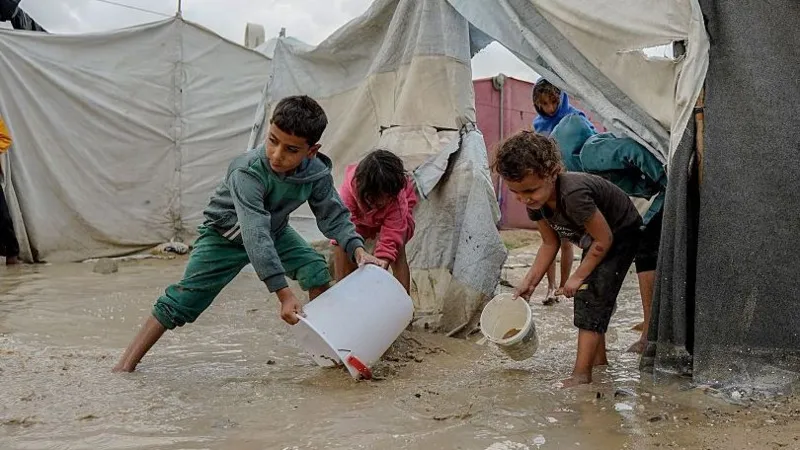
They warned that the recent floods had brought “further suffering” to the war-ravaged territory, where thousands of families are struggling to find shelter as winter sets in.
According to the statement, about 150,000 tents and other essential humanitarian supplies are being held at the border, despite the urgent needs of residents who have lost their temporary shelters to flooding.
“This situation is entirely reversible – and there is still time to act before the winter fully sets in,” the ministers said.
“The crossings must be opened, and the tents allowed in. Dual-use items necessary for humanitarian operations and early recovery must be granted entry before it is too late.”
However, the Israeli military authority responsible for controlling Gaza’s crossings said it was working with the US-led Board of Peace and the United Nations on a winter preparedness plan.
The authority stated that 93,000 tents and 8,600 trucks carrying winter supplies had already entered Gaza.
It also maintained that reconstruction “can only begin after Hamas fully disarms”.
The United Nations Office for the Coordination of Humanitarian Affairs said widespread flooding and a landslide had caused several deaths, damaged thousands of shelters and forced the suspension of essential services.
The European Union also expressed concern over the humanitarian situation in Gaza in a statement issued on Saturday, describing it as a “persistent and devastating humanitarian crisis” and urging Israel to respect international law.
The latest appeal comes amid continuing humanitarian challenges in the territory, where many displaced Palestinians are living in makeshift shelters following months of Israeli military operations.
The conflict began on October 7, 2023, when Hamas-led militants attacked southern Israel, killing about 1,200 people and taking 251 others hostage.
Israel subsequently launched a military campaign in Gaza, which has killed more than 74,690 people, according to the territory’s Hamas-run health ministry.
The United Nations considers the ministry’s casualty figures reliable.
Despite a ceasefire agreement reached in October 2025, Israeli air strikes and other attacks have continued almost daily in the Palestinian territory.