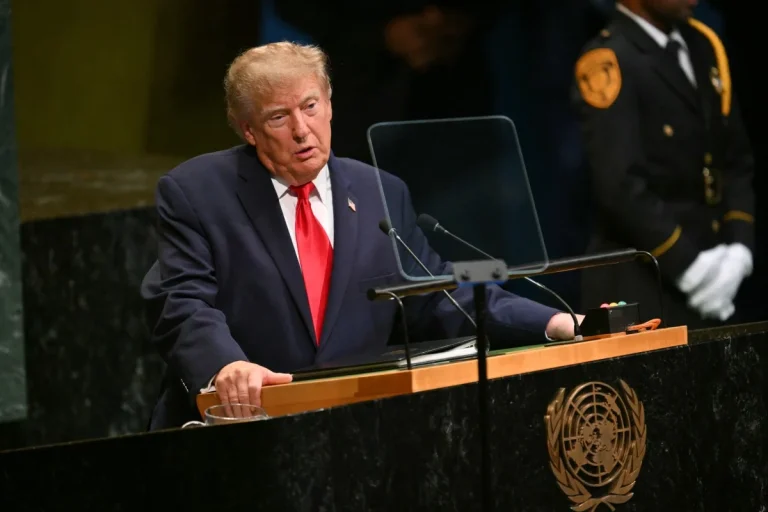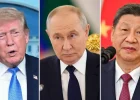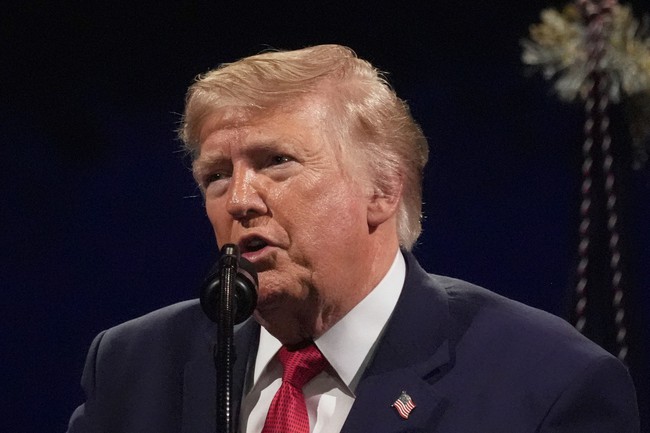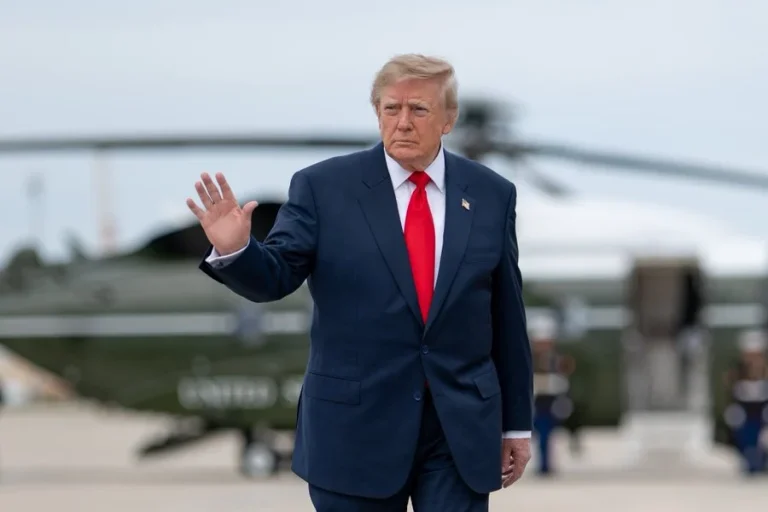
United States President, Donald Trump, has described his planned meeting with Chinese President Xi Jinping and Russian President Vladimir Putin as a diplomatic victory even before the talks take place, following a grand reception during his arrival in China.
Trump made the remarks on Thursday ahead of the historic gathering of leaders of the world’s three largest nuclear powers, which analysts believe is unlikely to produce major agreements despite its diplomatic significance.
Speaking in an interview with Fox News, Trump praised the elaborate reception organised in his honour, contrasting it with the less elaborate welcomes received by other visiting leaders, including Putin and Japanese Prime Minister Sanae Takaichi.
Xi personally welcomed Trump at the airport, marking the first time he had received a visiting leader there since becoming China’s president.
The gesture reciprocated Trump’s reception of the Chinese leader at Joint Base Andrews in September during their last meeting. The two leaders also briefly embraced.
“This is a great president, one of the great presidents of China, and he’s never gone to the airport to meet somebody,” Trump said when asked about his expectations for the trilateral meeting.
“And not only that, the fanfare, the beauty, the pageantry, the thousands of people, the young children, the soldiers, the whole thing. It was great respect, and I appreciate that. That’s a big win for us. It’s a big win for China too.”
Trump’s arrival followed speeches by Xi and Putin at the Asia-Pacific Economic Cooperation summit in Shenzhen, southern China, where both leaders criticised Western trade protectionism and sanctions.
Xi reiterated his support for what he described as free and open trade, while Putin maintained that Russia remained an important contributor to food and energy security in the Asia-Pacific region.
The US president also highlighted America’s economic strength and described the country’s presence in the Pacific as dating back hundreds of years.
On artificial intelligence, Trump said the technology was largely beneficial but warned that its negative aspects required caution.
He also opposed regulations that could stifle the industry.
Nuclear arms control is expected to feature prominently in Trump’s discussions, although China has repeatedly resisted joining negotiations with Washington and Moscow because of the significant difference in their nuclear arsenals.
Trump expressed concern about China’s expanding nuclear weapons programme, saying he wanted Beijing to halt the development.
“They’re going hot and heavy on building nuclear weapons. I’d love them not to do it,” Trump said of China.
“But when they look at me and they say, ‘OK, we’ll do it, but will you reduce your nuclear weapons by 2,000 weapons?’ It’s a hard thing to do for me,” he said, adding “It’s probably hard for them to do also.”
Before the three-way engagement, Trump is scheduled to hold a working lunch with Xi.
US and Russian officials also confirmed that the American president would meet Putin separately, although Moscow said no full-scale talks were planned.
The American leader has also expressed interest in meeting North Korean leader Kim Jong Un, but there has been no confirmation of an imminent encounter.
Despite the high-profile gathering, analysts have questioned the likelihood of substantial agreements, citing disagreements over Ukraine, Iran, trade, nuclear weapons and China’s military expansion.
Craig Singleton of the Foundation for Defense of Democracies said the three leaders had reasons to appear together but faced significant obstacles in reaching common ground.
“A photograph could serve all three men well,” Singleton said, adding that he thought the “agenda is much harder to agree on.”
Meanwhile, the summit comes at a time of growing tensions between Washington and Beijing over reports that Nvidia chips were being diverted to China through Southeast Asia, raising concerns about the effectiveness of US restrictions on advanced technology exports.
Singleton described the development as a major concern for Beijing, warning that China could face tougher restrictions on access to advanced American chips.
“This is Beijing’s worst nightmare. China wants chip access that it can negotiate with the president. It may get chip restrictions written into law by both parties,” he said.
Trump is expected to return to the United States facing domestic political and economic challenges, including the fallout from the midterm elections and disruptions affecting the technology and aviation sectors.