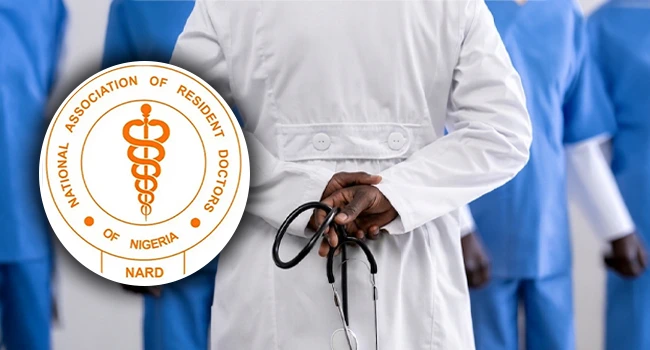
The Nigerian Association of Resident Doctors, and the Nursing and Midwifery Council of Nigeria, have reiterated that hospitals must treat gunshot victims without demanding police reports, as mandated by law.
The reminder came during separate interviews with the News Agency of Nigeria in Abuja on Sunday, following reports of hospitals turning away gunshot victims in emergencies despite the existing legislation.
The Compulsory Treatment and Care for Victims of Gunshot Wounds Act, signed into law in 2017, requires all hospitals—public and private—to provide immediate medical attention to gunshot victims without waiting for police documentation.
Section 7 of the Act prescribes a fine of ₦500,000 or a five-year jail term, or both, for any person or institution whose negligence leads to a victim’s death.
National President of NARD, Dr. Mohammad Suleiman, described the continued refusal to treat victims as “unacceptable and unlawful,” stressing that saving lives should come before any administrative procedure.
“Where I practice in Katsina, we treat first. The police pick up the process later,” Suleiman said. “Our role as doctors is to save lives—not judge. Any delay or refusal to treat a patient in critical condition is unethical and criminal.”
He added that while some medical personnel might be unaware of the law, NARD regularly educates its members through Continuing Medical Education programmes on medical ethics and legal obligations.
Suleiman urged citizens to report cases of denial of treatment to the appropriate authorities, saying such actions should attract disciplinary measures from the Medical and Dental Council of Nigeria.
“Any doctor who turns away a patient in an emergency, especially for monetary reasons, should face the MDCN tribunal. Our training is built on saving lives, not profit,” he said.
The NARD president commended the Federal Ministry of Health for its efforts to improve emergency response systems, noting that the MDCN tribunal has the same disciplinary powers as a Federal High Court.
Also speaking, the Registrar of the Nursing and Midwifery Council of Nigeria, Mr. Ndagi Alhassan, explained that some nurses’ hesitation often stemmed from restrictive hospital policies, which contradict federal directives on emergency care.
“In some hospitals, policy demands documentation before care, but nurses must prioritise saving lives.
With the federal directive, the right thing is to stabilise the patient first, then complete documentation later,” Alhassan stated.
He urged all nurses to act promptly in life-threatening situations, saying, “That’s the ethical, professional, and lawful approach expected of every nurse.”
Both NARD and NMCN appealed to health institutions to fully comply with the 2017 Gunshot Victims Act, warning that any failure to do so could lead to loss of lives and legal consequences.