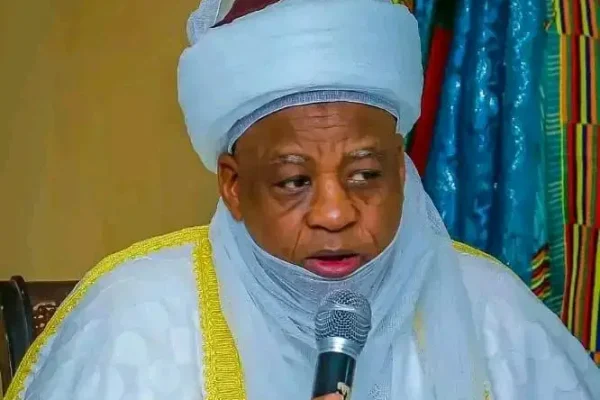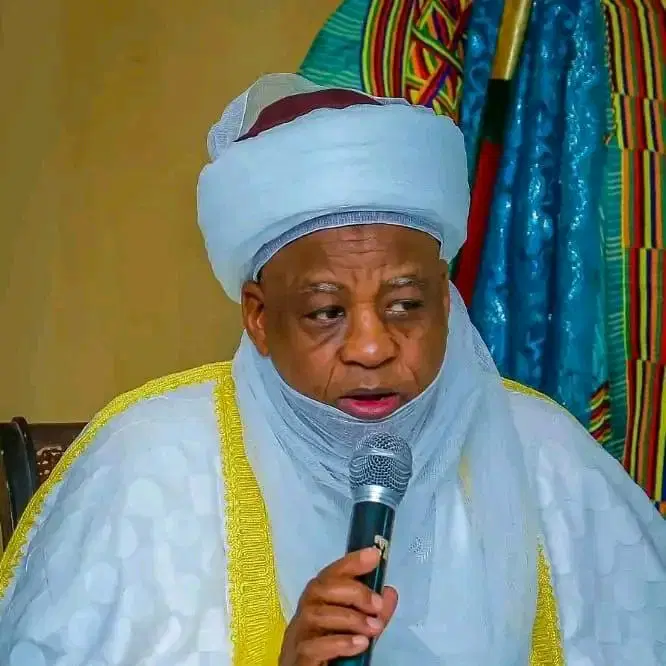
The Sultan of Sokoto, Muhammad Abubakar III, has called on Muslims across Nigeria to promote national unity, religious tolerance and peaceful coexistence, warning that ethnic differences must not become a source of division.
The Sultan made the appeal on Sunday at the 11th General Assembly of the Muslim Ummah of South-West Nigeria, held at the M.O. Abdul Hall, University of Ibadan Central Mosque Auditorium, Ibadan, Oyo State.
The assembly, themed “Insecurity in Nigeria: A Technology-Driven and Collective Approach for National Development,” brought together Muslim leaders and stakeholders to deliberate on national security and the development of the Muslim community.
Abubakar, who is also the President-General of the Nigerian Supreme Council for Islamic Affairs, said Muslims should embrace their shared identity and work collectively towards building a peaceful and prosperous nation.
“We are one big family. Ethnicity should never be a determining factor in identifying who is a Muslim and who is not.
“Almighty Allah created us as one human family and commanded us to worship Him alone and glorify His name. So, I urge you to champion national unity, religious tolerance and peaceful coexistence,” he stated.
The monarch also urged Muslims to make the teachings of Islam central to their lives, stressing that the religion should guide their behaviour, relationships and service to humanity.
“It must be Islam first, Islam first, Islam first, and Islam last,” he declared.
He further maintained that all human beings were equal before Allah, irrespective of their ethnic backgrounds, social standing or affiliations, noting that piety and righteousness were the true measures of human worth.
“Before Allah, we are all equal. The best among us is the one who possesses the greatest degree of piety and righteousness.”
The Sultan urged Muslim leaders and members of the Ummah to remain dedicated to the service of Islam and humanity, adding that ethnic and regional differences should not hinder their contributions to the development of the Muslim community.
The Chairman of the Board of Trustees of MUSWEN, Dr AbdulRauf Babalakin, called for stronger collaboration among Muslim organisations in the South-West, emphasising the importance of pursuing a shared vision for the advancement of the community.
Babalakin said unity, education and technological innovation were essential to strengthening the Muslim Ummah and addressing contemporary challenges.
“Muslim organisations must learn to work together and pursue a common vision. Our collective strength lies in our unity, our commitment to education and our ability to respond to the challenges of our time.”
He identified education, technological development and sustainable funding as key priorities for the organisation, while urging Muslims to reject extremism and maintain peaceful conduct.
The outgoing MUSWEN President, Rasaki Oladejo, said the organisation had made considerable progress in institutional development, property investment, education, mediation and financial management during his six-year tenure.
Oladejo said his administration focused on building a financially sustainable institution through investments, improved financial management and programmes aimed at enhancing the welfare and educational opportunities of members.
“Our priority has been to build an institution that can stand the test of time. We have invested in our properties, strengthened our financial base and supported programmes that will improve the welfare and educational opportunities of members of the Muslim community,” he said.
He disclosed that MUSWEN planned to sponsor 12 female medical students through the Sultan Abubakar Female Medical Student Scholarship Scheme, with two beneficiaries to be selected from each of the six South-West states.
Oladejo also announced plans to award 120 bursaries in 2027.
In his acceptance address, the new MUSWEN President, Rafiu Adisa, pledged to expand the organisation’s interventions in education, healthcare, youth and women empowerment, economic development and the protection of Muslim rights.
“We want a MUSWEN that is more responsive to the needs of the people, particularly in education, healthcare, economic empowerment and the development of our youths and women. Our responsibility is to build on the achievements of the past and make the organisation more effective,” he said.
Adisa said his administration would prioritise national unity, interfaith harmony and increased participation in national affairs, while strengthening the organisation’s financial capacity and development initiatives.
He condemned banditry, kidnapping, terrorism and communal violence, calling for improved intelligence-sharing, accountability among security agencies and closer cooperation between security institutions and local communities.
The new president also advocated consideration of constitutionally grounded decentralised policing to address Nigeria’s security challenges.
“Security cannot be left to government agencies alone. There must be effective cooperation between security institutions and local communities, supported by timely intelligence, accountability and a system that can respond adequately to the peculiar security needs of different areas,” he said.
Also speaking, the All Progressives Congress governorship candidate in Oyo State, Senator Sharafadeen Alli, highlighted the importance of moral and religious education in tackling societal challenges, particularly among young people.
Alli said his upbringing in a religiously diverse community had taught him the value of tolerance and mutual respect.
“Growing up in a community where people of different religions lived together taught me the importance of tolerance and mutual respect. Our religious differences should not divide us; rather, we should learn to understand one another and live together in peace,” he said.
He called for the strengthening of moral and religious education in schools, noting that proper upbringing could encourage responsible behaviour and help address social challenges among youths.