SpaceX’s Starship spacecraft has successfully returned from orbit and been caught by the launch tower in an unprecedented feat, marking a major milestone in the company’s efforts to develop fully reusable rockets.
The 171-foot-tall spacecraft, which serves as the upper stage of SpaceX’s massive Starship launch system, completed the historic manoeuvre at the company’s Starbase facility in South Texas on Saturday.
The achievement represents the first time an orbital rocket’s upper stage has been recovered through a controlled landing on its launchpad after returning from space.
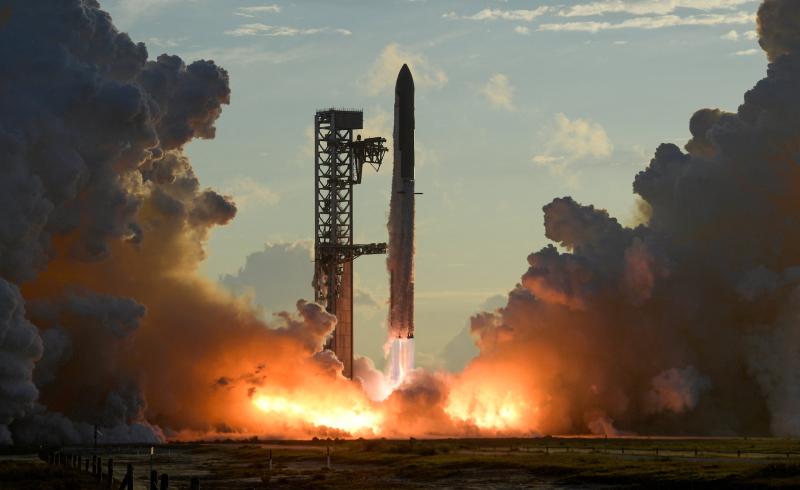
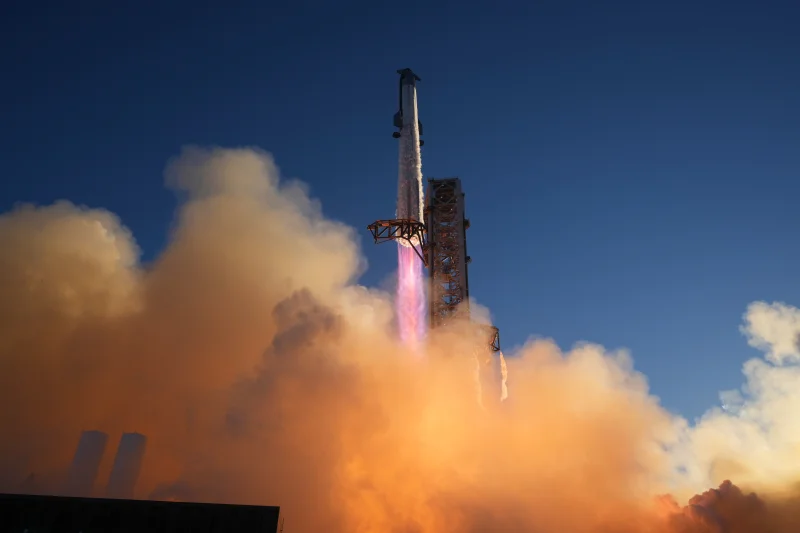
The feat followed the launch of the 15th Starship test flight, which began at 5:47 p.m. ET on Friday.
During the mission, the spacecraft reached orbit, deployed Starlink internet satellites and travelled around the Earth 14 times over a 22-hour period before making its return.
SpaceX attempted to recover the Super Heavy booster, the first stage of the launch system, shortly after liftoff.
However, the company abandoned the planned tower catch after the booster failed to complete the manoeuvre, redirecting it to splash down in the Gulf of Mexico.
The company reportedly attributed the decision to insufficient fuel.
The successful recovery of Starship is particularly significant because the spacecraft returned from orbital speeds exceeding 17,600 miles per hour, nearly 23 times the speed of sound.
Unlike the Super Heavy booster, which has previously been recovered, the upper stage has historically been discarded or destroyed after rocket flights.
SpaceX President and Chief Operating Officer, Gwynne Shotwell, celebrated the achievement on social media, describing the technology as “alien-level technology from this star system’s finest team.”
The company’s Chief Executive Officer, Elon Musk, also congratulated the engineers involved in the mission, writing, “Congratulations to an incredible team at SpaceX!!!”
NASA Administrator Jared Isaacman praised the landing, describing it as “almost magic” and saying the achievement brought the agency “one step closer” to its lunar ambitions.
SpaceX is expected to examine the recovered spacecraft to assess its heat shield, engines and other components, particularly how they performed during the return through Earth’s atmosphere, where temperatures exceeded 2,000 degrees Fahrenheit.
The company’s long-term goal is to make Starship rapidly reusable, reducing the cost of spaceflight and enabling more ambitious missions.
The development is crucial to NASA’s plans to use a modified Starship as a lunar lander for future Artemis missions, with the agency targeting a return of astronauts to the Moon.
SpaceX is also working towards a demonstration next year involving a Starship test vehicle docking with a NASA spacecraft as part of preparations for a lunar landing.
The company has indicated that it hopes to achieve reliable Starship reuse by the time NASA conducts its Artemis IV mission, currently scheduled for 2028.