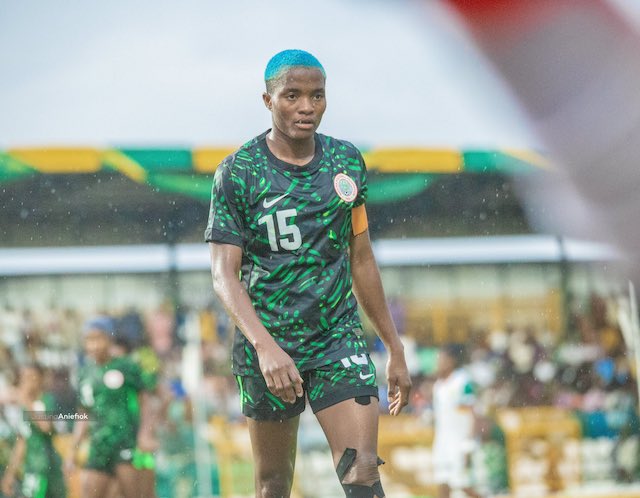
Super Falcons captain, Rasheedat Ajibade, has been named among 13 football stars selected for the second edition of the FIFA Player Impact Programme, an initiative aimed at encouraging players to use their influence to promote positive social change.
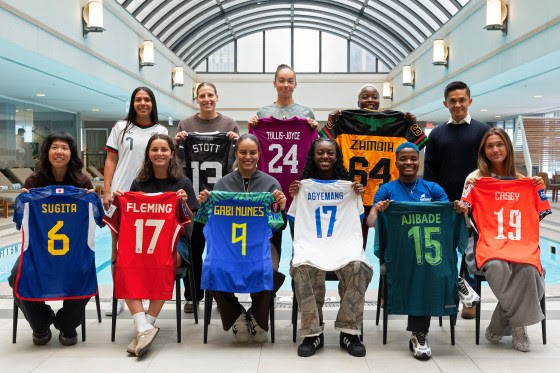
The Nigerian international is part of the global group comprising some of the biggest names in women’s football, including Spain’s World Cup winner Alexia Putellas, Brazil’s Gabi Nunes, Canada’s Jessie Fleming, England’s Michelle Agyemang and Zambia’s Racheal Kundananji.
Ajibade was among the first 11 participants who converged on Boston, Massachusetts, in June for a three-day Impact Accelerator Workshop designed to equip them with the skills, resources and knowledge needed to develop sustainable community-based projects.
The programme, which followed a female-only pilot introduced in 2025, has been expanded to accommodate male participants, with former India international Sunil Chhetri becoming the first man to join the initiative.
Other members of the cohort include Casey Phair of South Korea, Japan’s Hina Sugita, France’s Kenza Dali, Mexico’s Maria Sanchez, United States goalkeeper Phallon Tullis-Joyce and New Zealand’s Rebekah Stott.
According to FIFA, the initiative is designed to help footballers convert their personal experiences, resources and public influence into projects capable of addressing social challenges, particularly in education, mental health and equal access to sports.
The participants have embarked on a nine-month programme that began with the Boston workshop, where they exchanged experiences, outlined their ambitions and explored practical approaches to developing projects with lasting community benefits.
FIFA said the initiative would provide participants with specialised guidance, professional support and access to resources through the football governing body and an external organisation with expertise in sport and social impact.
The inaugural edition reportedly produced several initiatives, including foundations, football academies and partnerships with non-governmental organisations established by participants to tackle challenges they had encountered during their careers.
FIFA Chief Football Officer Jill Ellis said footballers had the opportunity to build legacies beyond their achievements on the pitch by using their influence to make meaningful contributions to society.
“As players and coaches, we spend our careers building a legacy through what we do on the pitch: the big save, the match-winning goal, the last-ditch tackle. But one of the questions we should all ask ourselves is: what legacy are we leaving beyond the game?” Ellis said.
She noted that the reach of modern footballers extended beyond their performances during matches, particularly with the growing influence of social media, which provides opportunities to connect with supporters and inspire positive change.
Putellas, who is also participating in the programme, said she hoped to use her platform to create opportunities for girls who encounter financial, family or cultural barriers to participating in sports.
The Spanish midfielder said her proposed project would focus on improving girls’ access to football while helping them develop confidence, teamwork and a sense of belonging.
Agyemang, an England and Arsenal forward, also stressed the importance of the initiative, noting that it would help players appreciate the influence of their voices and their responsibility to give back to the communities that supported them.
Chhetri, the programme’s first male participant, welcomed the opportunity to learn alongside some of the world’s leading female footballers, emphasising that the pursuit of social impact was not limited by gender.
The next stage of the programme is scheduled for December, when participants are expected to meet in London and take part in virtual sessions to present their proposed projects to other members of the cohort.
Ajibade’s selection places Nigeria among the countries represented in the global initiative, which seeks to harness the influence of professional footballers to create opportunities and address pressing social issues beyond the game.
Full list of FIFA Player Impact Programme participants:
Alexia Putellas – Spain
Casey Phair – South Korea
Gabi Nunes – Brazil
Hina Sugita – Japan
Jessie Fleming – Canada
Kenza Dali – France
Maria Sanchez – Mexico
Michelle Agyemang – England
Phallon Tullis-Joyce – United States
Racheal Kundananji – Zambia
Rasheedat Ajibade – Nigeria
Rebekah Stott – New Zealand
Sunil Chhetri – India