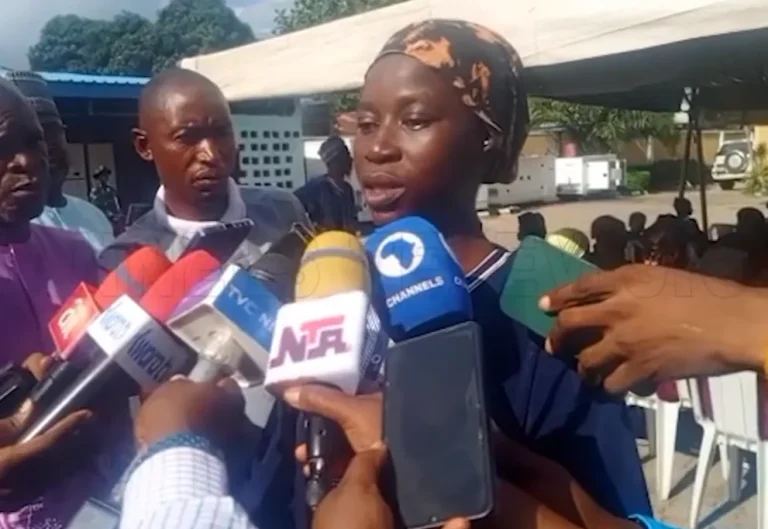
A nurse rescued after spending nearly six months in captivity has recounted the harrowing experience she and other abducted victims endured following the February 3 terrorist attack on Woro and Nuku communities in Kaiama Local Government Area of Kwara State.
Amirah Salihu, daughter of the Chief of Woro, Umar Salihu, said she helped 10 pregnant women deliver their babies while they were held captive, often without basic medical equipment or protective gloves.
Salihu disclosed this during an interview on Channels Television’s Politics Today on Friday.
According to her, the abductors subjected the captives to severe hunger and harsh living conditions, with food often consisting of guinea corn and salt, while the victims were forced to sleep in exposed areas despite rainfall.
“The kind of food that they were giving us was bad. The day that we got there, they just dropped guinea corn for us with salt and Maggi. Every day after, they gave us one bag of corn without oil, pepper, nothing. There was a day that they didn’t even give us Maggi again, just salt,” she said.
She explained that the captives were occasionally given kuka, but the abductors later stopped supplying it.
“And they kept us inside river. The place that we sleep is inside river. And rain always used to fall, sometimes. If we set fire, they asked us to put off the fire,” she added.
Salihu said several pregnant women went into labour during their captivity, prompting the abductors to ask if there was a nurse among the victims.
“Sometimes they give us fruits, sometimes they don’t give us. That’s how we used to sleep with our children. And I have seen people over there, pregnant woman, that they deliver.
“They asked of nurse, ‘Is there any nurse with us?’ I said no, because I was… I am also a nurse, I just used to help pregnant women do delivery. I helped like 10 women for the delivery, without gloves. I used my hands to help them,” she said.
She said the terrorists eventually discovered that she was a trained nurse and attempted to keep her with them, but she refused.
“But at last, when they got to know, they wanted to keep me, that I should stay with them, but I said no. I want to come back,” she said.
Explaining what the attackers told them about their motive, Salihu said the terrorists claimed they were acting in accordance with their interpretation of religious teachings and opposed the country’s democratic system.
“They always say that they are working for Allah’s work. That they want us to work with what Allah said. That all what we are doing, we are doing constitution, democracy—that it is not good. That they want us to work with Quran. That’s the reason why they entered our village, killed everybody.”
She also revealed that two of her brothers, including her elder and younger brothers, were killed during the attack.
“They even killed my brothers—my senior brother and my junior brother. And those… they said it’s because of my dad, because my dad did not allow them to come to our village,” she said.
Salihu said her father had previously resisted the terrorists’ attempts to gain access to Woro and had sought military protection for the community. However, she said the attackers struck after the soldiers had left.
“They just came to our house that day, suddenly, and people came to our house. The way I saw them, I knew that yes, they are Boko Haram, because the way they dressed, I knew that they are Boko Haram,” she said.
Asked whether the captives experienced rape or sexual assault during their time with the terrorists, Salihu said there was no such incident.
“No, no case of rape or sexual assault, no,” she said.
Salihu was among 176 women and children abducted during the February 3 attack on Woro and neighbouring Nuku communities.
The victims were rescued on Wednesday after spending almost six months in captivity.
The Kwara State Government said 13 children died while in captivity, while 12 others were still being held by the abductors.
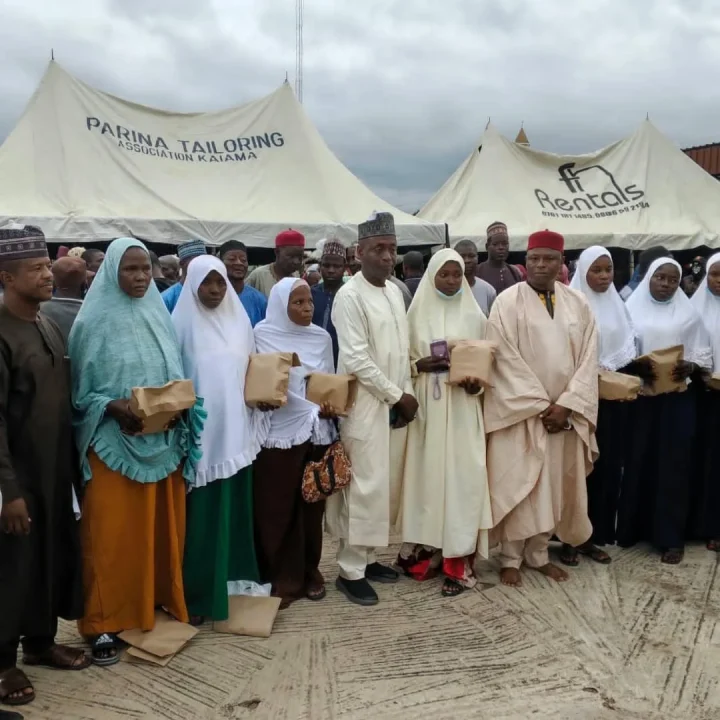
The rescued victims were received in Ilorin on Friday by Kwara State Governor AbdulRahman AbdulRazaq, who expressed condolences to families that lost loved ones and thanked President Bola Tinubu and the military leadership for their roles in securing the victims’ freedom.
The governor subsequently visited a general hospital where 14 rescued victims were undergoing treatment.
Three women who delivered babies while in captivity were among those receiving medical care.
The account adds to the growing details emerging about the prolonged deprivation and suffering endured by the victims, who previously reported surviving on inadequate food and sleeping in the forest during their captivity.